


As Europe accelerates its transition toward a greener future, ensuring that no one is left behind is paramount. The Social Climate Fund (SCF) is a pivotal initiative designed to make this green transition fair and inclusive.
Need the Gist? Check out the infographic below for a quick, visual summary of the key points!
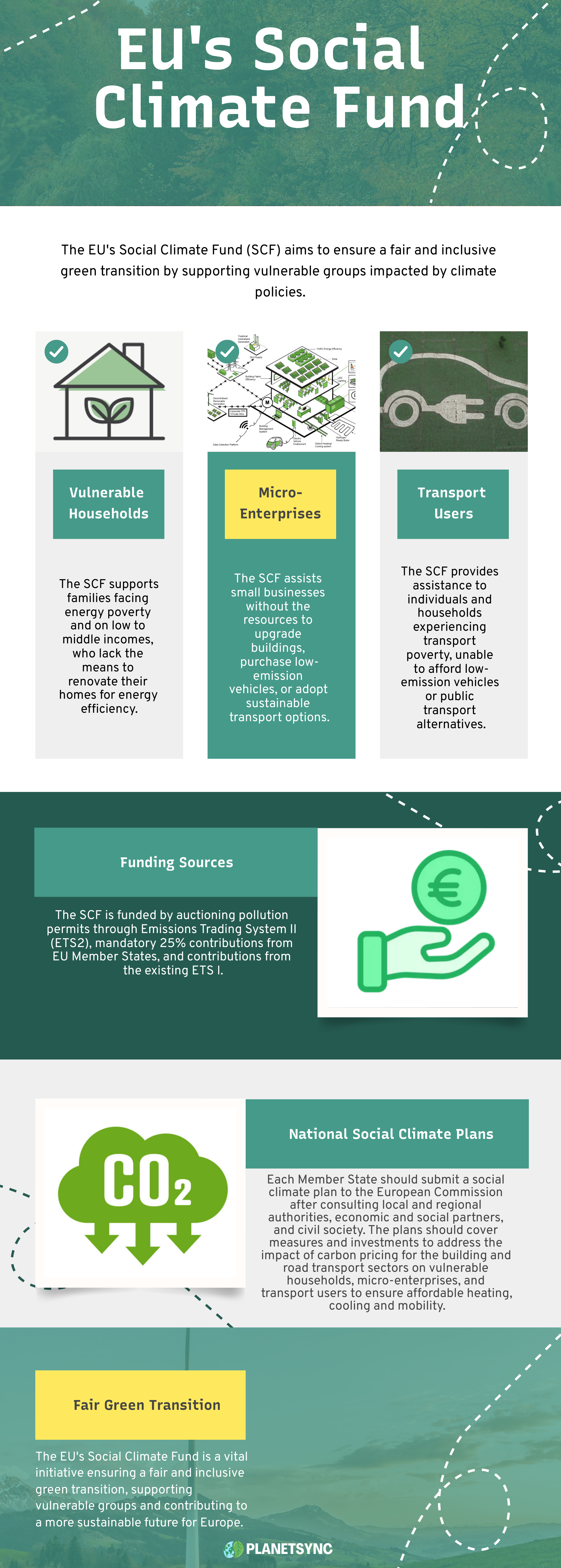
What is The Social Climate Fund?
The SCF is a cornerstone of the European Union’s strategy to ensure a fair and inclusive green transition. Established alongside the Emissions Trading System 2 (ETS2), which targets emissions from fuel combustion in buildings, road transport, and other sectors, the SCF is designed to support vulnerable groups who may be disproportionately affected by the shift towards a low-carbon economy.
Key Focus Areas of the SCF
The SCF supports several key areas, including:
- Energy Efficiency and Renovations: Funding to improve the energy efficiency of residential and public buildings, such as insulation upgrades and renewable energy installations.
- Clean Heating and Cooling: Supporting efficient heating and cooling systems to reduce energy consumption and emissions.
- Renewable Energy Integration: Promoting renewable energy sources like solar, wind, and geothermal to decrease reliance on fossil fuels.
- Zero- and Low-Emission Mobility: Investing in electric vehicles, charging infrastructure, and providing incentives for adopting electric mobility solutions.
- Public Transport Improvements: Enhancing public transportation systems to make them more efficient, affordable, and environmentally friendly.
Why the SCF matters?
The SCF is more than just a financial tool; it embodies the EU’s commitment to ensuring that everyone benefits from the transition to a greener future. By addressing the social and economic impacts of climate policies, the SCF aims to prevent energy and transport poverty, thereby fostering social cohesion and economic resilience.
Who can benefit from the SCF?
The SCF targets three key groups:
- Vulnerable Households: These are households experiencing energy poverty, including those on low and lower-middle incomes, and which lack the means to renovate the building they occupy.
- Vulnerable Micro-Enterprises: These are micro-enterprises that do not have the means to renovate the building they occupy, purchase zero- and low-emission vehicles, or switch to alternative sustainable modes of transport, including public transport.
- Vulnerable Transport Users: These are individuals and households experiencing transport poverty, including those on low and lower-middle incomes, and who do not have the means to purchase zero- and low-emission vehicles or to switch to alternative sustainable modes of transport, including public transport.
How is the SCF funded?
The EU’s Social Climate Fund (SCF) is expected to mobilize approximately €86.7 billion from 2026 to 2032, sourced through:
- Auctioned Pollution Permits (ETS2): Under the new Emissions Trading System for buildings and road transport (ETS2), companies in these sectors are required to purchase permits to cover their carbon emissions. The revenue from these ETS2 permit auctions will be directed toward the SCF to support low-income and vulnerable households in managing the costs of the green transition.
- Contribution from the Existing ETS (ETS1): An additional contribution will come from the original Emissions Trading System, which covers heavy industries and power sectors. The SCF will receive revenue from the auctioning of 50 million permits under ETS1, providing supplementary funds for the initiative.
- Mandatory 25% Contribution from EU Member States: Each EU country is required to contribute at least 25% of their Social Climate Plans’ projected costs. This minimum contribution ensures that member states actively invest in programs to support vulnerable groups through the climate transition. Countries have the flexibility to increase their contribution beyond the 25% minimum by utilizing additional revenue retained from ETS2, allowing them to prioritize local projects that align with the SCF’s objectives.
National Social Climate Plans: The Roadmap to Funding
Each EU Member State is required to develop a Social Climate Plan that details measures and investments aimed at addressing the social impact of carbon pricing in the building and road transport sectors. These plans, to be submitted to the European Commission by June 2025, must be prepared in consultation with local and regional authorities, economic and social partners, and civil society. The Commission will assess these plans and release funds based on the achievement of specific milestones and targets.
Ensuring Accountability
To ensure the effective use of SCF resources and the achievement of its objectives, the EU has established robust monitoring and accountability mechanisms, including:
- Reporting Requirements: Regular progress reports from Member States on the implementation of their Social Climate Plans.
- Audits: Independent audits to verify the use of SCF funds and ensure compliance with EU regulations.
- Evaluation: Periodic evaluations by the European Commission to assess the effectiveness of the SCF and make necessary adjustments.
A Brighter Future
As the EU continues its journey towards a low-carbon economy, the SCF plays a vital role in ensuring a just and equitable transition for all. By addressing energy and transport poverty and promoting sustainable energy solutions, the SCF contributes to a more resilient and sustainable future for Europe.


 planetsync.blog
Leave a comment