


In 2023, the European Union introduced an updated Energy Efficiency Directive (EU/2023/1791) under its Green Deal and REPowerEU strategies, reinforcing its commitment to achieving climate neutrality by 2050. This directive places energy efficiency at the forefront, embedding the “energy efficiency first” principle across policies and investments wherever feasible and cost-effective. While not a strict mandate in every instance, this principle prioritizes energy efficiency where possible to optimize energy use, reduce emissions, and support sustainable growth. But what does this mean for you? Why should it matter? And what progress has been made in 2024? Let’s dive in.
Need the Gist? Check out the infographic below for a quick, visual summary of the key points!
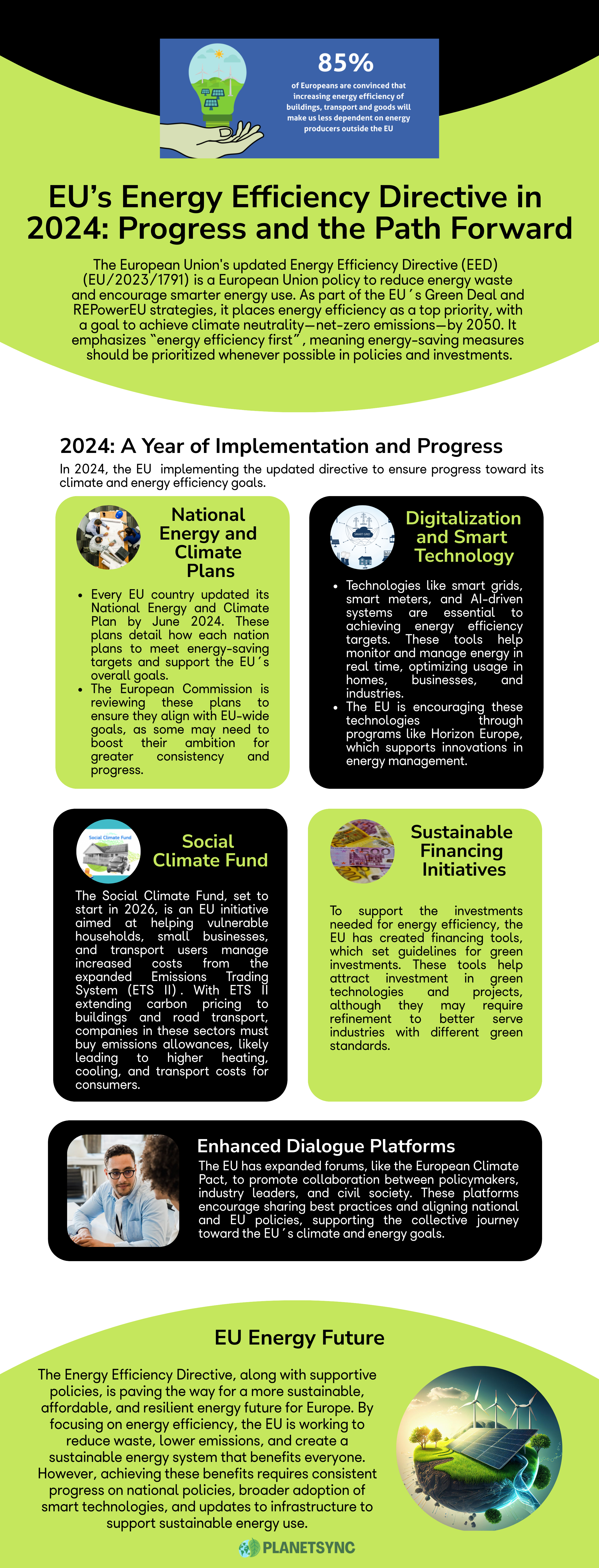
What is the Energy Efficiency Directive?
The Energy Efficiency Directive (EED), first introduced in 2012, is a core EU policy aimed at reducing energy consumption and increasing efficiency across member states. The directive promotes energy savings, cost reductions, and emissions reductions through binding energy savings targets and encourages investments in energy-efficient technologies. It also mandates that the public sector demonstrate leadership in energy efficiency, setting a standard for sustainable practices. The directive’s ultimate goals are to minimize waste, lower energy bills, and support economic growth by advancing energy-efficient solutions.
In October 2023, the EU updated the EED as part of its Green Deal and REPowerEU initiatives, aimed at achieving climate neutrality and energy independence. With this update, the “energy efficiency first” principle became a formal priority in EU law, urging that energy efficiency be a primary consideration across policies and investments whenever feasible and cost-effective. This approach intends to foster smarter, more sustainable energy use as the EU steps up its climate goals.
Why Does This Matter?
Energy efficiency is essential for more than just environmental reasons. These policies aim to create a future with reliable, affordable, and sustainable energy for households and businesses. By emphasizing energy efficiency, the directive works to lower energy costs, reduce waste, and enhance the resilience of Europe’s energy supply. The directive not only supports emissions reduction but also prioritizes sustainable, accessible energy for all.
2024: A Year of Implementation and Progress
In 2024, the EU is actively implementing the updated directive to ensure meaningful progress toward its climate and energy efficiency goals. Let’s review some key developments.
National Energy and Climate Plans (NECPs)
As part of the directive’s implementation, each EU member state submitted an updated National Energy and Climate Plan (NECP) by June 2024. These plans outline how each country intends to meet the directive’s targets, including an EU-wide objective to reduce primary energy consumption by 11.7% by 2030 compared to 2020 levels. While this target applies collectively, individual member states have tailored targets to reflect their unique energy profiles and policies.
The European Commission is currently reviewing these plans. Some countries may need to make adjustments to align with EU-wide goals, as early reports indicate varying levels of ambition and quality in the submitted NECPs. This review process may lead to recommendations for increased targets or greater standardization to ensure alignment and effective progress across the EU.
Digitalization and Smart Technology for Energy Efficiency
Digital solutions play a vital role in achieving the directive’s goals, with the EU encouraging the adoption of technologies like smart grids, smart meters, and AI-driven energy management systems in 2024. These smart technologies, supported through EU initiatives like Horizon Europe and the Connecting Europe Facility, are designed to optimize energy use and enhance energy efficiency across sectors. By leveraging digital infrastructure for real-time energy monitoring and management, the EU aims to advance energy efficiency significantly in both public and private sectors.
Social Climate Fund
The European Union’s Social Climate Fund (SCF) is a new initiative designed to help ease the financial burden on vulnerable households, micro-enterprises, and transport users as the EU ramps up its climate action efforts. This fund was established to address the effects of the EU’s expanded Emissions Trading System (ETS), specifically a new phase (ETS II) targeting emissions from buildings and road transport.
The ETS is a “carbon market” where certain high-emission companies must buy “allowances” to cover their greenhouse gas emissions if they exceed set limits. These allowances are traded, and over time, the overall cap on emissions decreases, encouraging companies to adopt cleaner technologies and reduce their carbon footprint. With the expansion into buildings and road transport, ETS II is expected to increase costs in sectors like heating, cooling, and commuting, as companies and utilities pass on their added expenses to consumers.
The SCF, set to launch in 2026, will provide financial relief specifically for vulnerable groups who may struggle to handle these higher costs. The goal is to offset some of the increased expenses and to invest in sustainable solutions, such as energy-efficient home renovations and affordable, low-emission mobility options.
EU member states must develop Social Climate Plans by June 2025 to outline how they intend to use SCF resources to protect those who need it most. These plans are required for countries to access SCF funding and should focus on helping households and micro-businesses make sustainable, energy-efficient upgrades. To support the preparation of these plans, the European Commission is offering assistance through its Technical Support Instrument (TSI) during 2024 and 2025.
In addition to general support, ten EU countries—Belgium, Czechia, Denmark, Greece, Finland, Croatia, Lithuania, Latvia, Romania, and Slovakia—are receiving targeted assistance to ensure they can effectively prepare their Social Climate Plans. To foster collaboration and knowledge-sharing, the EU has also created a special forum within the Commission Expert Group on Climate Change Policy, enabling member states to exchange best practices and coordinate their efforts in developing SCF-supported measures.
Sustainable Financing Initiatives
To facilitate the substantial investments needed for energy efficiency, the EU has bolstered its sustainable finance framework with tools like NextGenerationEU bonds for recovery investments and the EU Taxonomy for sustainability standards. The EU Taxonomy provides criteria to classify investments as environmentally sustainable, guiding both private and public sectors to prioritize green technologies. However, applying the taxonomy can be challenging in industries where green standards are still evolving, and its accessibility may vary by sector. Continued refinement of financial tools will be necessary to address the diverse needs of industries transitioning toward sustainability.
Enhanced Climate and Energy Dialogue Platforms
In 2024, the EU expanded its climate and energy dialogue platforms, including the European Climate Pact, to encourage cooperation and knowledge-sharing among policymakers, industry representatives, and civil society. These dialogue platforms are instrumental in promoting best practices and fostering alignment between national policies and EU-wide goals. Through these voluntary forums, member states can share effective strategies to meet EED targets, supporting collective efforts toward achieving a sustainable energy future.
Towards a Sustainable Energy Future
The Energy Efficiency Directive and its associated policies are paving the way for a cleaner, more affordable, and resilient energy landscape in the EU. These initiatives aim to lower emissions, reduce waste, and establish a sustainable energy infrastructure that can benefit households by potentially reducing energy costs and enhancing energy supply. However, realizing these benefits will require a continued focus on national policies, accelerated technological adoption, and necessary infrastructure improvements. As the EU advances, energy efficiency remains central to Europe’s journey toward a climate-resilient and sustainable future.
The road to a sustainable future starts with energy efficiency, and Europe is leading the way!


 planetsync.blog
Leave a comment