


The threat of flooding is a constant reality for Moldova, a nation that has endured 10 major flood events over the past 70 years. It’s not a matter of if a flood will strike, but when.
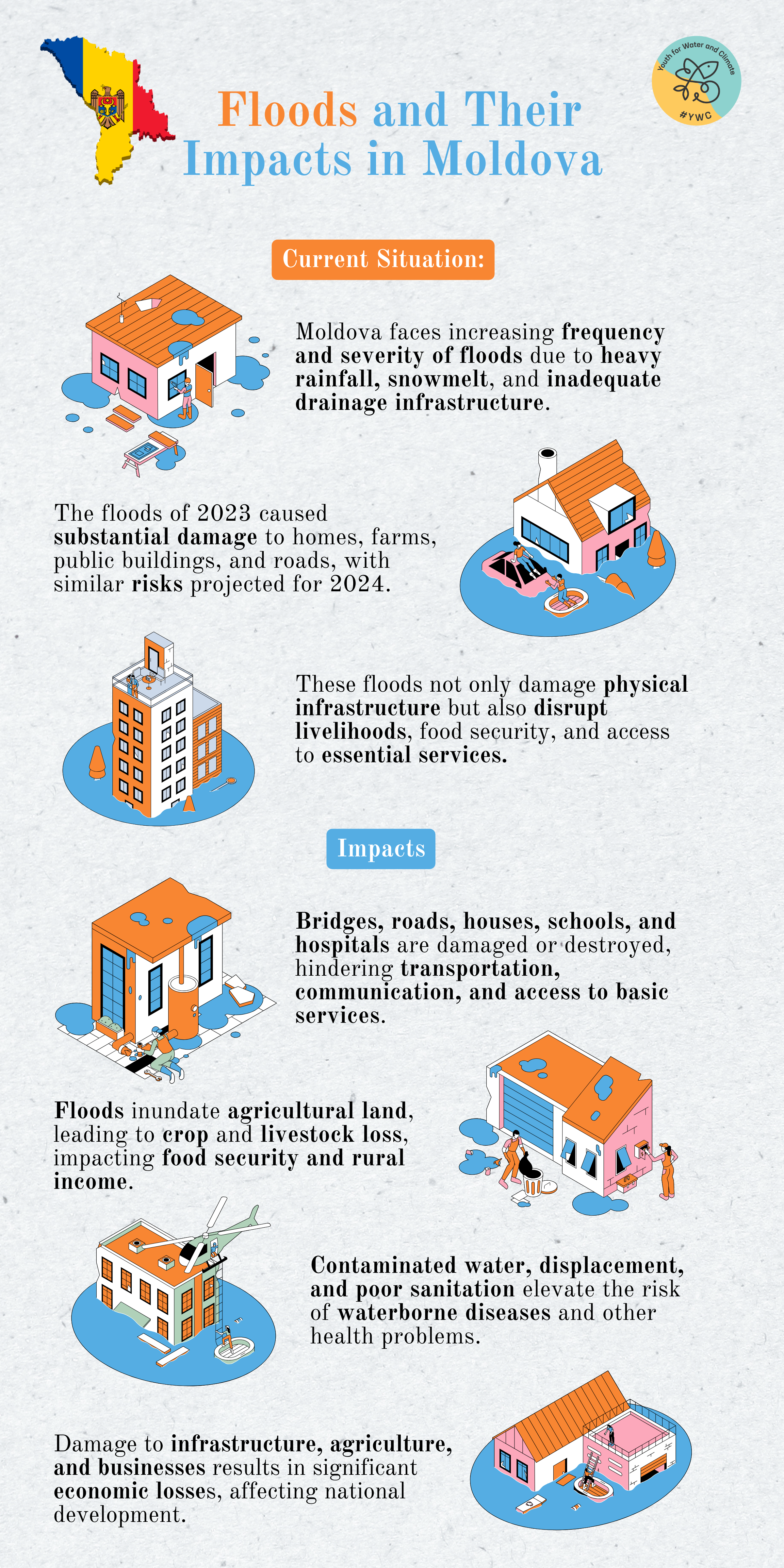
Why Moldova is Highly Vulnerable to Floods?
Moldova’s high vulnerability to floods is largely a result of its geographical location, topography, and climate. The country is landlocked between Ukraine and Romania, with key rivers like the Dniester and Prut playing a major role in shaping the landscape. These rivers are prone to overflow during periods of intense rainfall or snowmelt, causing widespread flooding in low-lying areas. Additionally, Moldova’s continental climate—with hot summers and cold winters—creates conditions for extreme weather patterns, leading to frequent and intense storms. Furthermore, the region’s topography, characterized by hills and valleys, directs water flow in a way that accelerates flooding in certain areas.
The combination of these natural factors—alongside deforestation, poor land use practices, and limited flood defenses—makes Moldova particularly susceptible to catastrophic flooding events.
Rising waters, rising risks
Floods aren’t just about rising waters; they trigger a chain reaction of problems:
- Transportation Chaos: Roads turn into rivers, cutting off access to schools, hospitals, and essential services. For rural communities, this isolation can last for days or weeks, deepening economic and social divides.
- Devastated Farmland: Moldova’s economy heavily depends on agriculture. Floods destroy crops, wash away fertile soil, and kill livestock. This loss doesn’t just affect farmers—it threatens the entire nation’s food security.
- Health Risks: Floodwater often mixes with sewage, contaminating drinking water sources. This creates a perfect environment for diseases like cholera and dysentery to spread, especially in flood-affected communities.
The Economic and Social Impact of Floods
The immediate devastation caused by floods in Moldova is only part of the story. The long-term consequences of repeated flooding events affect the country’s overall development and social well-being.
- Stalled Development: Each flood sets back infrastructure development by years, as roads, bridges, and public buildings need to be rebuilt or repaired. Moldova’s limited budget struggles to address these recurring challenges.
- Migration and Displacement: Severe floods often displace families from their homes, forcing them to migrate to safer areas. In the long term, this disrupts community cohesion, increases urbanization pressure, and worsens housing shortages in cities.
Why Addressing Floods is Crucial for Moldova’s Future?
Floods are becoming more frequent and severe as climate change accelerates. Moldova, a country with limited resources, cannot afford to wait for the next disaster. Flood prevention and response strategies are not only vital for saving lives but are also essential for safeguarding the country’s future.
Current Flood Prevention Efforts: Are They Enough?
Moldova has made some progress in flood prevention and response, but there are still significant gaps. In recent years, international organizations such as the European Union and the United Nations Development Programme (UNDP) have helped the country implement early warning systems and develop better emergency response plans.
- Early Warning Systems: Moldova’s flood forecasting has improved, giving communities more time to evacuate and minimize damage. However, these systems still need to reach more remote areas effectively, where rural populations are often cut off from timely information.
- Flood Defenses: Levees, dams, and flood barriers have been built along key rivers like the Dniester, but they remain insufficient, particularly given the increasing intensity of climate change-driven weather events. Many of these defenses are outdated or in disrepair due to a lack of maintenance and funding.
Areas for Improvement
To better protect Moldova’s population and economy, several areas of improvement need to be prioritized:
- Upgrading Infrastructure: Modernizing levees, dams, and drainage systems can prevent catastrophic damage during floods. The government needs to allocate more funds to maintain and upgrade flood defenses.
- Sustainable Land Management: Deforestation and poor land use practices exacerbate flood risks by reducing the landscape’s ability to absorb water. Encouraging sustainable farming and reforestation efforts can reduce runoff and soil erosion.
- Community-Based Preparedness: Local communities, particularly in rural areas, need more education and resources on how to respond during a flood. Disaster preparedness programs can help people protect their homes and families while waiting for emergency assistance.
Preparing for a More Resilient Future
Floods in Moldova are not just natural disasters—they’re recurring crises with far-reaching economic, social, and health consequences. Addressing this challenge will require a combination of improved infrastructure, community preparedness, and international support. The risks are clear, but with the right investments and actions, Moldova can build a more resilient future for its people.
Additional Resources
Want to learn more? Check out these helpful resources:
- Strengthening Moldova’s Disaster Risk Management and Climate Resilience
- Moldova has a National Climate Change Adaptation Programme, developed with the support of UNDP
- Promotion Of Climate Change and Disaster Risk Reduction Solution in The Water and Civil Protection Sectors for Enhanced Rural Resilience
- Hydro-infrastructure rehabilitation to mitigate vulnerability to climate-driven extreme events in the republic of Moldova
- Nationally Determined Contribution of the Republic of Moldova


 planetsync.blog
Leave a comment