

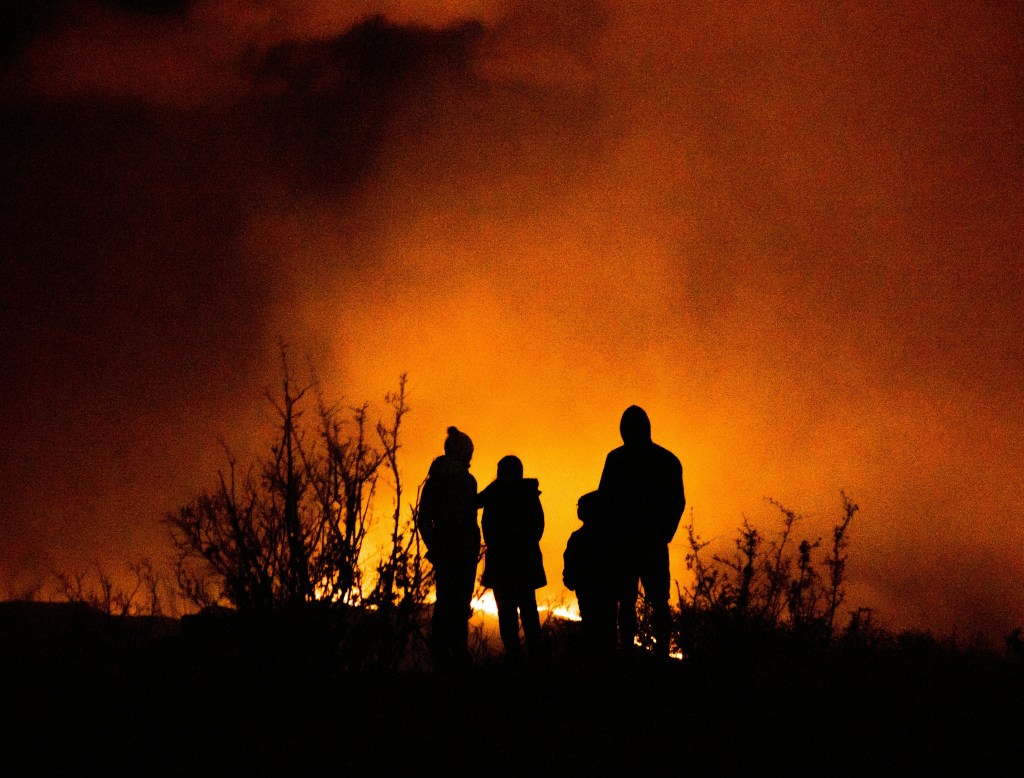
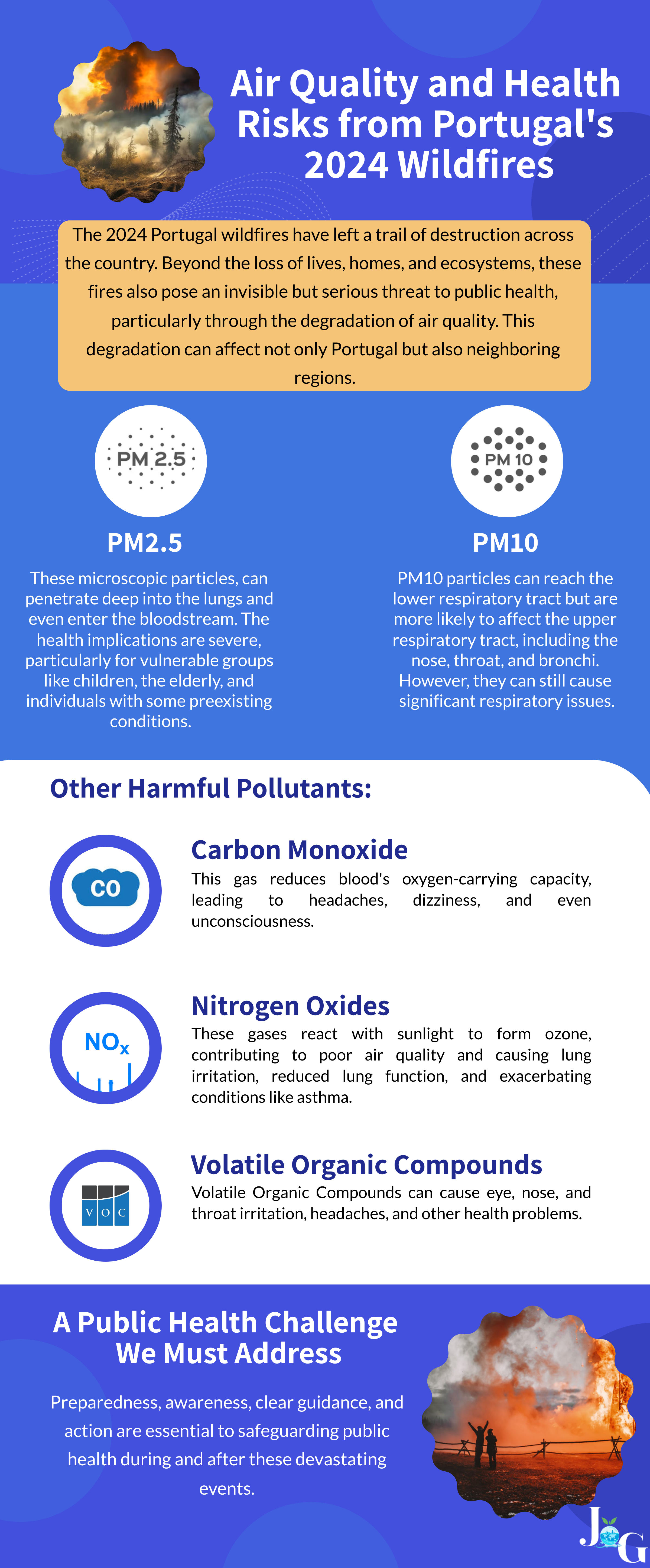
The 2024 Portugal wildfires have left a trail of destruction across the country, as discussed in my previous post. Beyond the loss of lives, homes, and ecosystems, these fires also pose an invisible but serious threat to public health, particularly through the degradation of air quality. This degradation can affect not only Portugal but also neighboring regions.
Let’s explore how wildfires are impacting air quality and what this means for human health!
Degraded Air Quality: An Important Concern
According to the Copernicus Atmosphere Monitoring Service (CAMS), wildfires have severely reduced air quality across the region. Smoke plumes from the fires are expected to spread across the Iberian Peninsula, reaching areas as far as western France. These plumes contain harmful pollutants, turning clean air into a health hazard.
Particulate Matter (PM2.5): The Invisible Danger
Among the pollutants released, PM2.5 stands out as one of the most dangerous. These microscopic particles, smaller than a human hair, can penetrate deep into the lungs and even enter the bloodstream. The health implications are severe, particularly for vulnerable groups like children, the elderly, and individuals with preexisting conditions such as asthma, bronchitis, chronic obstructive pulmonary disease (COPD), and cardiovascular diseases. Prolonged exposure to high levels of PM2.5 can exacerbate these conditions and lead to serious respiratory and heart issues.
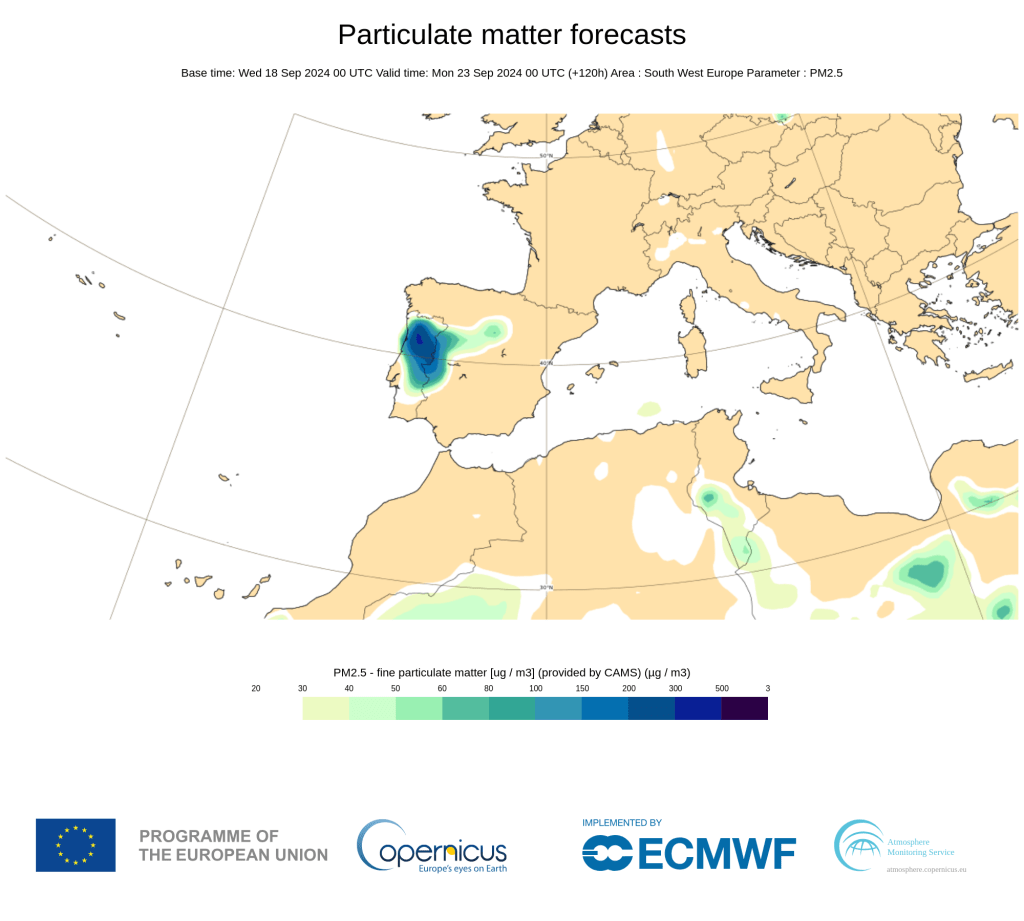
Copernicus Atmosphere Monitoring Service. (2024). Particulate matter forecasts: PM2.5 for southwest Europe. Copernicus Programme.
PM10: A Bigger Threat Than You Might Think
In addition to PM2.5, PM10 also poses significant health risks. PM10 particles can reach the lower respiratory tract but are more likely to affect the upper respiratory tract, including the nose, throat, and bronchi. However, they can still cause significant respiratory issues, especially for those with preexisting conditions like asthma and bronchitis.
Exposure to high levels of PM10 can lead to symptoms like coughing, wheezing, shortness of breath, and irritation of the nose and throat. Children and the elderly are especially vulnerable due to their developing or weakened respiratory systems.
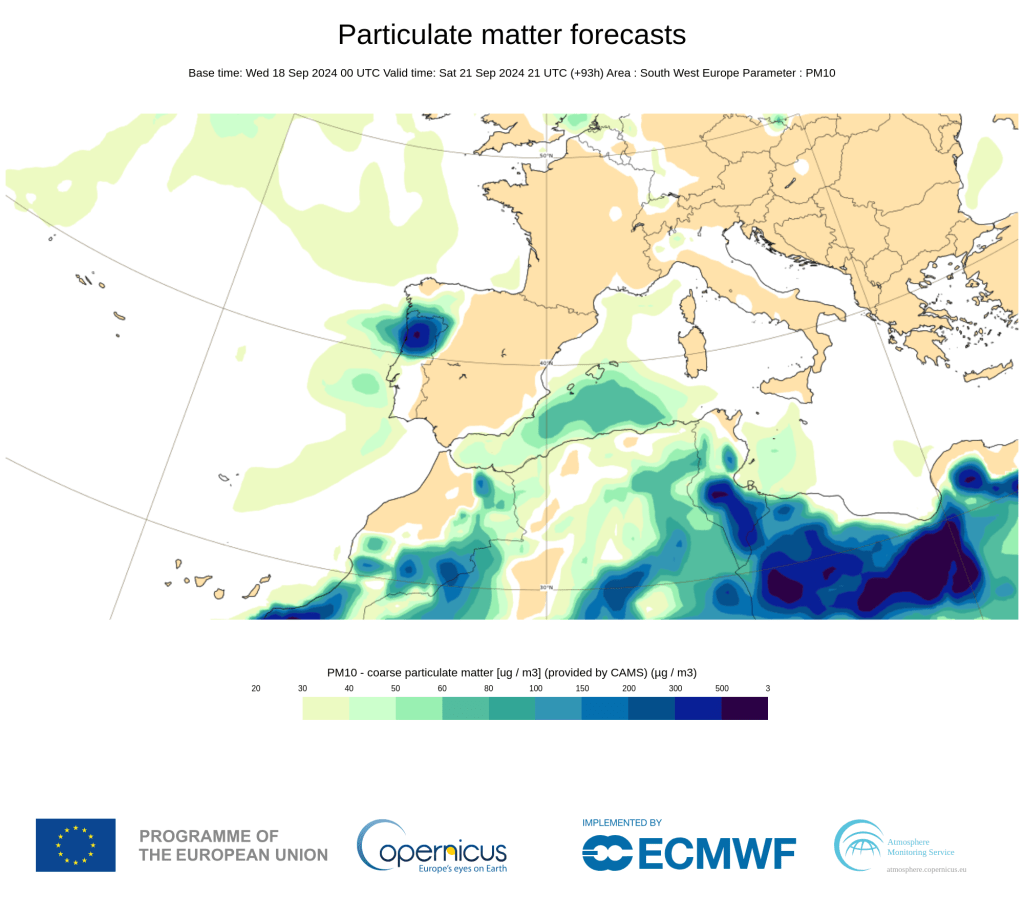
Copernicus Atmosphere Monitoring Service. (2024). Particulate matter forecasts: PM10 for southwest Europe. Copernicus Programme.
Other Harmful Pollutants: Carbon Monoxide, Nitrogen Oxides, and VOCs
In addition to particulate matter, wildfires release a range of other harmful pollutants that can significantly degrade air quality:
- Carbon monoxide (CO): This gas reduces the ability of the blood to carry oxygen, leading to symptoms like headaches, dizziness, and, in severe cases, unconsciousness. Individuals in areas affected by wildfire smoke may be exposed to higher concentrations of CO, especially near the fire zones.
- Nitrogen oxides (NOx): These gases can react with sunlight to form ozone at ground level, contributing to poor air quality and causing lung irritation, reduced lung function, and exacerbating conditions like asthma.
- Volatile Organic Compounds (VOCs): Released from burning vegetation, VOCs can cause eye, nose, and throat irritation, headaches, and, in some cases, damage to the liver, kidney, and central nervous system.
A Public Health Challenge We Must Address
The air quality degradation caused by the 2024 Portugal wildfires presents a serious public health crisis. From the immediate risks posed by fine particulate matter (PM2.5 and PM10) to the long-term effects of carbon monoxide, nitrogen oxides, and other pollutants, wildfire smoke can significantly impact human health.
Addressing the health risks posed by wildfires requires immediate and proactive steps. Governments and public health organizations must provide clear guidance to the public.
Additional Resources
Want to learn more? Check out these links:


 planetsync.blog
Leave a comment