

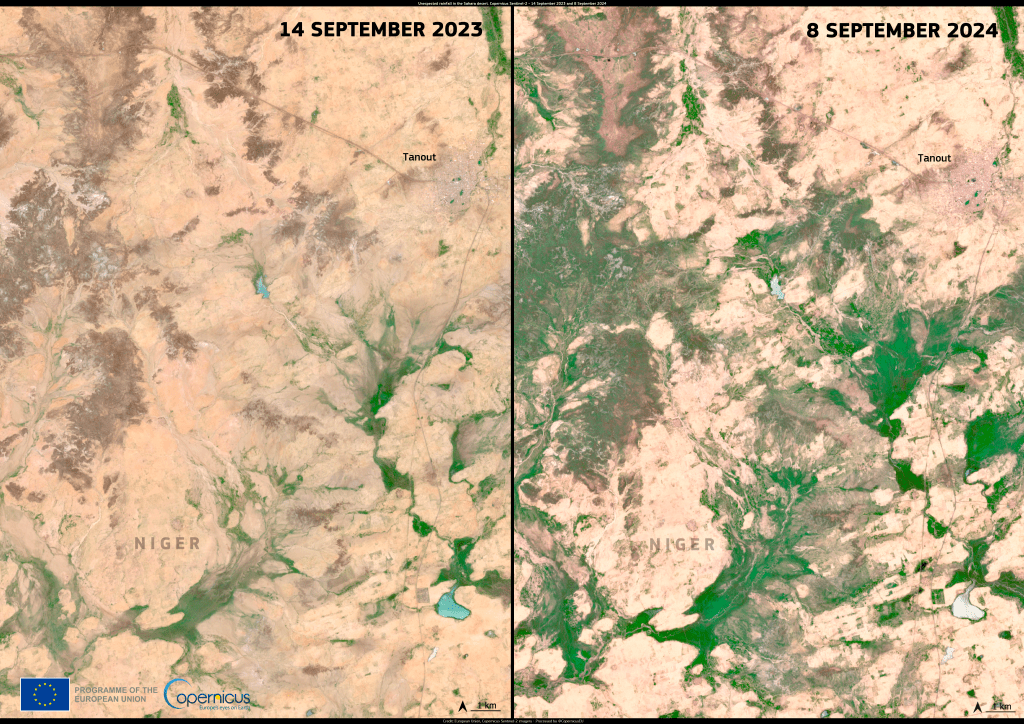
When we think of the Sahara Desert, the image that comes to mind is one of endless sand dunes and scorching heat. The idea of flooding seems almost unthinkable. Yet, in October 2024, the Sahara experienced one of its rarest phenomena: flooding. This unusual event has sparked both fascination and concern, highlighting the impact of shifting weather patterns in the age of climate change.
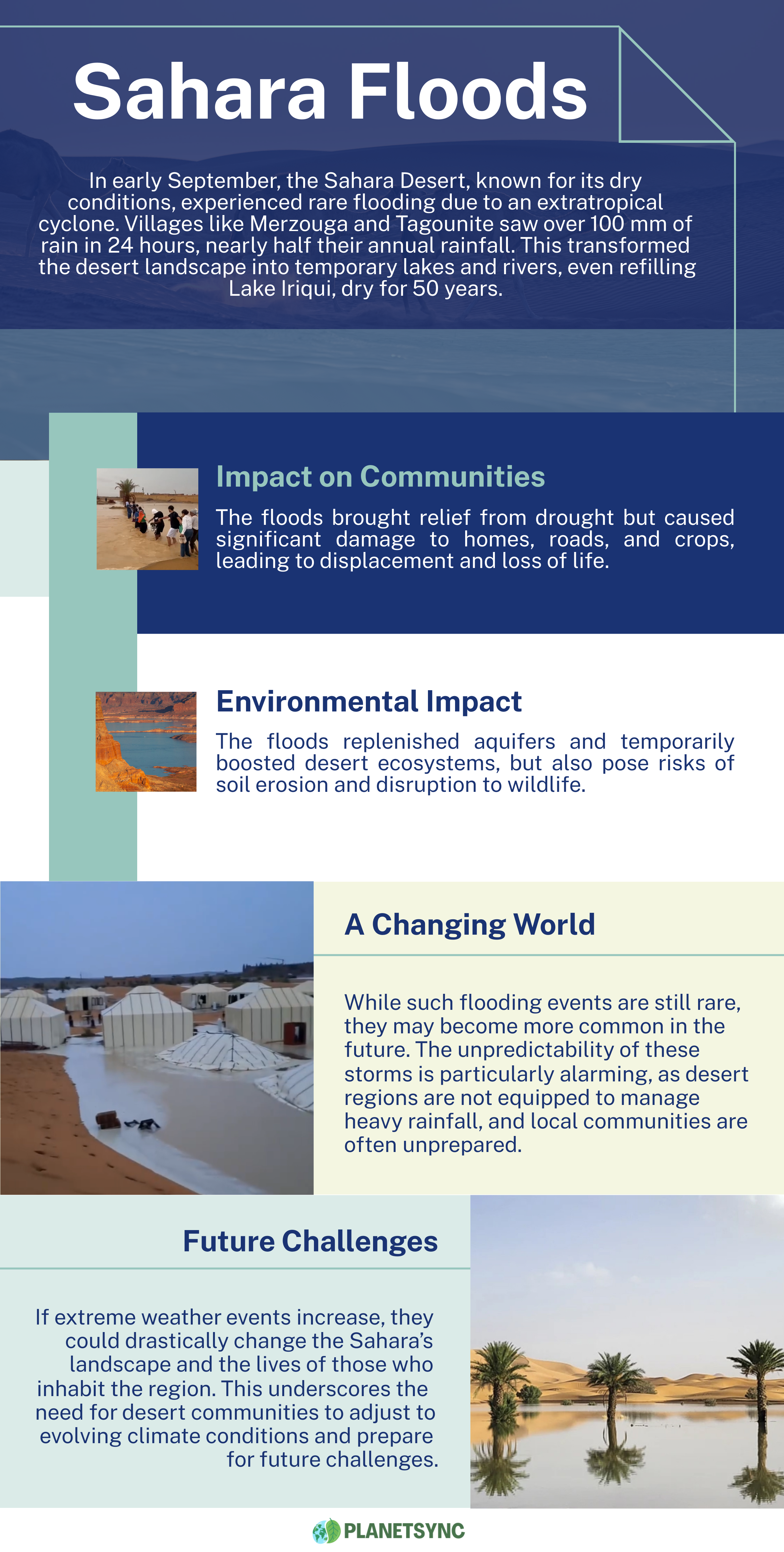
Need the Gist? Check out the infographic below for a quick, visual summary of the key points!
What Happened?
In early September, an extratropical cyclone swept across North Africa, bringing more water than these regions had seen in decades. In southeastern Morocco, villages like Merzouga and Tagounite, known for their typically dry, arid conditions, received over 100 mm of rain in just 24 hours. To put that into perspective, these areas usually get less than 250 mm in an entire year. This intense precipitation led to the refilling of Lake Iriqui, a lake that had remained dry for 50 years.
Why Did This Happen?
The main culprit behind this event? The warming of the North Atlantic Ocean. When the ocean warms up more than usual, it acts like a giant humidifier, releasing a lot of moisture into the atmosphere. This extra moisture feeds storm systems, making them stronger and wetter. In this case, the extra-tropical cyclone pulled in all that moisture as it traveled southward towards North Africa. The result? Heavy rains over the Sahara Desert.
But that’s not the whole story. There’s also something called the Intertropical Convergence Zone (ITCZ)—a band of clouds that moves north and south of the equator throughout the year, bringing rain to tropical regions. In 2024, warmer ocean temperatures nudged the ITCZ further north than usual. This pushed the storm’s path into the Sahara, bringing downpours to places like Morocco and Algeria, which typically get just a trickle of rain each year.
These factors combined created a perfect storm that turned parts of one of the world’s driest regions into a temporary water wonderland. As October rolled around, the impact of September’s deluge was still visible. Temporary lakes and green patches dotted the desert, offering a stark contrast to the usual arid landscape. Palm trees reflected in these newly formed lagoons made for breathtaking scenery, but the situation also brought significant challenges.
Impact and Consequences
Communities
For the people living in the affected areas, the floods were a double-edged sword. On one hand, the rains briefly relieved the persistent drought that has long plagued desert communities. Groundwater reserves, crucial for drinking water and agriculture, were replenished. However, the sudden deluge caused significant damage.
Roads and homes were washed away, and more than 20 people in Morocco and Algeria tragically lost their lives. For farmers, the irony was bitter: years of drought had stunted their crops, but now, too much water threatened to ruin them. Livestock was displaced, and crops were destroyed, leaving many in a precarious situation.
Environment
From an environmental perspective, the floods offer both opportunities and risks. On the positive side, aquifers—underground water reservoirs that sustain life in the desert—have been replenished. Areas like Lake Iriqui are now filled with water, offering a temporary boost to local ecosystems.
However, the floods also present serious risks. Desert soils are fragile, and the sudden rush of water can cause erosion, stripping away the topsoil that plants and farmers rely on. This could lead to long-term damage to the land, making it even harder for crops to grow in the future.
Moreover, desert ecosystems are adapted to extreme dryness, and sudden changes in water levels can disrupt these finely tuned systems. While some plants and animals may benefit from the new water sources, others could struggle to survive in the altered conditions.
A Warning Sign of Climate Change
Scientists are particularly interested in this event because it fits into a broader pattern of extreme weather linked to climate change. As the planet warms, the atmosphere holds more moisture, leading to more intense storms, even in regions that are normally dry, like the Sahara. This means that while flooding in deserts may remain rare, it could become less so in the future.
What’s particularly concerning is the unpredictability of these weather events. Deserts like the Sahara are not equipped to handle large amounts of rain, and the communities that live there are often ill-prepared for such extremes. If these kinds of storms become more frequent, it could permanently alter the region’s landscape and way of life. Preparing for and adapting to these new realities will be crucial for desert communities.


 planetsync.blog
Leave a comment