


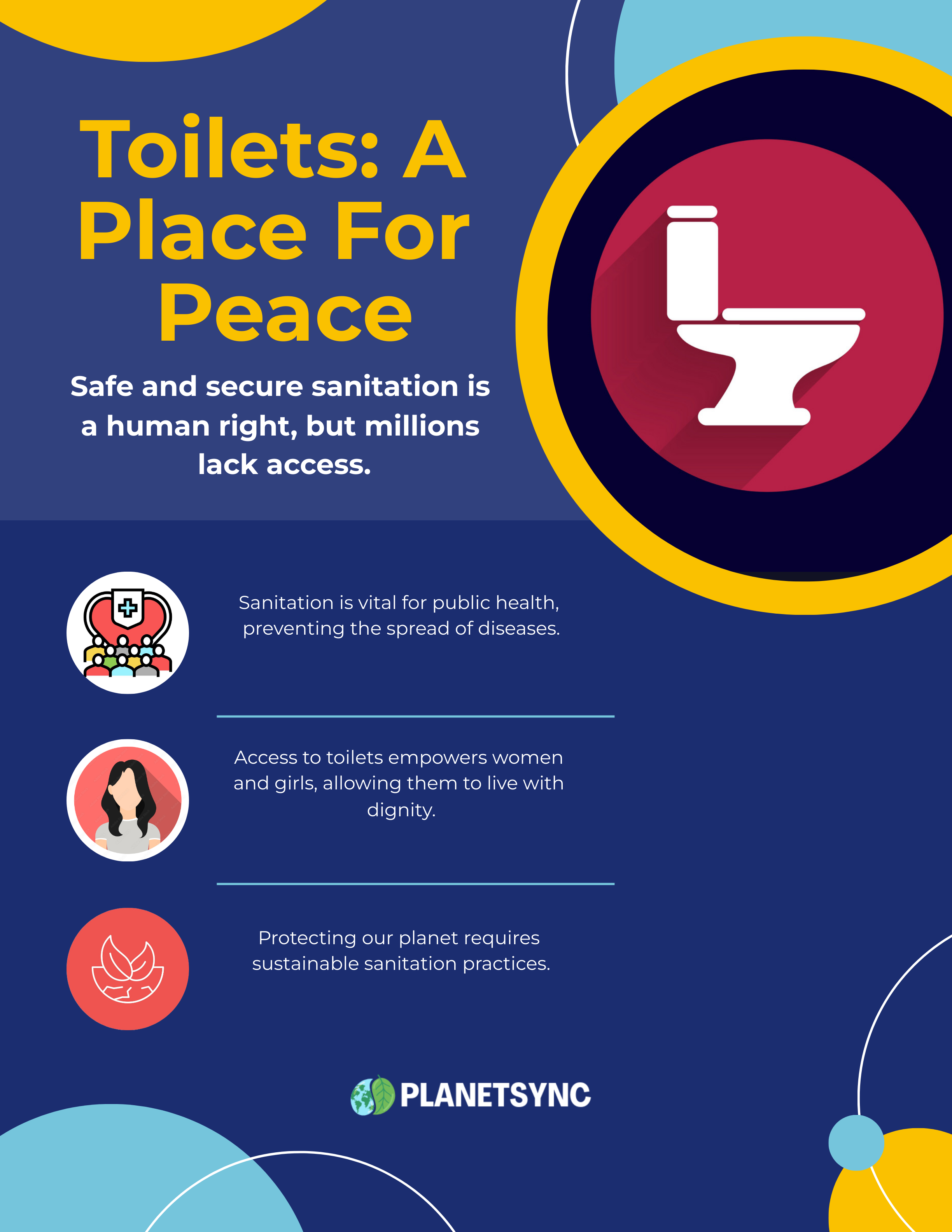
On World Toilet Day 2024, we pause to reflect on the significance of a basic yet vital part of daily life: toilets. This year’s theme, “Toilets as a Place for Peace,” highlights how safe, secure, and accessible sanitation transforms lives and contributes to a fairer, healthier, and more peaceful world. Yet, for billions of people, proper sanitation remains a privilege rather than a universal right.
The Global Sanitation Crisis
Despite progress, the world is far from achieving Sustainable Development Goal (SDG) 6, which calls for clean water and sanitation for all by 2030. Here are the stark realities:
- 3.5 billion people lack access to safely managed sanitation services, compromising health and dignity.
- 419 million people still practice open defecation, facing not just health risks but also a loss of safety and privacy.
- Climate change, conflicts, and disasters are further weakening fragile sanitation infrastructure, leaving millions more at risk.
Toilets are more than just convenience—they are crucial to protecting public health, preserving human dignity, and ensuring environmental sustainability. Failing to address the global sanitation crisis could have devastating consequences for individuals and communities alike.
Why Toilets Matter
- A Place for Protection: Toilets act as our first line of defense against hazardous waste. When properly managed, they prevent pathogens from entering water supplies, reducing the risk of diseases like cholera, diarrhea, and hepatitis. A failure in sanitation systems leads to widespread environmental and public health crises.
- A Place for Dignity: Sanitation is a recognized human right. Access to clean and safe toilets empowers individuals, especially women and girls, who face significant challenges without these facilities. A lack of safe sanitation affects their privacy, safety, and access to education, perpetuating cycles of inequality.
- A Place for Progress: Sanitation is the foundation for healthier communities. Functioning toilets reduce healthcare costs, enhance productivity, and promote equity. From improving school attendance to safeguarding public health, toilets drive progress and sustainable development.
The Threats to Sanitation
Sanitation systems worldwide face numerous challenges:
- Climate Change: Rising sea levels, floods, and droughts compromise sanitation infrastructure, leaving millions without access.
- Conflicts and Disasters: War and natural calamities disrupt existing systems, exposing vulnerable populations to disease outbreaks.
- Neglect and Underfunding: Poorly maintained or outdated facilities fail to meet the needs of growing populations, widening the gap between those with and without access.
When sanitation systems collapse, communities are hit hardest by disease, water contamination, and environmental harm. It is essential for governments to prioritize resilient infrastructure to withstand these challenges, ensuring access to sanitation even in times of crisis.
What Needs to Be Done
To achieve universal access to safe toilets by 2030, immediate and coordinated action is required:
- Invest in Sanitation Systems: Governments and organizations must allocate substantial funding to build, maintain, and expand sanitation infrastructure, ensuring equitable access for marginalized communities.
- Design Resilient Infrastructure: Sanitation systems should be climate-resilient and disaster-proof, ensuring uninterrupted services during floods, droughts, and conflicts.
- Promote Awareness and Advocacy: Public campaigns can highlight the importance of sanitation and drive collective action. Strong advocacy efforts can push governments and stakeholders to prioritize the sanitation agenda.
- Empower Women and Girls: Addressing the unique sanitation needs of women and girls is critical. Access to safe toilets ensures their dignity, safety, and equal participation in education and economic opportunities.
Towards a Future with Safe Sanitation for All
On World Toilet Day 2024, let us acknowledge the profound role toilets play in building a healthier and more equitable world. Toilets are not merely functional spaces—they are essential for dignity, safety, and peace. As we work toward achieving SDG 6, it is imperative to remember that sanitation is a universal right, not a privilege.
Governments, organizations, and individuals must collaborate to accelerate progress. By investing in sanitation infrastructure, raising awareness, and promoting inclusive policies, we can bridge the gap and ensure that everyone, everywhere, has access to safe toilets by 2030. Only through collective action can we realize a world where sanitation is no longer a barrier to health, dignity, and peace.


 planetsync.blog
Leave a comment