

In a time when environmental sustainability is more critical than ever, recycling has become a critical component of climate action. Often underestimated, your recycling bin is a gateway to conserving resources, reducing emissions, and supporting a circular economy that minimizes waste. By taking small, informed steps, you contribute to a collective effort that can drive systemic change.
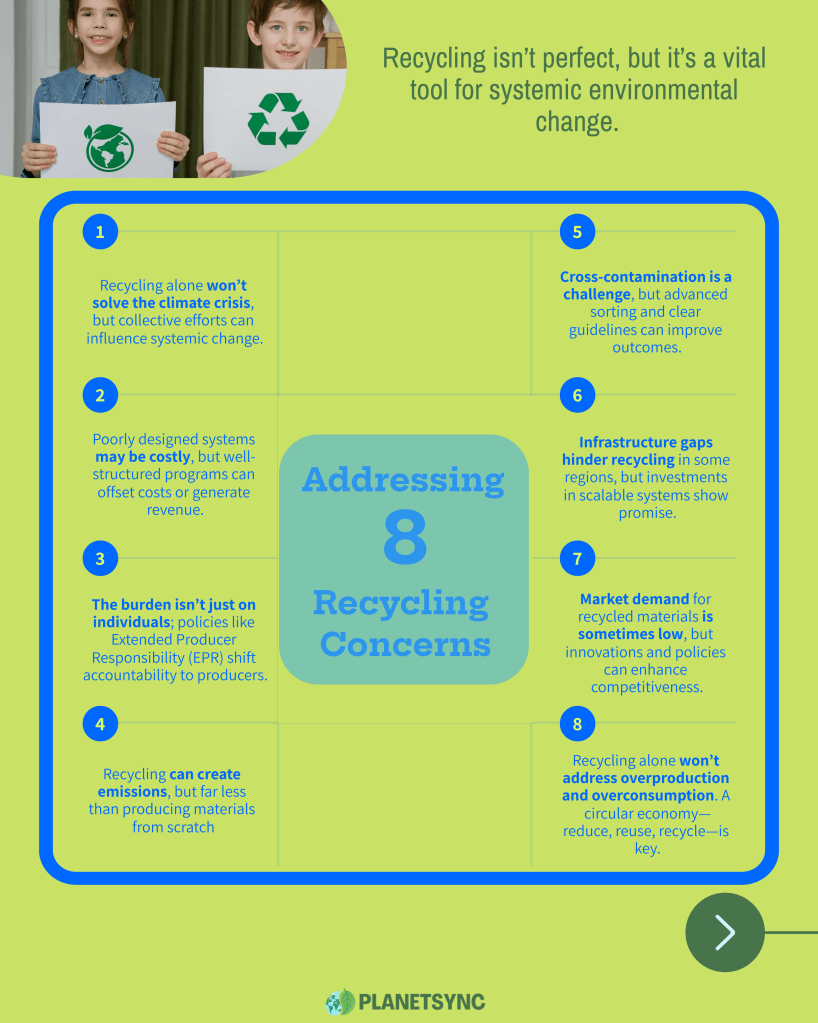
Need the Gist? Check out the infographic below for a quick, visual summary of the key points!



Recycling Benefits
Recycling is not just a feel-good action; it is a way to conserve energy, reduce resource extraction, and mitigate greenhouse gas emissions. However, its effectiveness depends on the type of material, recycling technologies, and the efficiency of local systems. Here’s what the data tells us:
- Plastics: Recycling plastics can reduce energy consumption by 50% to 80% compared to virgin plastic production.
- Glass: Recycling glass reduces energy consumption by approximately 25-30% compared to production from raw materials. This efficiency can vary based on contamination levels and transportation distances.
- Paper and Cardboard: Recycling paper conserves approximately 40% of the energy needed to produce new paper from virgin pulp, while also saving water and reducing deforestation.
- Clothing and Textiles: Recycling textiles is challenging due to fiber blends, but advancements in Europe have made progress. Around 40% of discarded textiles are now collected for recycling, with innovative methods like fiber regeneration enhancing reuse.
These data points make one thing clear: recycling is not merely symbolic. When thoughtfully studied, effectively implemented, and rigorously evaluated, it conserves resources, reduces emissions, and plays a crucial role in a sustainable future. Localized studies are essential for fine-tuning regional strategies, but the broader environmental benefits are undeniable.
Addressing Common Concerns About Recycling
- “Recycling Alone Won’t Solve the Climate Crisis”
True. Systemic changes are essential to addressing the climate crisis. However, dismissing individual actions underestimates their cumulative impact. Aggregated efforts can influence corporate policies, shift market demand toward sustainable practices, and stimulate legislative progress.
- “Recycling Is Costly for Local Governments”
Partially true. Poorly designed systems can be costly. However, well-designed recycling programs, particularly those incorporating Extended Producer Responsibility (EPR), can offset costs or even achieve profitability. For instance, Sweden’s integration of recycling with waste-to-energy systems not only achieves high recycling rates but also generates revenue through energy production.
- “Recycling Places the Burden on Individuals”
False. While consumers play a role, EPR policies in the EU and other regions shift significant accountability to producers. These policies require manufacturers to manage the lifecycle of their products, including disposal. EPR frameworks lead to higher recycling rates, improved waste management systems, and reduced consumer responsibility.
- “Recycling Generates Pollution”
Partially true. Recycling processes do produce emissions, but these are substantially lower than those from producing materials from virgin resources. For example, recycling aluminum emits approximately 5% of the CO₂ associated with primary aluminum production. Localized recycling facilities further minimize emissions from transportation.
- “Cross-Contamination Reduces Recycling Quality”
True. Contamination is a challenge, but solutions exist. Investments in advanced sorting technologies, clearer public guidelines, and improved infrastructure can minimize contamination and maintain high-quality recycled materials.
- “Limited Recycling Infrastructure Remains a Challenge in Many Regions”
True. Infrastructure gaps, particularly in low-income regions, hinder recycling efficiency. Expanding capacity requires policy support and investment. Successful examples from Sweden and Germany demonstrate how robust infrastructure can create efficient, scalable systems.
- “Limited Demand for Recycled Materials Can Lead to Landfill Disposal”
Partially true. Market demand for recycled materials is sometimes insufficient, leading to disposal challenges. However, policy interventions, such as mandatory recycled content requirements, and innovations like chemical recycling, are addressing these issues. Studies suggest that these measures enhance the competitiveness of recycled materials.
- “Recycling Alone Cannot Address Overproduction and Overconsumption”
True. Recycling is just one piece of the puzzle. A comprehensive circular economy approach—emphasizing reduction, reuse, and recycling—is essential. Combining these strategies significantly amplifies environmental benefits.
Despite these challenges, recycling remains an indispensable component of climate action. Through systemic improvements, technological advancements, and public engagement, recycling can realize its full potential to conserve resources, reduce emissions, and support a sustainable future.
Practical Steps You Can Take
- Recycle Correctly: Adhere to local recycling guidelines to minimize contamination.
- Reduce and Reuse: Choose products with minimal packaging and support brands adopting circular economy principles.
- Advocate for Systemic Change: Engage with policymakers to promote stricter EPR enforcement, increased investment in recycling infrastructure, and support innovative technologies.
Recycling Could Work
Recycling, though not a standalone solution, is a vital element of comprehensive climate action. Its benefits in reducing emissions, conserving resources, and fostering sustainability are well-supported by evidence. To maximize its impact, both public education and systemic improvements are necessary. By participating in recycling systems and advocating for advancements, individuals contribute to a collective effort aligned with Europe’s climate goals.
Together, we can make informed choices to support a sustainable future and combat the climate crisis effectively.
References & Resources
- European plastics production, demand, conversion and end-of-life management
- Environmental statement 2023
- Circular economy action plan
- Europe’s circular economy in facts and figures
- The Plastics Transition
- How Circular is Glass?
- A Mapping of Textile Waste Recycling Technologies in Europe and Spain
- Management of used and waste textiles in Europe’s circular economy
- Aluminium Industry Dashboard
- Recycling municipal waste in Germany


 planetsync.blog
Leave a comment