


For millions worldwide, boiling tap water is a common practice. But is it always necessary? The answer largely depends on where you live and the local water quality. In European Union (EU) countries, stringent water quality standards make boiling unnecessary in most cases. However, in many other parts of the world, boiling water can be a critical step in ensuring safe drinking water.
Need the Gist? Check out the infographic below for a quick, visual summary of the key points!

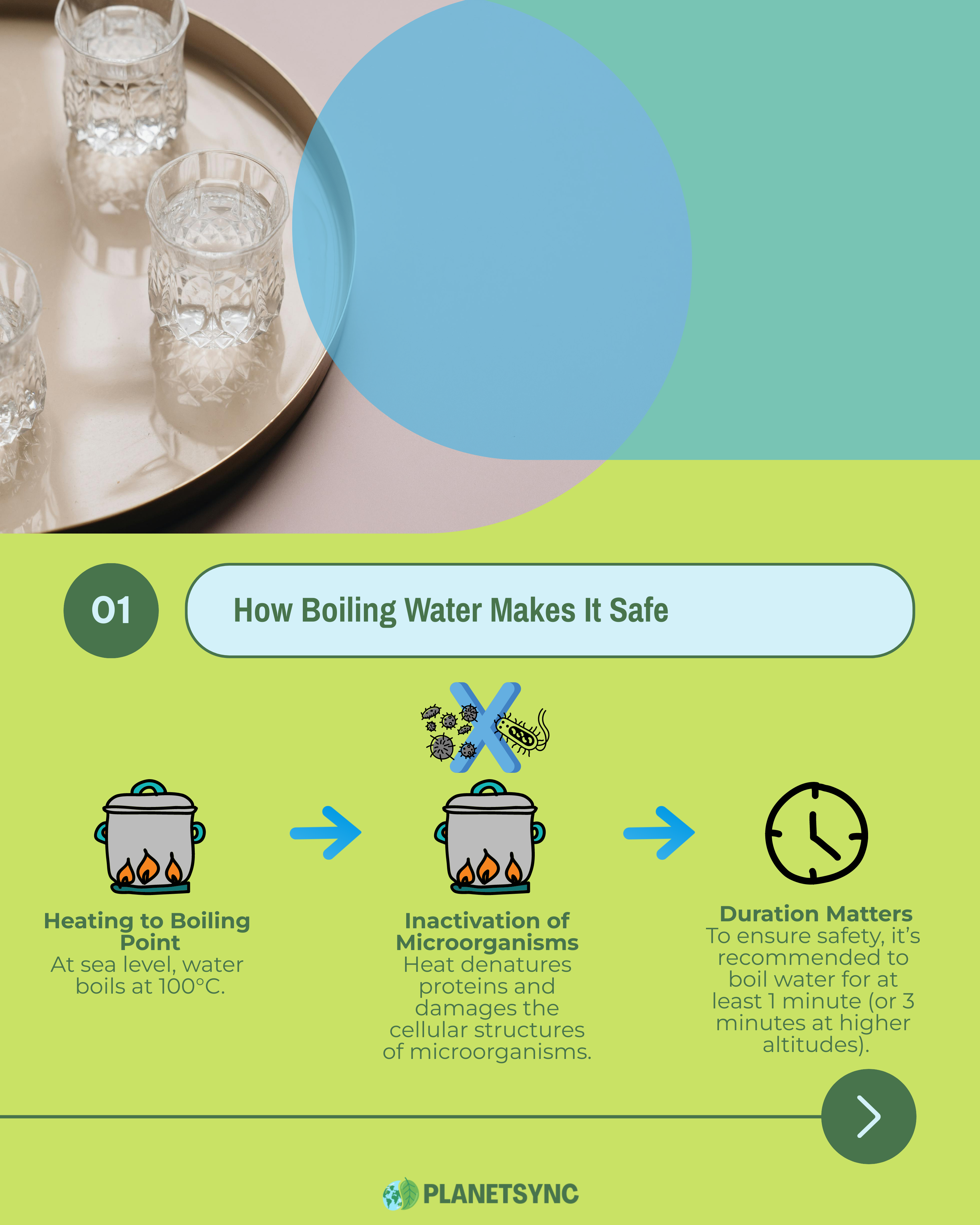


How Boiling Water Makes It Safe
Boiling water is one of the simplest and most effective ways to ensure its safety. But what exactly happens when water is boiled?
- Heating to Boiling Point: At sea level, water boils at 100°C. This temperature is high enough to inactivate most waterborne pathogens.
- Inactivation of Microorganisms: Heat denatures proteins and damages the cellular structures of bacteria, viruses, and parasites, rendering them inactive.
- Duration Matters: To ensure safety, it’s recommended to boil water for at least one minute (or three minutes at higher altitudes). This exposure guarantees that any remaining pathogens are destroyed.
When Boiling Water Is Effective
Boiling is particularly effective for neutralizing microbiological contaminants, including:
- Bacteria: Pathogens such as E. coli and Salmonella are inactivated at boiling temperatures.
- Viruses: Waterborne viruses, including norovirus and hepatitis A, are neutralized when exposed to boiling temperatures.
- Parasites: Protozoan pathogens like Giardia lamblia and Cryptosporidium parvum are effectively inactivated by boiling.
Limitations of Boiling Water
While boiling is effective against microbiological hazards, it has limitations:
- Chemical Contaminants: Boiling does not remove harmful chemicals such as heavy metals (e.g., lead, mercury, arsenic) or persistent organic pollutants (e.g., pesticides, industrial residues).
- Particulate Matter: Dirt, sand, and debris remain in the water after boiling.
- Dissolved Salts and Minerals: Boiling does not eliminate dissolved salts or minerals and can even concentrate them due to evaporation.
- Energy Dependence: Boiling water requires a heat source, such as gas, electricity, or firewood, which may not be accessible during power outages or in low-resource settings.
- Time and Effort: Boiling large quantities of water for daily household use can be time-consuming.
Boiling Water is Rarely Necessary in the EU
EU countries have some of the highest water quality standards globally, thanks to the EU Drinking Water Directive. This framework enforces strict safety measures across member states, ensuring that tap water is potable in most European households. Advanced water treatment processes and frequent quality testing further uphold these high standards. Therefore, under normal circumstances, boiling is unnecessary in the EU. However, exceptions may arise in cases of:
- Emergencies: Natural disasters, flooding, or infrastructure failures can temporarily compromise water safety.
- Localized Contamination: Specific areas may experience contamination events or outbreaks of waterborne illnesses.
- Remote Travel: Accessing untreated water sources in rural or isolated locations.
- Aging or Poor Plumbing: Older or poorly maintained plumbing systems can introduce contaminants into the water supply.
Boiling Water is a Tool for Water Safety in Many Contexts Worldwide
Globally, access to safe drinking water remains a significant challenge. According to the World Health Organization (WHO) and UNICEF, billions lack access to safely managed drinking water, making boiling an essential practice in:
- Low-Resource Settings: In regions without reliable water treatment infrastructure, boiling is an accessible method for pathogen inactivation.
- Post-Disaster Scenarios: Natural disasters like earthquakes, floods, and hurricanes often lead to microbiological contamination of water supplies. Boiling can mitigate these risks.
- Rural Communities: For those relying on untreated surface water or groundwater, boiling can significantly reduce the risk of waterborne diseases.
Complementary Water Treatment Methods
While boiling is effective, it may not address all concerns. Additional treatments might be necessary, depending on local water quality.
EU countries: Rarely Necessary
In most cases, home water treatment is not necessary for safety. However, some households may choose to use filters or purifiers to improve taste, reduce unpleasant odors (such as chlorine), or mitigate the effects of hard water (like scale buildup).
Worldwide: May Be Necessary
In regions with limited or unreliable water treatment systems, or during specific circumstances, methods such as filters, purifiers, or chemical disinfectants can serve as valuable complements to boiling by addressing a wider range of contaminants. To ensure their effectiveness, it is essential to prioritize proper installation, routine maintenance, and correct usage of these tools.
Adapting Water Safety Practices to Local Needs
The need to boil tap water depends on where you live and the quality of your water supply. By understanding how boiling works and its limitations, you can adapt your water safety practices effectively. In regions with high-quality municipal water, boiling is rarely required. However, in areas with compromised or untreated water supplies, it remains a vital tool for health and well-being.


 planetsync.blog
Leave a comment