


According to the World Health Organization (WHO), unsafe drinking water, poor sanitation, and inadequate hygiene contribute to over 1 million deaths each year, primarily in low- and middle-income countries. Many of these deaths result from waterborne diseases caused by bacteria, viruses, and parasites.
Even in countries with strict water regulations, challenges persist. In the United States, for example, the Environmental Protection Agency (EPA) estimates that 6–10 million homes still rely on lead service lines, posing potential contamination risks.
Understanding your water source, potential contaminants, and the importance of water testing is crucial for ensuring its safety. With this knowledge, individuals can make informed choices, take steps to protect their health, and advocate for stronger water quality standards.
Need the Gist? Swipe through the visuals below for a quick summary!


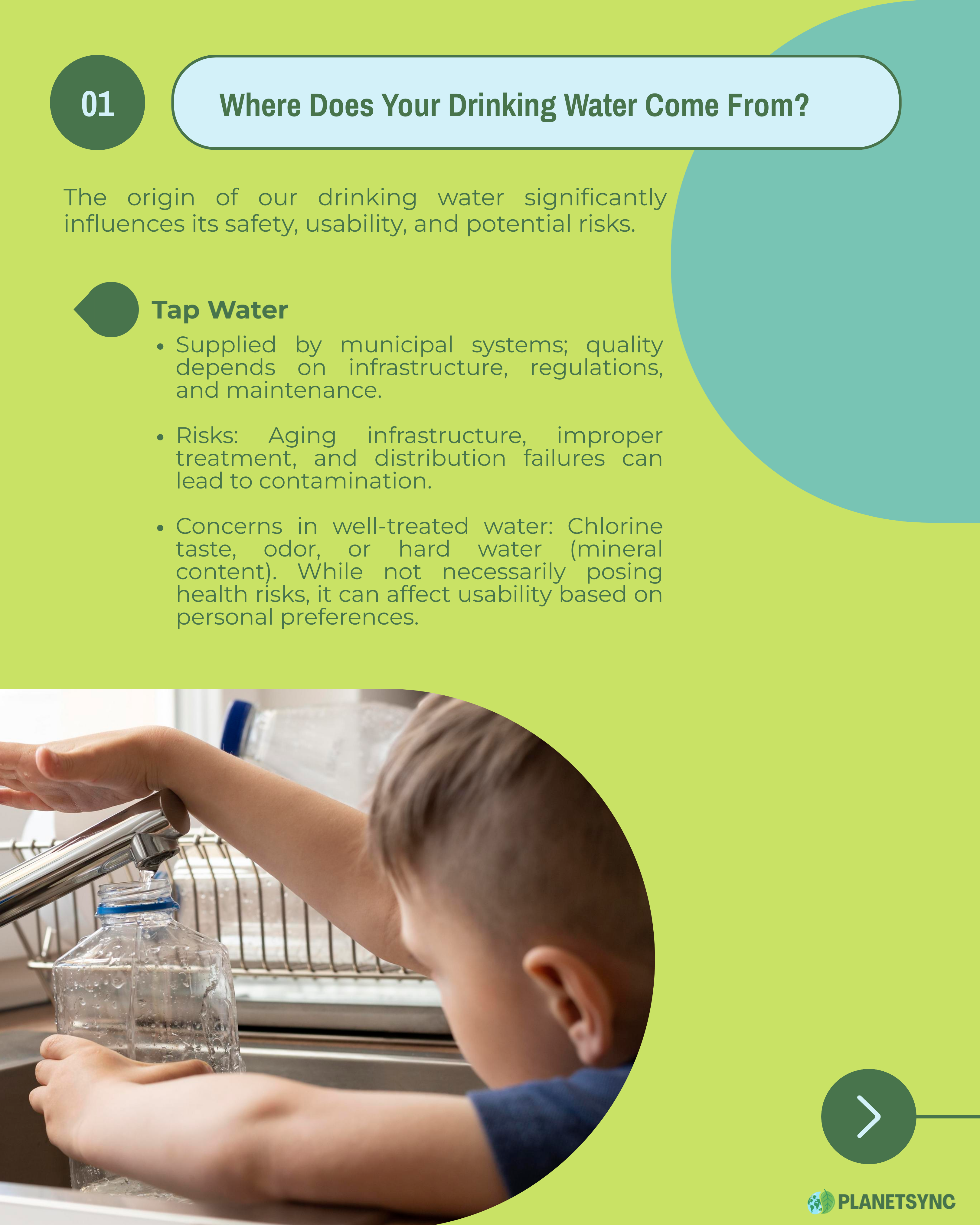


Where Does Your Drinking Water Come From?
The safety and quality of your drinking water start with its source. Each source presents unique benefits and risks, from natural contamination to pollution caused by human activities.
By understanding where your water comes from and the potential risks involved, you can take steps to ensure its safety, whether that means using filtration, testing regularly, or staying informed about local water quality reports.
Tap Water: Quality Depends on Infrastructure and Regulation
Tap water is typically supplied by municipal water systems that treat and distribute water to homes and businesses. Its quality depends on regional infrastructure, regulatory standards, and maintenance.
In well-regulated areas, municipal water is subject to rigorous regulations and treatment processes designed to ensure safety. However, regulatory frameworks are not foolproof and aging infrastructure, improper treatment, and distribution system failures can still lead to contamination. Additionally, treated water can have characteristics such as a chlorine taste, odor, or mineral content (e.g., hard water) that, while not posing health risks, can affect usability based on personal preferences.
In areas with aging infrastructure, inadequate treatment facilities, or weak regulatory oversight, the challenges are more severe. Contaminants may persist due to inconsistent purification processes, outdated distribution systems, or insufficient monitoring. In such areas, people are at greater risk of exposure to harmful substances, making water quality a critical concern.
Groundwater: Naturally Filtered but Susceptible to Contamination
Groundwater, sourced from wells, benefits from natural filtration as water passes through layers of soil and rock. However, this process does not guarantee safety. Groundwater can accumulate naturally occurring contaminants like arsenic, radium, or iron, which vary by geological conditions. Additionally, human activities, such as intensive farming and industrial operations, can introduce pollutants like nitrates, pesticides, and other chemicals into aquifers, compromising water quality. Therefore, testing and treatment are often essential to ensure safe drinking water.
Surface Water: Exposed and Highly Susceptible to Contamination
Surface water, drawn from rivers, lakes, and reservoirs, is highly exposed to environmental and human-induced contamination. Natural processes such as sedimentation, organic matter decay, and microbial activity (including bacteria and algae) can degrade its quality. Human activities further intensify these risks. Agricultural runoff introduces fertilizers and pesticides, industrial discharge releases heavy metals and toxic chemicals, and urban runoff carries oil, microplastics, and other pollutants. Additionally, inadequate wastewater treatment can introduce pathogens and excess nutrients, which contribute to harmful algal blooms and further degrade water quality.
Due to its high exposure to contaminants, surface water requires extensive treatment before it is safe for drinking. Some communities, especially those in resource-limited settings, may lack adequate purification systems, forcing residents to rely on untreated water, which increases the risk of waterborne diseases. This lack of access to safe treatment is a global crisis: according to WHO, in 2022, globally, at least 1.7 billion people use a drinking water source contaminated with feces.
Rainwater: Sustainable but Requires Proper Treatment
Rainwater harvesting is a sustainable water source, especially in areas with limited groundwater or surface water. However, simply collecting rainwater isn’t enough for safe drinking. Several factors must be carefully considered. First, air quality plays a crucial role. Rain can absorb airborne pollutants, so if the air is heavily polluted, the rainwater will be too. Second, the collection surface matters. Rooftops, for example, can harbor organic debris, bird droppings, and bacteria, which rain will wash into a storage tank. Third, proper storage is essential. The tank should be clean and prevent sunlight from reaching the water, as sunlight can promote algae growth. Finally, and most importantly, treatment is a must. Untreated rainwater may contain harmful contaminants. Effective filtration to remove particles and debris, followed by disinfection to inactivate harmful pathogens, is crucial for making rainwater safe for human consumption.
Seawater: Abundant but Challenging to Use
Seawater covers more than 70% of our planet, making it seem like an abundant water source. But its high salt content makes it undrinkable without treatment. Beyond salt, seawater contains dissolved minerals, organic matter, and microorganisms such as bacteria, viruses, and algae. Coastal waters are especially vulnerable to pollution from industrial discharge, agricultural runoff, and sewage, making treatment even more critical.
Turning seawater into safe drinking water requires desalination, the process of removing salt and impurities. Unlike filtering tap water or boiling river water, isn’t something you can do at home. It requires specialized equipment, high-pressure systems, and advanced filtration technology, making it a process that only large-scale facilities can handle efficiently.
Despite technological advancements, desalination comes with trade-offs. It is energy-intensive, making it significantly more expensive than treating freshwater sources. Additionally, it produces brine, a concentrated salt byproduct that, if not managed properly, can harm marine ecosystems by increasing local salinity and reducing oxygen levels.
What’s Next?
Understanding the source of your drinking water is only the first step. While the origin of your water plays a significant role in its quality, external factors can also profoundly impact its safety and usability. In the next section, we’ll explore these additional influences on water quality and discuss when testing is necessary.


 planetsync.blog
Leave a comment