


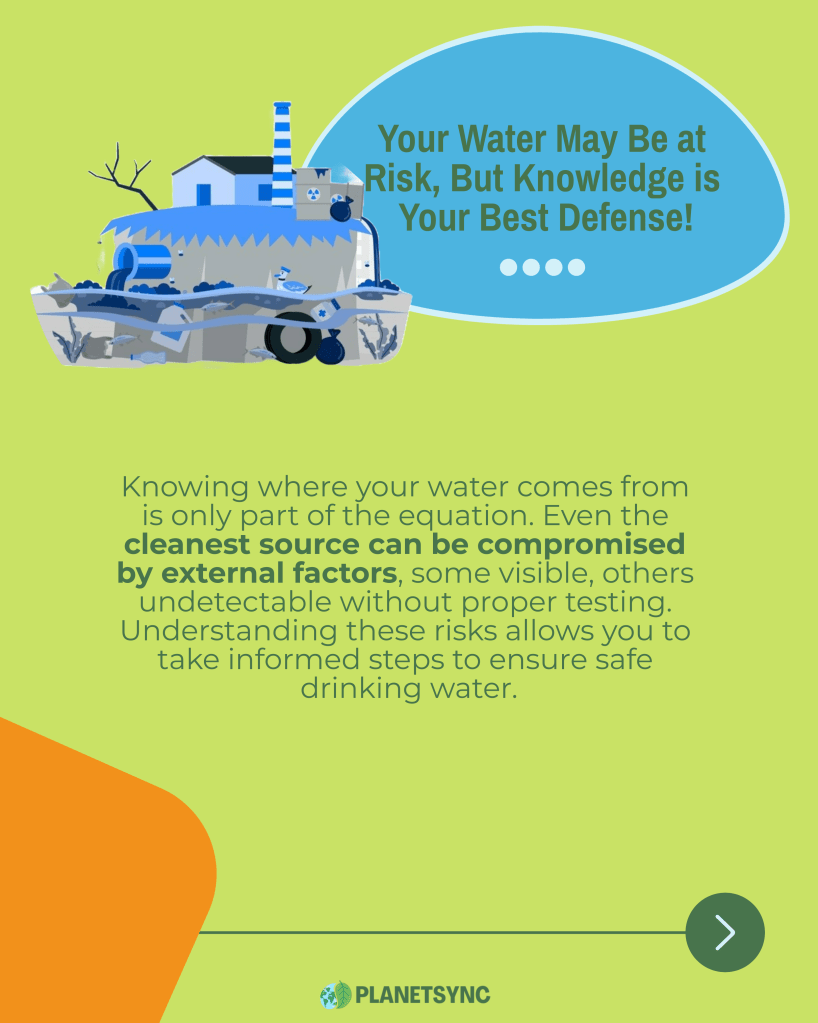
In Part I, we explored the different sources of drinking water, each with its own challenges and vulnerabilities. However, knowing where your water comes from is only part of the equation. Even the cleanest water source can be compromised by external factors. While some of these factors may be beyond your direct control, understanding them is crucial because they can impact the safety and quality of the water you rely on daily. By recognizing these risks, you can take proactive steps to safeguard your health. In this section, we’ll explore these external influences in detail and discuss when and why testing your water is a critical step in ensuring its safety and reliability.
Need the Gist? Swipe through the visuals below for a quick summary!
How External Factors Can Affect Your Drinking Water
While you can’t directly control all the factors that affect water quality and safety, understanding them is crucial. Several external factors, beyond the original source, can impact your water, though not all apply to every source. Knowing these potential risks allows you to make informed decisions about water treatment, testing, and ultimately, your family’s health.
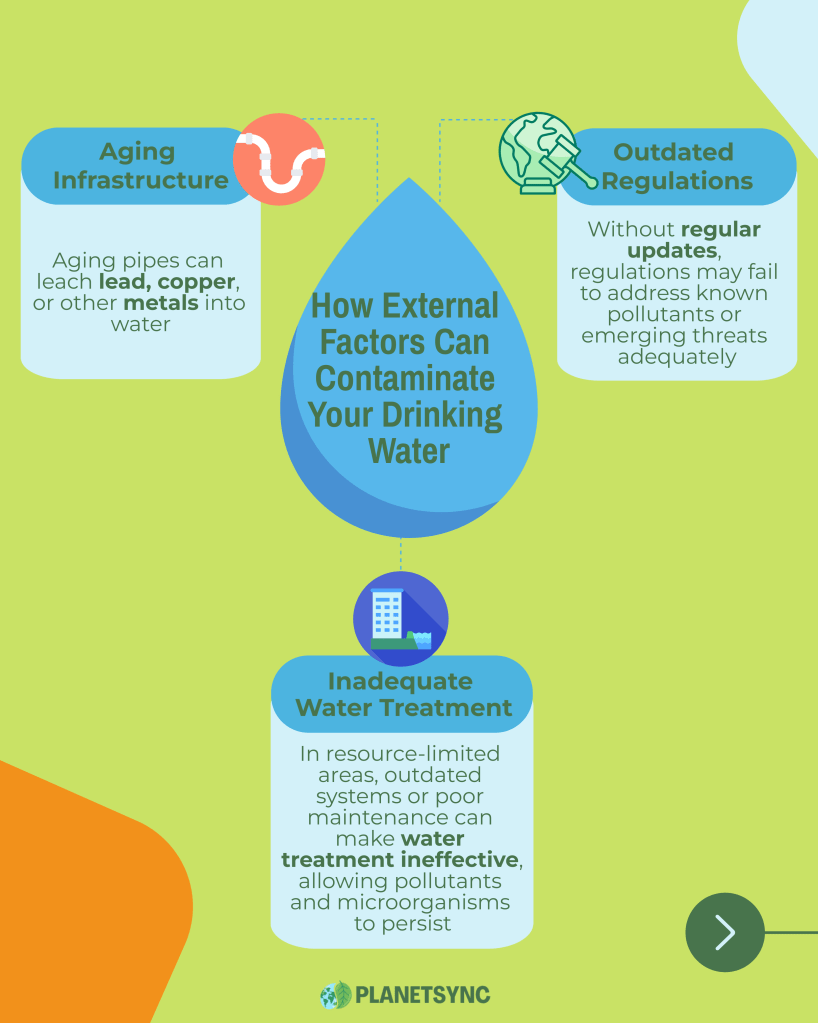
Aging Infrastructure
Aging water infrastructure is a significant concern in many regions. Even if water leaves the treatment plant clean, contamination can occur during distribution due to corroded pipes that leach trace amounts of lead, copper, or other metals. These issues are often localized and monitored in regions with strict water management practices but can have widespread implications in areas with inadequate maintenance and monitoring.
Outdated Regulations
Water quality regulations and standards vary worldwide and may not always keep pace with the latest scientific research. In some areas, existing contaminant limits may need to be revised as new evidence reveals health risks at lower concentrations. Without regular updates, regulations may fail to adequately address known pollutants or emerging threats, leaving communities vulnerable.
Inadequate Water Treatment
In areas with limited resources, outdated systems, or poor maintenance, water treatment may be inconsistent or ineffective. This can allow pollutants and microorganisms to pass through the system, posing serious health risks. In the most vulnerable communities, access to treated water may be unreliable or nonexistent, forcing reliance on untreated surface water and significantly increasing exposure to contaminants.
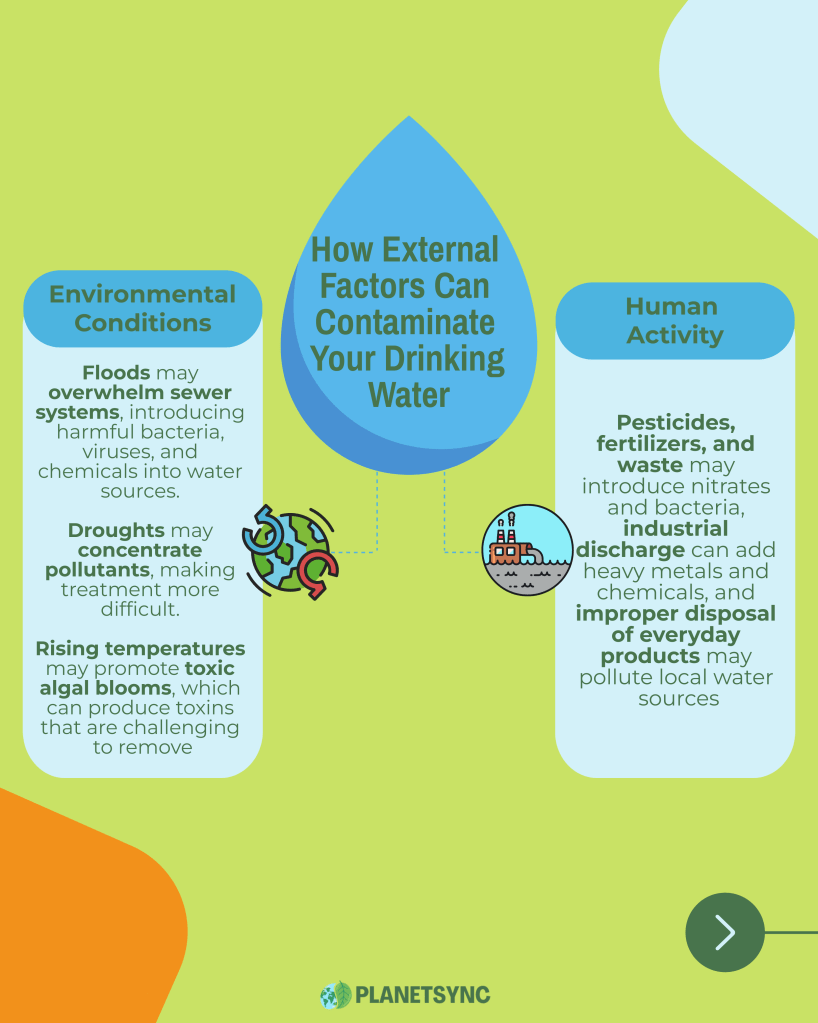
Environmental Conditions
Natural events such as floods, droughts, and seasonal changes can significantly affect water quality. Floods and heavy storms are particularly concerning in cities with combined sewer systems, where stormwater and sewage share the same pipes. During intense rainfall, these systems can overflow, releasing untreated sewage into rivers and lakes, potentially contaminating drinking water sources with harmful bacteria, viruses, and chemicals.
Droughts pose a different but equally serious challenge. Pollutants become more concentrated as there isn’t enough water to dilute them, making treatment more challenging.
Seasonal changes, particularly rising temperatures, can also degrade water quality. Warmer conditions promote the growth of harmful algal blooms, some of which produce toxins that are difficult to remove through conventional treatment processes. These toxins can compromise drinking water safety and require advanced purification methods to address effectively.
Human Activity
Agriculture, industry, and household habits all contribute to contamination. Pesticides, fertilizers, and waste introduce nitrates and bacteria, while industrial discharge adds heavy metals and chemicals. Even everyday household activities, such as improper disposal of cleaning products, pharmaceuticals, or personal care items, can contribute to the presence of contaminants in local water sources.
Should You Test Your Drinking Water?
Understanding when to test your water can help identify risks and ensure its safety.
When Testing is Necessary
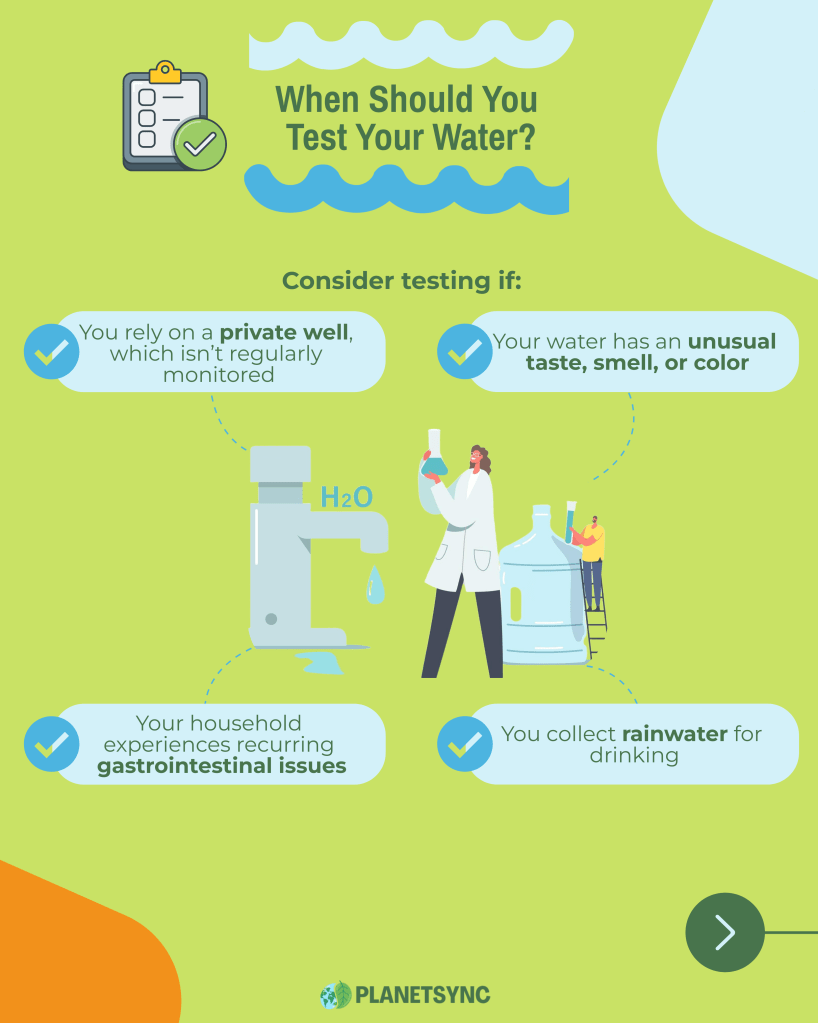
- If you rely on a private well, which lacks routine regulatory oversight and requires testing do detect bacteria, nitrates, heavy metals, and other pollutants, particularly if the well is near agricultural, industrial, or waste disposal sites.
- If your tap water has an unusual taste, color, or odor, as these could indicate contamination. Testing can help pinpoint the source of the problem.
- If you use rainwater for drinking, since airborne pollutants, bacteria, and chemicals from collection surfaces can compromise its safety.
- If you or your family have recurring gastrointestinal issues that could be linked to waterborne contaminants. Testing can help determine if your water is a contributing factor.
- If you rely on untreated water (which is highly discouraged due to contamination risks), testing is crucial. But when formal testing isn’t an option, a sensory and visual check can help identify potential risks. Look for signs like a strong odor, cloudiness, unusual color, or visible algae. Before drinking, you must purify untreated water. You can do this by filtering it through a clean cloth, boiling it thoroughly, or using water purification tablets. While these methods reduce some risks, they may not eliminate all harmful contaminants.
When Testing May Not Be Needed
If you live in an area with a well-regulated public water supply and haven’t noticed any changes in water quality, testing is generally unnecessary, as utilities conduct regular monitoring and treatment to meet health and safety standards. However, it’s important to be aware that unforeseen issues can still arise. Similarly, if your household relies on a properly maintained water treatment system and you haven’t experienced recurring gastrointestinal issues or other water-related health concerns, testing might seem unnecessary. However, water quality can change over time, and regular testing is still advisable to ensure the continued effectiveness of your treatment system and the safety of your water.
How to Test Your Drinking Water
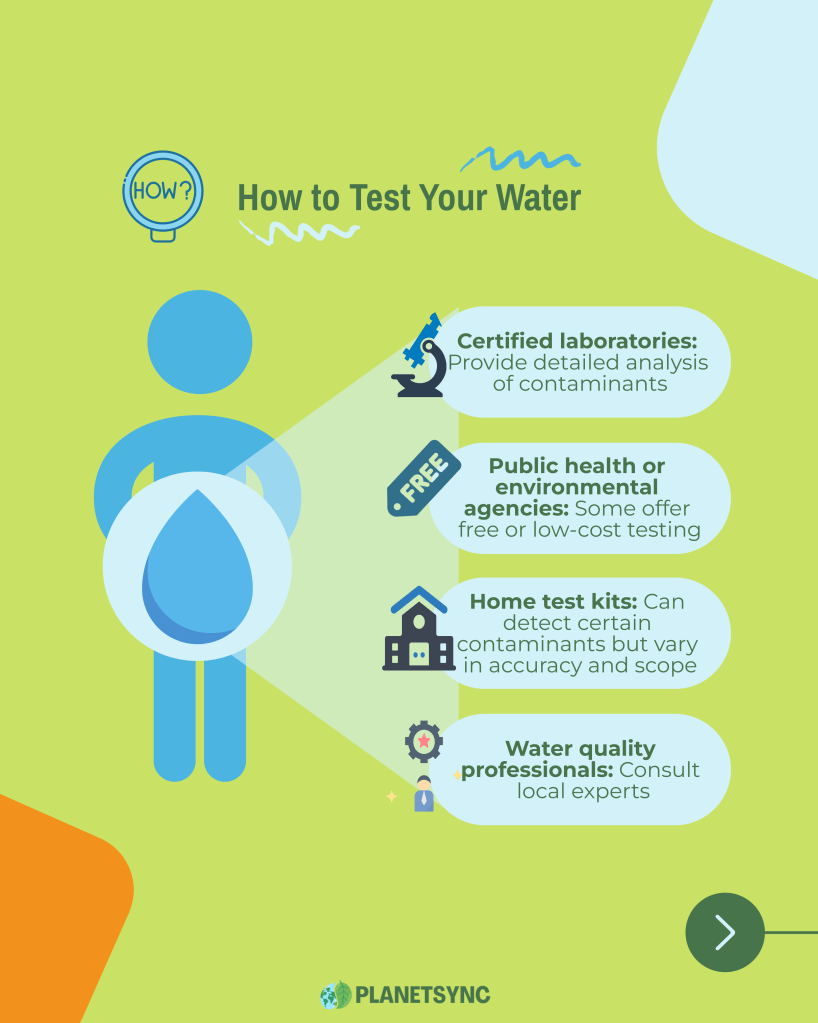
Certified laboratories can analyze your water for specific contaminants and provide detailed information on their concentrations. However, the accessibility of certified testing varies depending on location and cost. In some countries, certain local health departments or environmental agencies may offer free or low-cost water testing services or provide guidance on how to collect and submit samples. In areas where public testing services are limited, independent organizations and home testing kits may offer alternatives, though their accuracy and scope can vary. Finally, consulting local experts, such as water quality professionals, can help you interpret results effectively and navigate your choices.
Empowering Yourself Through Knowledge
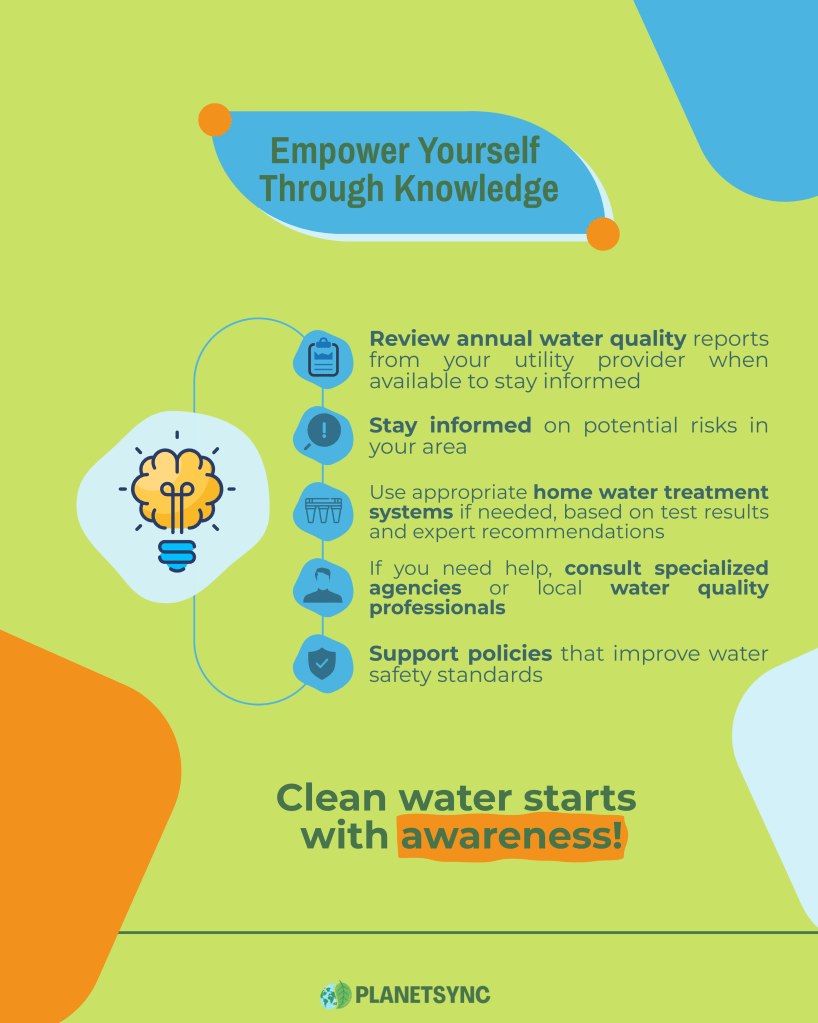
Whether your water is supplied by a utility, drawn from a private well, or sourced from another origin, being informed about the factors that affect its quality is crucial. In most cases, water testing is a critical first step in identifying potential risks. Accredited laboratories can conduct analyses to detect contaminants and assess water quality. Local health departments, environmental agencies, or extension services may provide resources, guidelines, and support to help you navigate the testing process effectively. If testing reveals issues, a tailored home water treatment system can address specific concerns.
Staying informed about your local water system is equally important. Some utility providers publish annual water quality reports, which detail the water’s source, the presence of any contaminants, and compliance with health standards. Reviewing these reports can help you understand potential risks and make informed decisions. Additionally, public notices and consultations with local experts or environmental agencies can provide insights into emerging issues or improvements in your water system.
By taking these steps, you can empower yourself with the knowledge needed to ensure the safety and quality of your water, safeguarding both your health and well-being.
References & Resources
- World Health Organization (WHO). (2022). State of the World’s Drinking Water: An Urgent Call to Action to Accelerate Progress on Ensuring Safe Drinking Water for All.
- World Health Organization. (2022). Guidelines for Drinking-water Quality: Fourth Edition Incorporating the First Addendum and second addenda.
- U.S. EPA. (2023). Lead Service Line Replacement Accelerators.
- Prüss-Ustün, A., et al. (2019). “Burden of Disease from Inadequate Water, Sanitation, and Hygiene for Selected Adverse Health Outcomes: An Updated Analysis with a Focus on Low- and Middle-Income Countries.” International Journal of Hygiene and Environmental Health.
- Richardson, S. D., & Kimura, S. Y. (2020). “Water Analysis: Emerging Contaminants and Current Issues.” Analytical Chemistry.
- European Environment Agency (EEA). (2024). Europe’s state of water 2024: the need for improved water resilience.
- Drinking water – European Commission
- Drinking-water – WHO
- Lakshmikandan, Manogaran & Li, Ming & Pan, Baozhu. (2024). Cyanobacterial Blooms in Environmental Water: Causes and Solutions. Current Pollution Reports.
- Semenza, J. C., & Ko, A. I. (2023). Waterborne diseases that are sensitive to climate variability and climate change. New England Journal of Medicine, 389(23), 2175–2187.
- Li, P., Karunanidhi, D., Subramani, T., & Srinivasamoorthy, K. (2021). Sources and consequences of groundwater contamination. Archives of Environmental Contamination and Toxicology.
- Singh, R., Andaluri, G., & Pandey, V. C. (2022). Cities’ water pollution—Challenges and controls. Algae and Aquatic Macrophytes in Cities
- Allaq, A. A. A., Mahid, H. H., Yahya , E. B., Saleh, A. M., Sidik, N. J., Abdulsamad, M. A., Saad , N. R., Elengoe , A. and Abdul-Aziz, A. (2023) “Emerging Drinking Water Borne Diseases: A Review on Types, Sources and Health Precaution”, Journal of Pharmaceutical Research International.


 planetsync.blog
Leave a comment