


As we approach International Women’s Day, it is important to highlight the challenges that disproportionately affect women and girls worldwide. One such challenge is the burden of water collection. For millions, fetching water remains an arduous daily task, limiting opportunities for education, economic participation, and overall well-being.
The “Progress on Household Drinking Water, Sanitation and Hygiene 2000-2022: Special Focus on Gender” report, published in 2023, presents a data-driven analysis of how water access is divided along gender lines. Developed by the WHO/UNICEF Joint Monitoring Programme (JMP), the report compiles internationally comparable estimates on water, sanitation, and hygiene (WASH) services across different regions, shedding light on the scale and impact of these inequalities.
This article draws from the report’s findings. By understanding the gendered dimensions of water collection, we can gain insight into a broader issue: how fundamental resources, or the lack thereof, shape lives differently based on gender. While the statistics present a stark reality, the true challenge lies in translating these numbers into meaningful action.
Need the Gist? Swipe through the visuals below for a quick summary!
The Gendered Burden of Water Collection
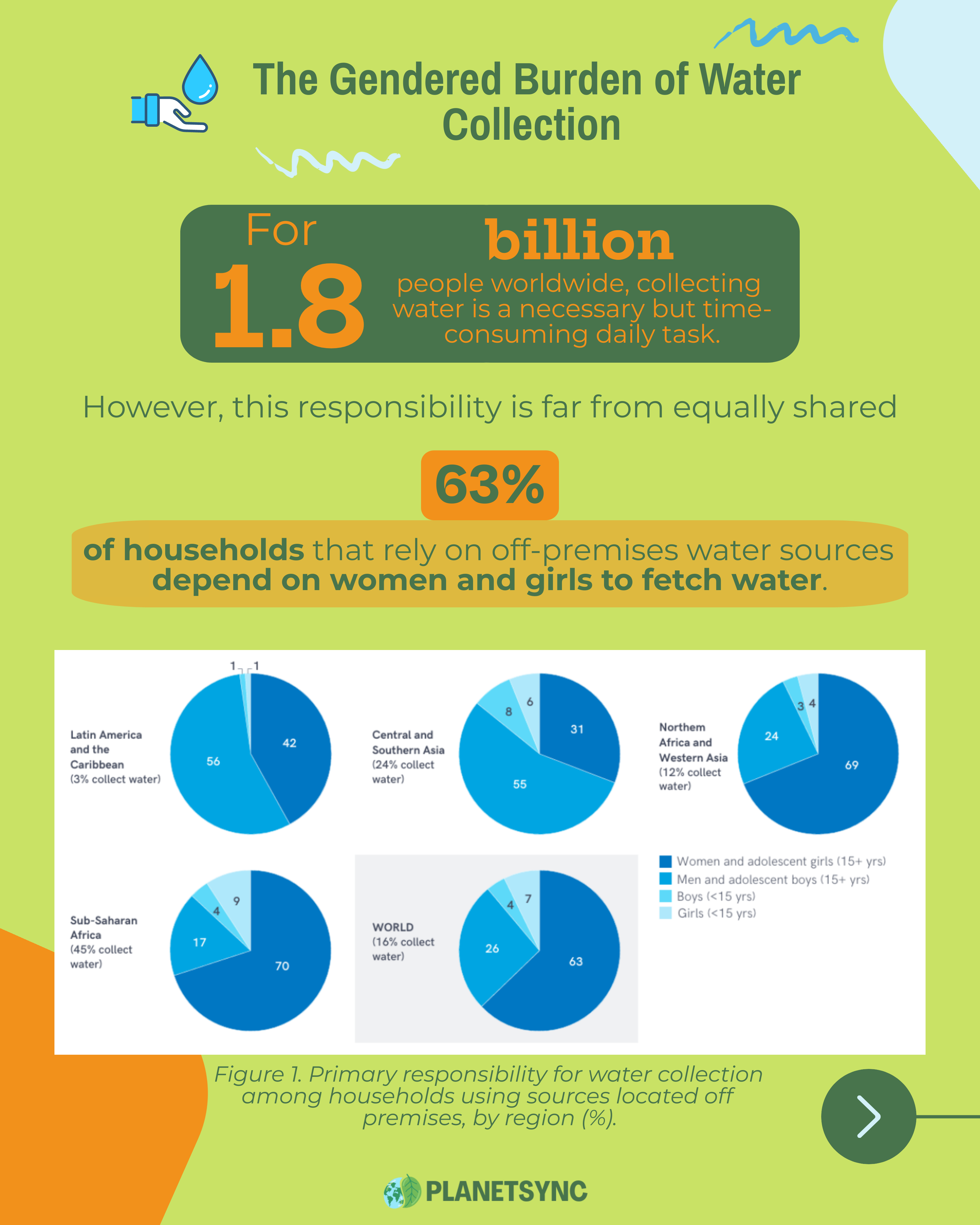
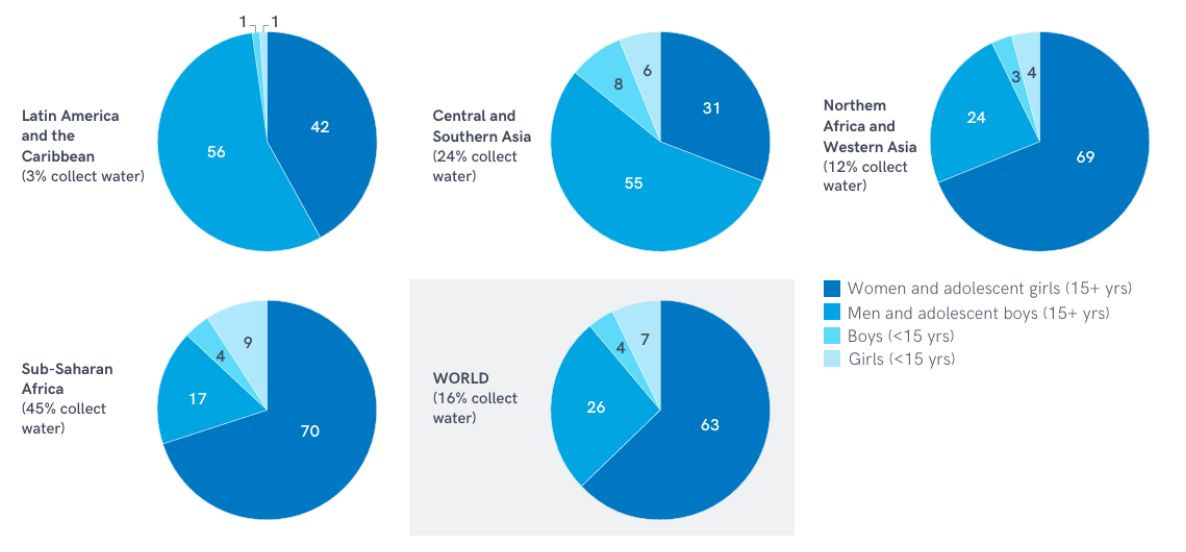
For 1.8 billion people worldwide, collecting water is a necessary but time-consuming daily task. However, this responsibility is far from equally shared. In nearly 63% of households that rely on off-premises water sources, women and girls are the primary collectors, while only 26% of households depend on men for this task.
The burden is particularly stark in certain regions. In sub-Saharan Africa, where nearly 45% of the population depends on collected water, women are four times more likely than men to take on this duty. In Central and Southern Asia, where 24% of people still collect water, the pattern remains similar, with women nearly three times more likely to be responsible. While Northern Africa and Western Asia present an exception, where men are more commonly responsible for water collection, this is an outlier rather than the global trend.
Generally, beyond adult women, girls also bear this burden disproportionately, with 7% of girls (compared to 4% of boys) tasked with fetching water, reinforcing gender disparities from an early age.
Primary responsibility for water collection among households using sources located off premises, by region (%)
Time Spent on Water Collection
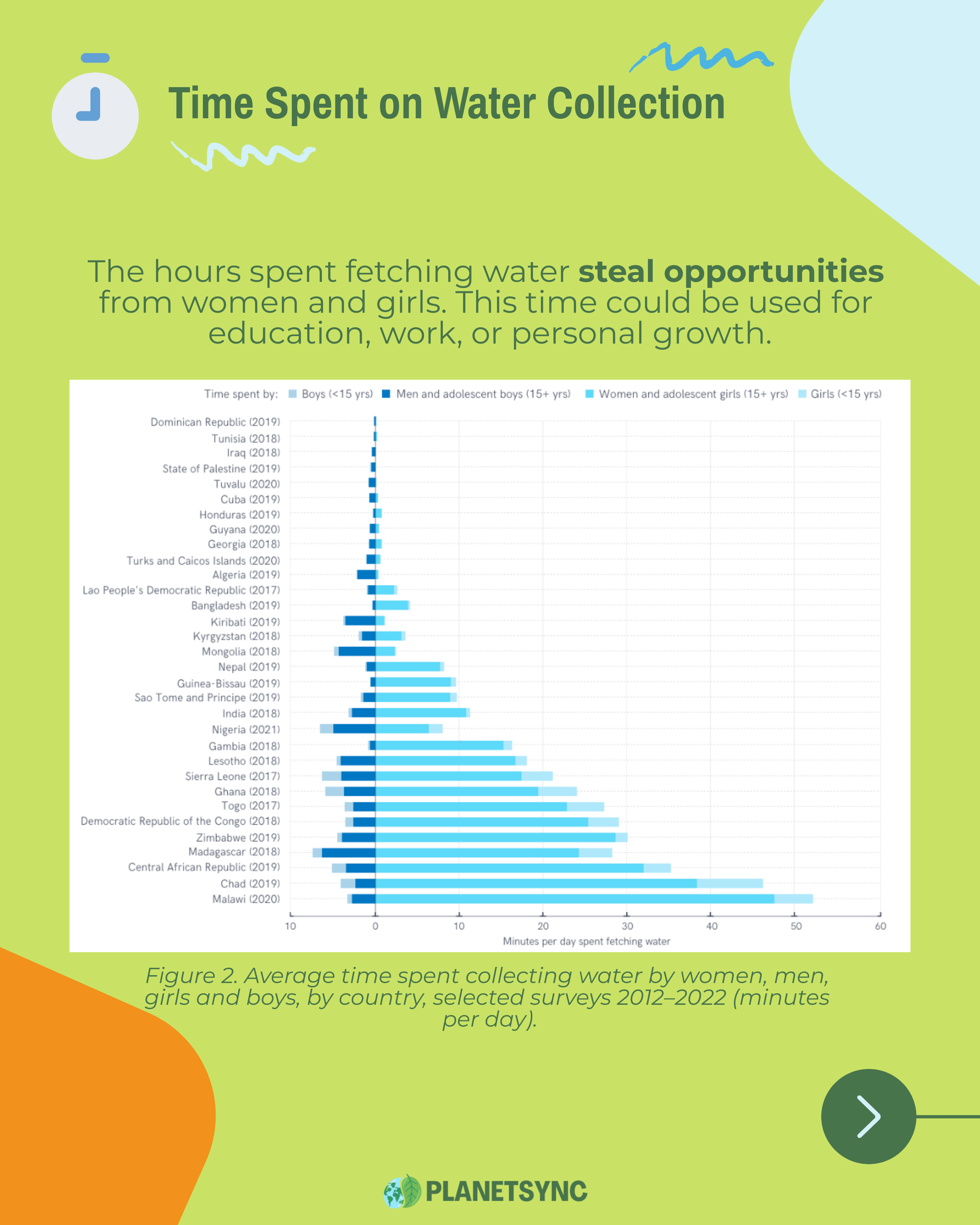
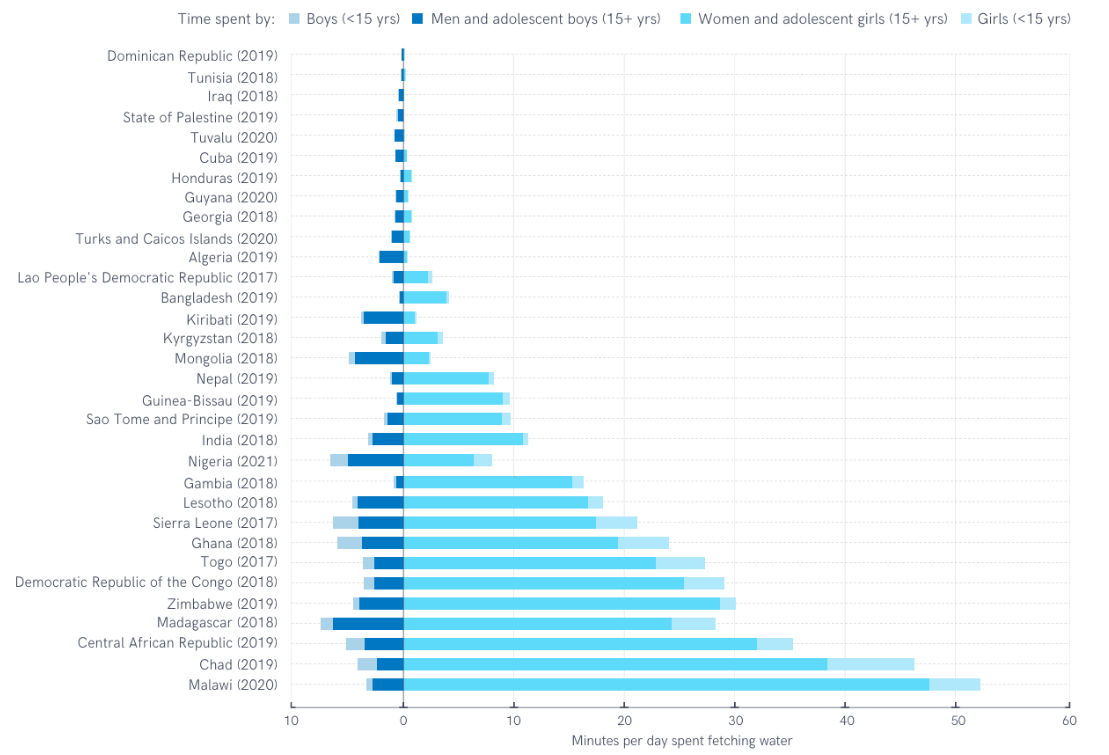
The disproportionate responsibility for water collection is not just about who fetches it, but also about time. In many regions, the hours women and girls spend collecting water come at the cost of education, employment, and overall well-being. In 21 out of 32 studied countries, they dedicate significantly more time to this task than men and boys, reinforcing existing gender inequalities.
The disparity is particularly striking in Malawi, where women and girls spend an average of 52 minutes per day collecting water, while men and boys spend just 3 minutes. Similar trends emerge in Bangladesh, Chad, Gambia, and Guinea-Bissau, where the time commitment for women is over 10 times higher than that of men.
In contrast, in regions where men and boys are primarily responsible for fetching water, the time burden is noticeably lower. For instance, in Kiribati and Mongolia, men and boys spend an average of just 4 minutes per day on this task, highlighting the sharp contrasts in water collection responsibilities worldwide.
Average time spent collecting water by women, men, girls and boys, by country, selected surveys, 2012–2022 (minutes per day)
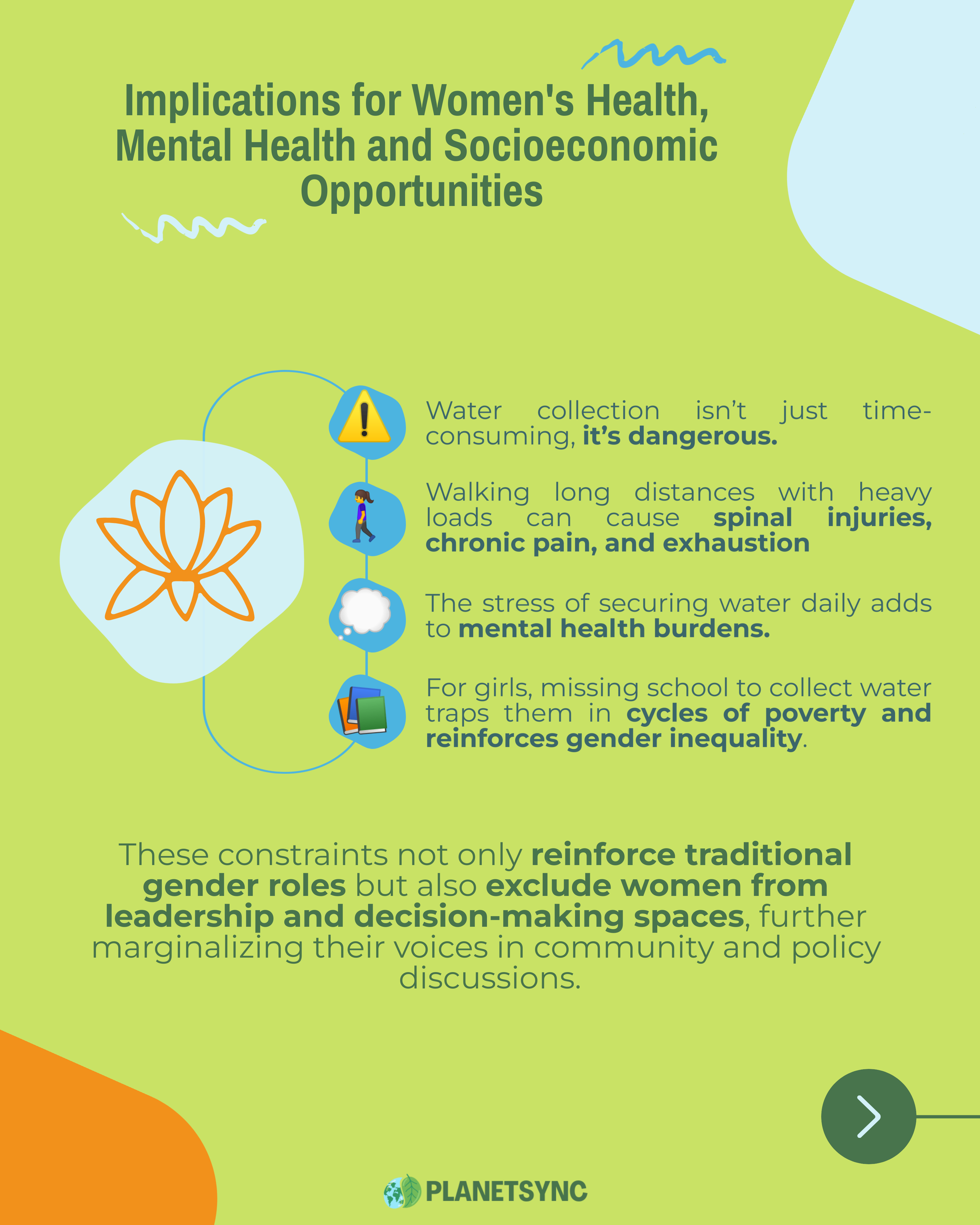
Implications for Women’s Health, Well-Being and Socioeconomic Opportunities
The burden of water collection has far-reaching consequences for women’s health, mental well-being, and economic independence.
Carrying heavy water containers over long distances takes a severe physical toll, and could lead to musculoskeletal disorders, spinal injuries, and chronic pain. The daily strain of lifting and transporting large water loads can also have long-term health effects, particularly for young girls whose bodies are still developing.
The constant concern over water availability and safety could increase psychosocial stress, placing an additional emotional toll on those responsible for household water supply.
The time-consuming nature of water collection also limits women’s ability to participate in the workforce, reinforcing economic inequalities. With hours spent fetching water each day, many women have little opportunity for paid employment, reducing their financial independence. Similarly, young girls often miss out on schooling as water collection takes precedence over their education, perpetuating cycles of poverty and gender disparity. These constraints not only reinforce traditional gender roles but also exclude women from leadership and decision-making spaces, further marginalizing their voices in community and policy discussions.
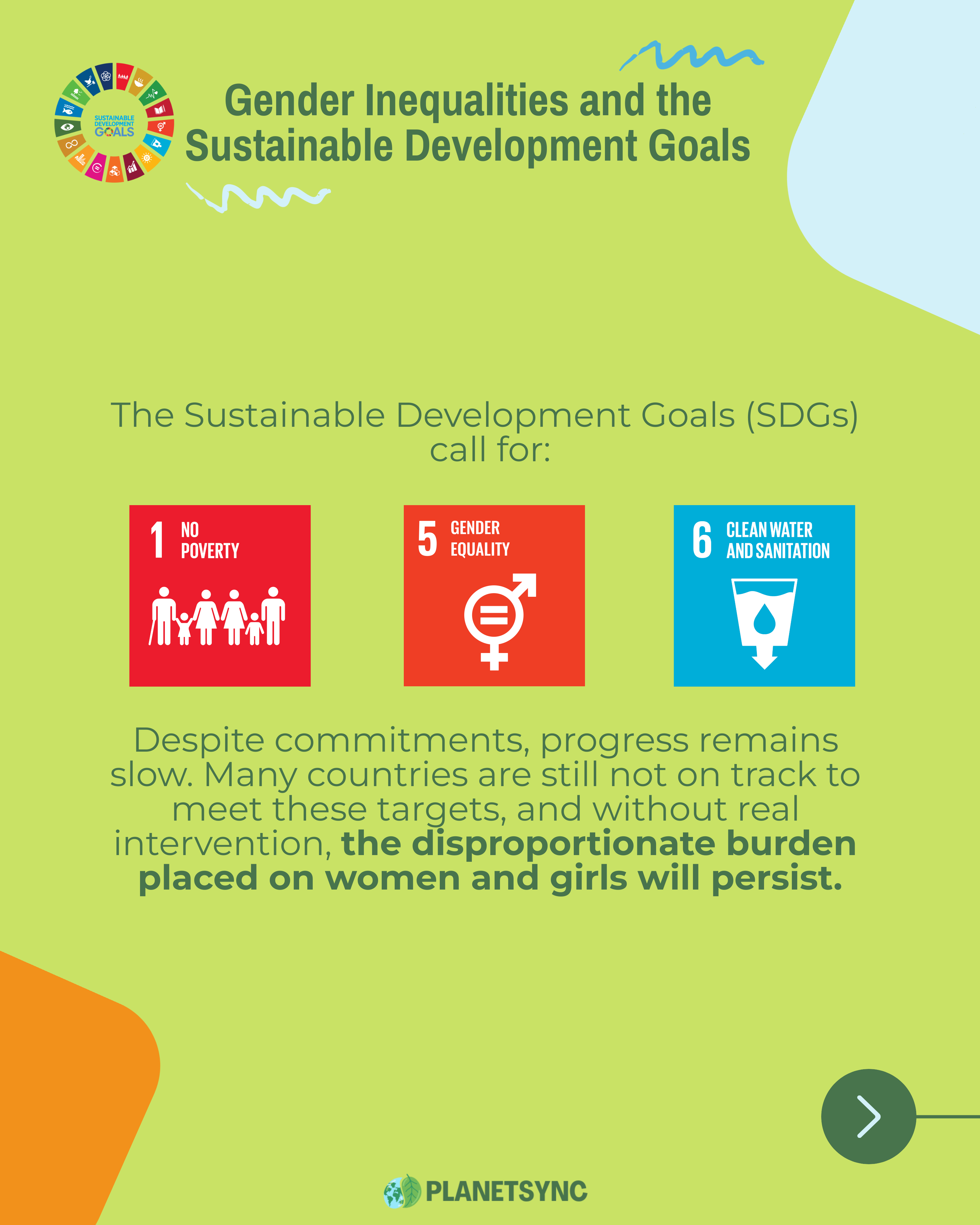
Gender Inequalities and the Sustainable Development Goals (SDGs)
The 2030 Sustainable Development Goals (SDGs) recognize the need to address both gender inequality and water access as fundamental human rights. SDG 5, which focuses on gender equality, seeks to empower all women and girls by eliminating discrimination, including the burden of unpaid care work such as water collection. Meanwhile, SDG 6, which emphasizes clean water and sanitation, calls for universal and equitable access to safe and affordable drinking water.
Despite commitments, progress remains slow. Many countries are still not on track to meet these targets, and without real intervention, the disproportionate burden placed on women and girls will persist.
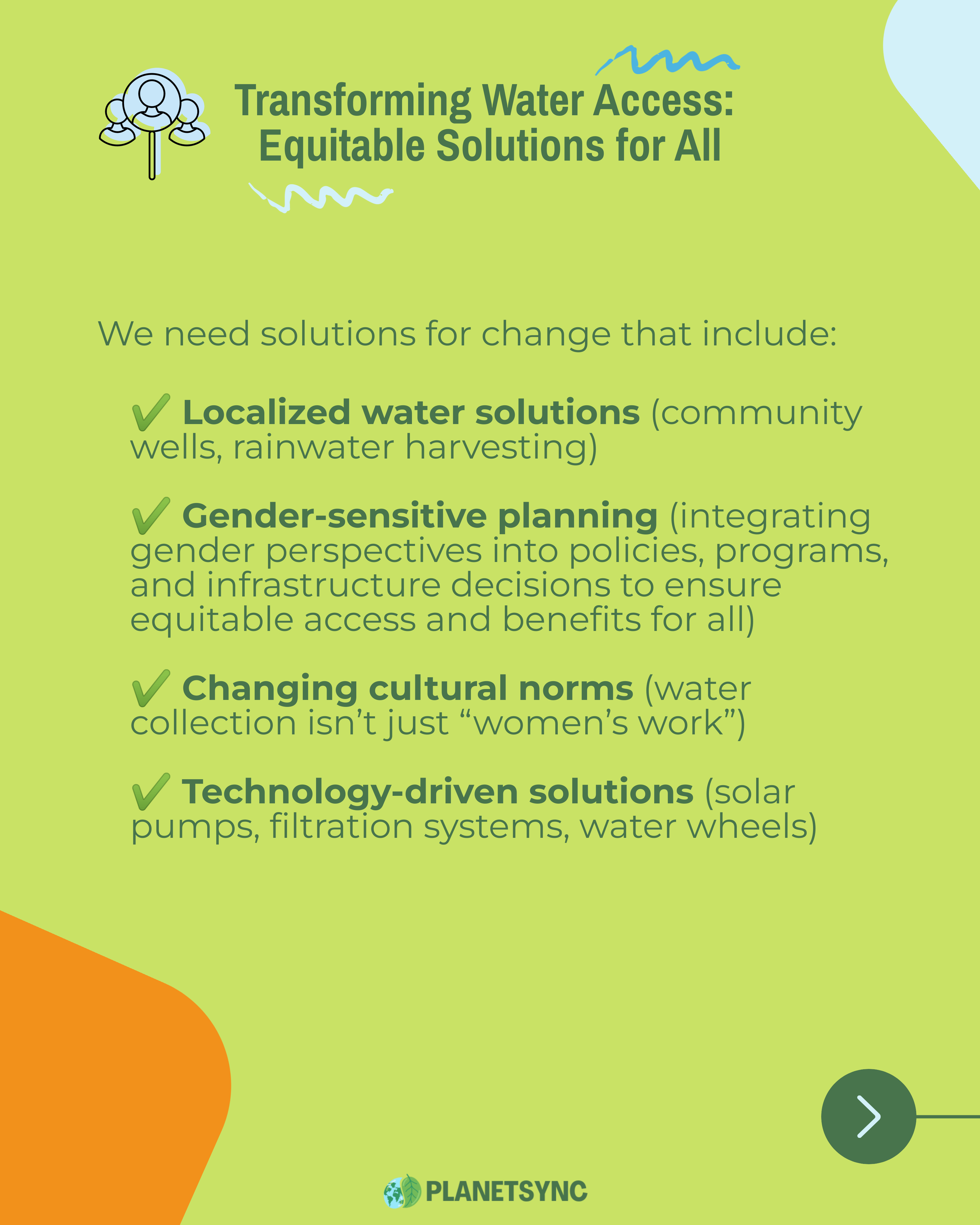
Transforming Water Access: Equitable Solutions for All
Achieving equitable access to water requires a multi-faceted approach. Sustainable solutions must not only ensure water availability but also improve accessibility, affordability, and address gender disparities. Without these considerations, marginalized communities, especially women and girls, will continue to bear the heaviest burdens in water collection.
Expanding Localized Water Solutions
Large-scale infrastructure projects take years to implement, leaving many communities waiting far too long for reliable water access. In the meantime, localized, community-driven solutions can offer immediate relief. Investing in community boreholes and wells can significantly reduce the distances women must travel to fetch water. Additionally, rainwater harvesting systems provide a cost-effective way to improve local water availability, particularly in areas where rainfall is seasonal but abundant.
Integrating Gender-Sensitive Planning
Water infrastructure projects are often designed without considering the realities of those most affected: women and girls. Ensuring that women have an active role in planning and decision-making leads to more effective and sustainable solutions. When their perspectives are included, water sources could be placed in safer, more accessible locations, benefiting entire communities and reducing unnecessary risks for women and children.
Shifting the Narrative Around Water Collection
Water collection has long been considered “women’s work,” reinforcing traditional gender roles that limit opportunities for education and employment. Changing this mindset requires long-term efforts through education and community engagement. Schools can play a vital role by teaching boys and girls that household responsibilities, including water collection, should be shared. Additionally, engaging male leaders within communities to publicly support men’s involvement in water collection can help break deep-rooted norms and encourage a shift in attitudes. These small but meaningful changes can gradually redistribute the burden of water collection across genders.
Leveraging Low-Cost Technology
While large-scale water infrastructure remains a long-term goal, affordable and locally sourced technologies can help alleviate the physical burden of water collection in the short term. Manual and solar-powered water pumps are simple, low-maintenance solutions that reduce the need for long-distance travel. Similarly, household water filtration systems can make water safe to drink at home, eliminating the need for women and girls to walk to distant sources in search of potable water. Innovations such as water wheel devices, which allow individuals to roll rather than carry heavy containers, can further reduce physical strain, particularly for children tasked with water collection.
Breaking the Cycle is Crucial
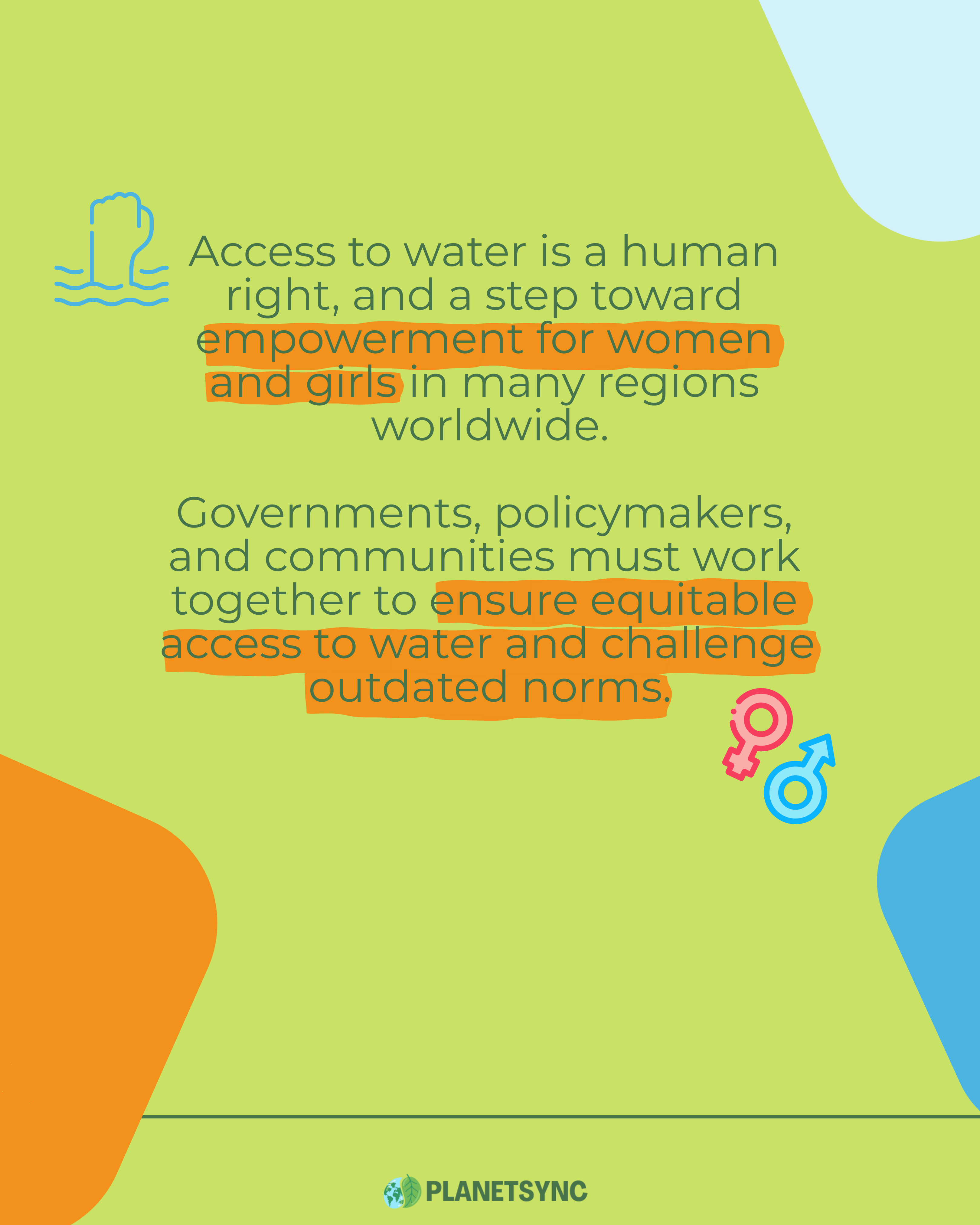
Water collection is a gender equality issue in many regions worldwide. The time, effort, and risks associated with fetching water limit women’s education, economic independence, and health. Without meaningful intervention, millions of women and girls will remain locked in this cycle.
Governments, policymakers, and communities must work together to ensure equitable access to water, recognizing it as both a basic human right and a stepping stone toward true gender equality.


 planetsync.blog
Leave a comment