

Choosing the right home water treatment system can feel overwhelming with so many options available. But making an informed decision is easier than you might think. In this article, we’ll simplify the process by breaking down common treatment systems and key factors to consider, helping you confidently choose the best solution for your home.
Need the Gist? Swipe through the visuals below for a quick summary!




Key Considerations for Selecting a Water Treatment System
Selecting the best water treatment system starts with understanding the factors that influence your decision. The following sections outline the essential considerations to guide your choice.
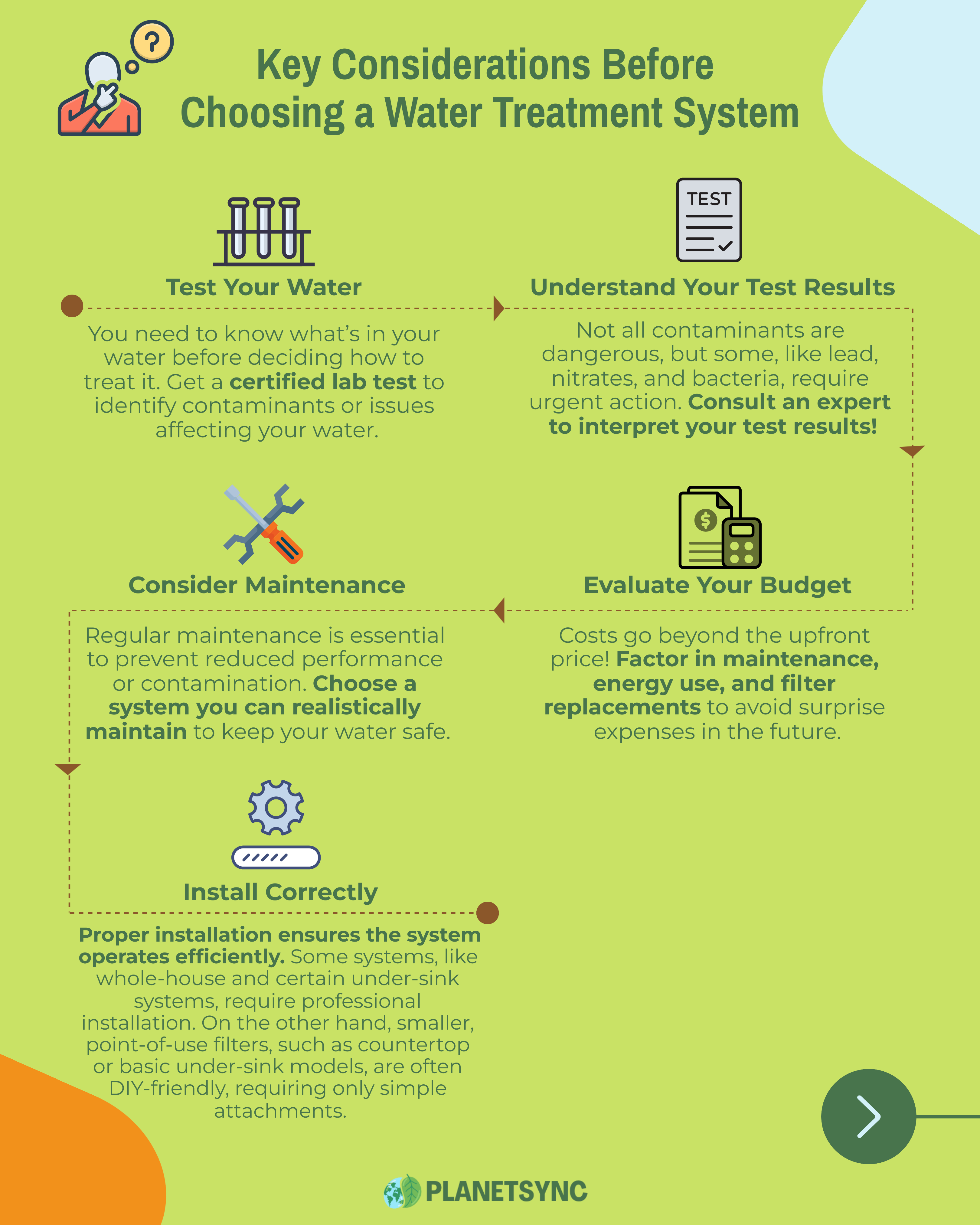
Test Your Water
The first step in choosing a water treatment system is identifying the specific contaminants or issues affecting your water. The most reliable way to do this is through testing by a certified laboratory. While home test kits can provide a general overview, they are not a substitute for professional analysis.
Understand Your Test Results
Once you receive your test results, correctly interpreting them is essential. Consulting a local water quality expert or environmental health professional can clarify whether any detected contaminants pose health risks or are simply aesthetic concerns, such as taste or odor. Not all contaminants require immediate action. Some naturally occurring minerals may not be harmful, while others, such as lead, nitrates, or microbial pathogens, demand urgent treatment. Understanding your water quality will help you narrow down the most effective treatment solution.
Evaluate Your Budget
Water treatment systems vary in cost, from budget-friendly point-of-use filters to more expensive whole-house solutions. When comparing options, consider not just the upfront cost but also long-term expenses, including maintenance, energy use, and potential servicing. Striking the right balance between affordability and effectiveness ensures you get the best system for your needs without unnecessary expenditure.
Consider Maintenance and System Longevity
All water treatment systems require regular maintenance to perform effectively. Neglecting maintenance can reduce efficiency or even introduce new contaminants. Before making a purchase, understand the maintenance requirements and assess whether you can meet them.
Ensure Correct Installation and Support
Once you’ve selected a water treatment system, consider its installation requirements. Smaller, point-of-use systems may be DIY-friendly. However, larger, whole-home systems and certain under-sink systems, require expert technicians due to complex plumbing connections, drain setups, and precise configuration. Professional installation sets the system up for correct initial operation and usually provides ongoing support for maintenance and troubleshooting
Types of Home Water Treatment Systems
The following systems differ in convenience, capacity, and effectiveness, making it essential to choose one that aligns with your household’s water needs.
Countertop Filters
Countertop filters are compact, portable units that connect directly to a faucet, making installation and removal quick and hassle-free. They are an excellent choice for renters or those who move frequently, as they require no permanent plumbing modifications. These filters provide point-of-use filtration, treating water at a single tap.
Under-Sink Systems
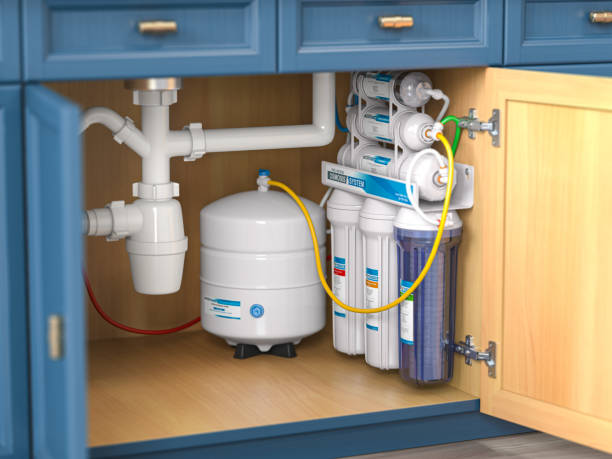
Under-sink systems are installed beneath the kitchen sink and connected to a dedicated faucet. Compared to countertop models, they offer higher filtration capacities and can remove a broader range of contaminants. While installation requires some plumbing work, these systems provide a more permanent solution. Their design helps conserve countertop space while delivering on-demand filtered water.
Whole-House Filtration Systems
Whole-house filtration systems, also known as point-of-entry systems, treat all the water entering a home, ensuring that every tap delivers water of consistent quality. These systems are particularly useful for addressing widespread issues such as hard water, chlorine, or iron. Because they are connected to the main water line, installation is more complex and typically requires professional assistance. While whole-house systems provide comprehensive treatment, some contaminants may still require additional point-of-use filters to ensure water is safe for consumption.
Water Treatment Technologies
Below are the most common home water treatment solutions and their key benefits.
Activated Carbon Filters: Improving Taste and Odor
Activated carbon filtration is one of the most widely used home filtration methods, particularly for improving taste and odor. These filters can remove chlorine, organic compounds, and some pesticides, making tap water more pleasant and safer to drink. Standard carbon filters do not remove dissolved salts, nitrates, or microbial contaminants, so they are often paired with other treatment methods, such as reverse osmosis or UV filtration for comprehensive treatment.
Reverse Osmosis (RO) Systems: Removing Dissolved Contaminants
RO systems effectively remove a broad range of contaminants, including heavy metals (lead, arsenic, mercury), nitrates, pesticides, and dissolved salts. They also reduce bacteria, viruses, and protozoa, but RO alone is not a certified method for microbiological disinfection. The system’s efficiency depends on the membrane type, contaminant properties, and overall design. RO is particularly beneficial in areas with high dissolved solids.
RO systems typically include pre-filtration and post-treatment. A pre-filtration stage protects the membrane from clogging by removing sand, grit, and large particles. In areas with extremely hard water, a water softener (ion exchange system) may be necessary before RO to prevent scale buildup. Post-treatment, usually with activated carbon filtration, removes chlorine, volatile organic compounds, and any residual taste or odor compounds that RO does not fully eliminate.
Ion Exchange Systems: Addressing Hard Water
Ion exchange systems are primarily used to soften hard water, a common issue in many regions. These systems replace calcium and magnesium ions, which cause hardness, with sodium or potassium ions, thereby preventing limescale buildup in plumbing and appliances. Water softeners do not remove bacteria, chemicals, or other contaminants. Therefore, they are often installed alongside activated carbon or RO filtration systems for drinking water.
Sodium-based softeners increase sodium levels in water, which may be a concern for individuals with high blood pressure, heart disease, and low-sodium diets. Potassium chloride softeners are an alternative but are generally more expensive.
Ultraviolet (UV) Purification: Neutralizing Microorganisms
UV water purification is effective in neutralizing bacteria, viruses, and parasites by exposing water to ultraviolet light. This method is particularly useful for treating water from private wells or sources susceptible to microbial contamination. However, UV treatment does not remove chemicals, heavy metals, or sediments. Therefore, it is often combined with other filtration methods, such as activated carbon or RO systems, to ensure comprehensive water treatment. For UV purification to be effective, the water must be clear; if it contains sediment or turbidity, a pre-filter is necessary to ensure the UV light can penetrate effectively.
Ceramic Filters: Removing Bacteria and Sediments
Ceramic filters are a cost-effective option for removing sediment, bacteria, and some parasites, making them useful in areas with microbial risks. These filters operate by allowing water to pass through tiny pores in the ceramic material, trapping contaminants. The pore size of the ceramic filter determines what contaminants are removed.
Ceramic filters do not remove chemical contaminants, heavy metals, or dissolved solids. Therefore, they are typically used in conjunction with other systems, such as activated carbon or UV filters, to provide safe drinking water.
Making Informed Decisions
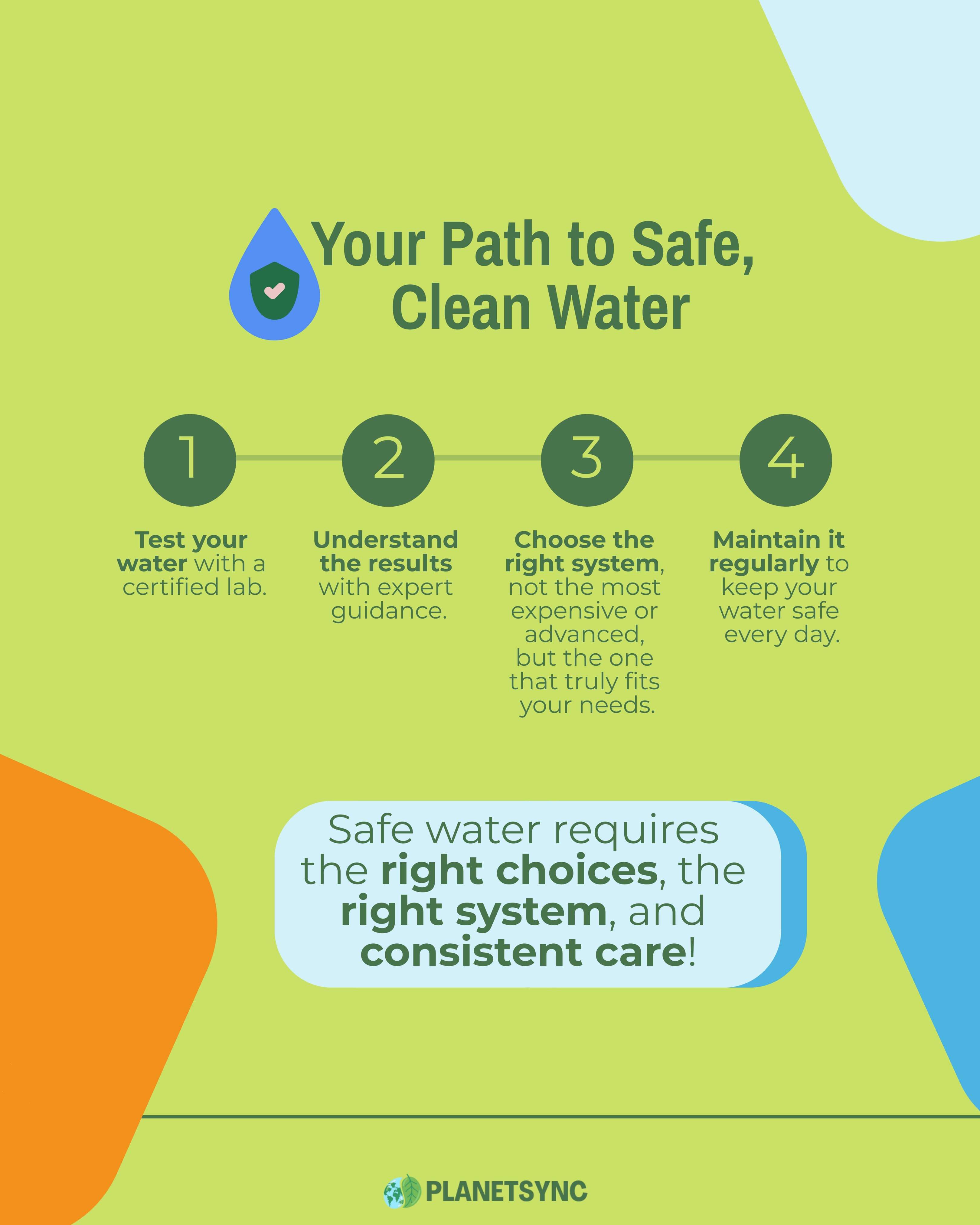
Clean, safe water is essential for health and peace of mind. Achieving it begins with understanding your water. Start by testing it in a certified lab, interpreting the results with the help of a water quality expert, and selecting a treatment system tailored to your unique needs. Remember, the most effective solution isn’t always the most expensive or advanced; it’s about finding the right balance between addressing your specific concerns and fitting your budget. With the right system and regular maintenance, you can enjoy safe water, day after day.
References & Resources
- CDC. (2024, September 19). About Home Water Treatment Systems. Drinking Water.
- Texas Commission on Environmental Quality. (n.d.). Choosing Home Water Treatment.
- Minnesota Department Of Health. (n.d.). Home Water Treatment Facts
- NSF. (n.d.). Home Water Treatment System and Solutions.
- Patton, H., Krometis, L.-A., Ling, E., Cohen, A., & Sarver, E. (2024). Faucet-mounted point-of-use drinking water filters to improve water quality in households served by private wells. Science of The Total Environment, 906, 167252.
- Wu, J. (2024). The Role of Affordability on the Adoption of Residential Point-of-Use Drinking Water Filtering Systems in China. Sustainability, 16(2), Article 2.


 planetsync.blog
Leave a comment