

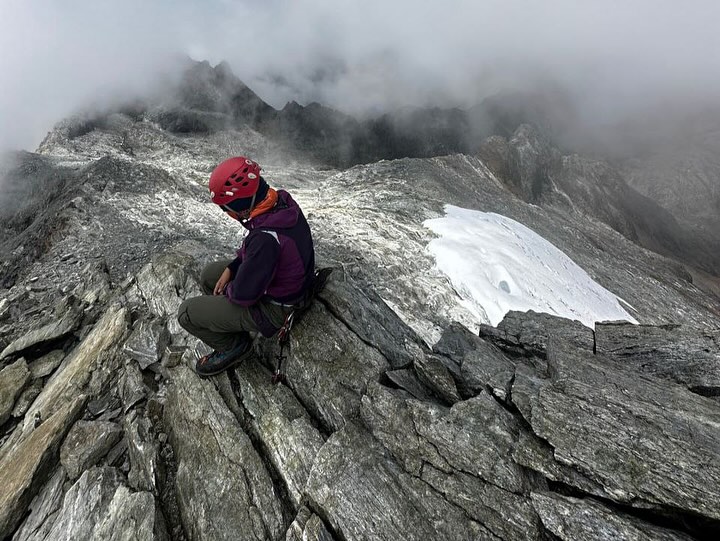
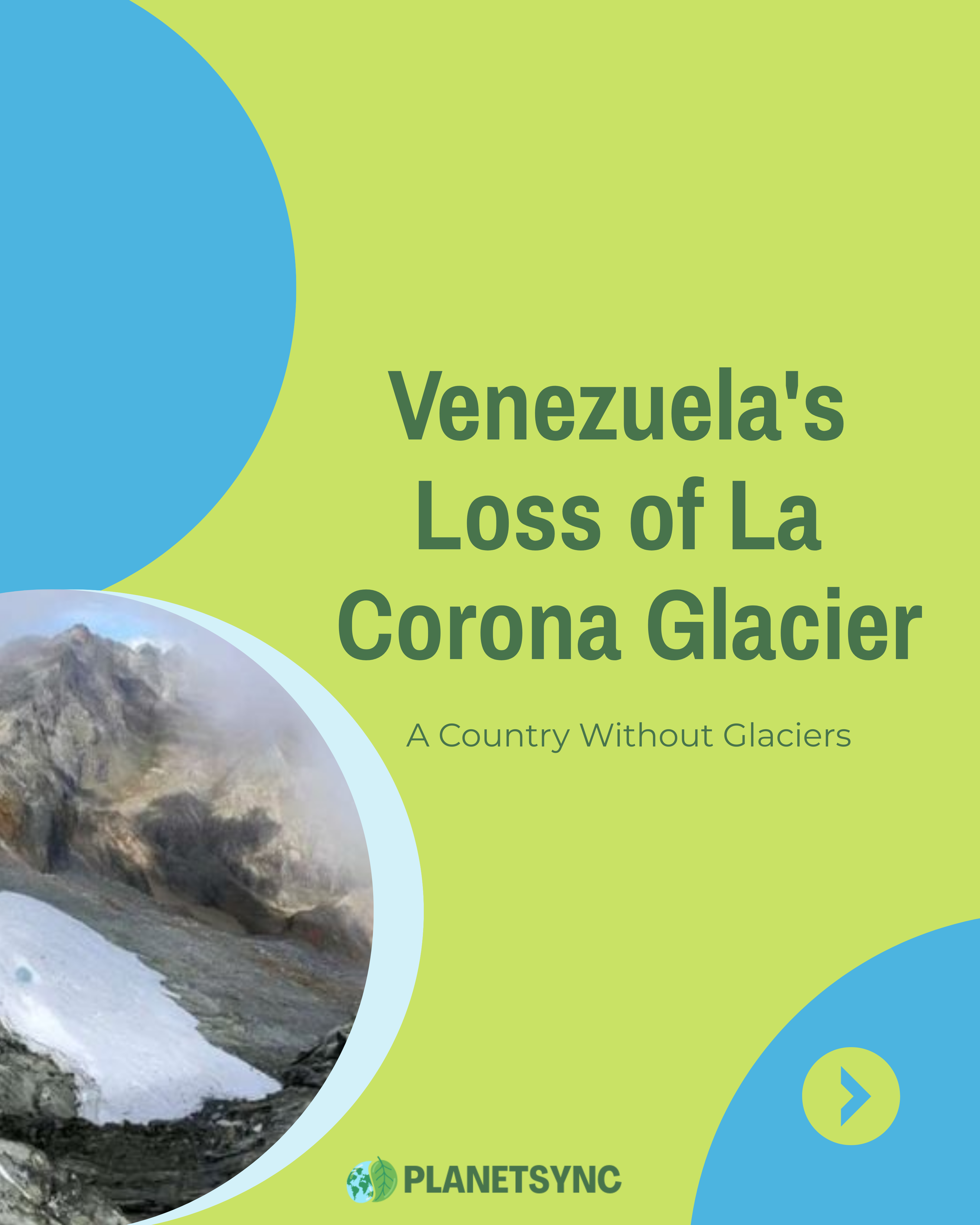
Every year, on March 22, World Water Day reminds us of the fundamental role water plays in our lives, highlighting the urgent issues related to water access, conservation, and sustainability. In 2025, its theme “Glacier Preservation” underscores the growing crisis of glacial retreat. Nowhere is this issue more visible than in Venezuela, which, as of 2024, became the first country in modern history to lose all of its glaciers.
Need the Gist? Swipe through the visuals below for a quick summary!


A Vanishing Ice Legacy
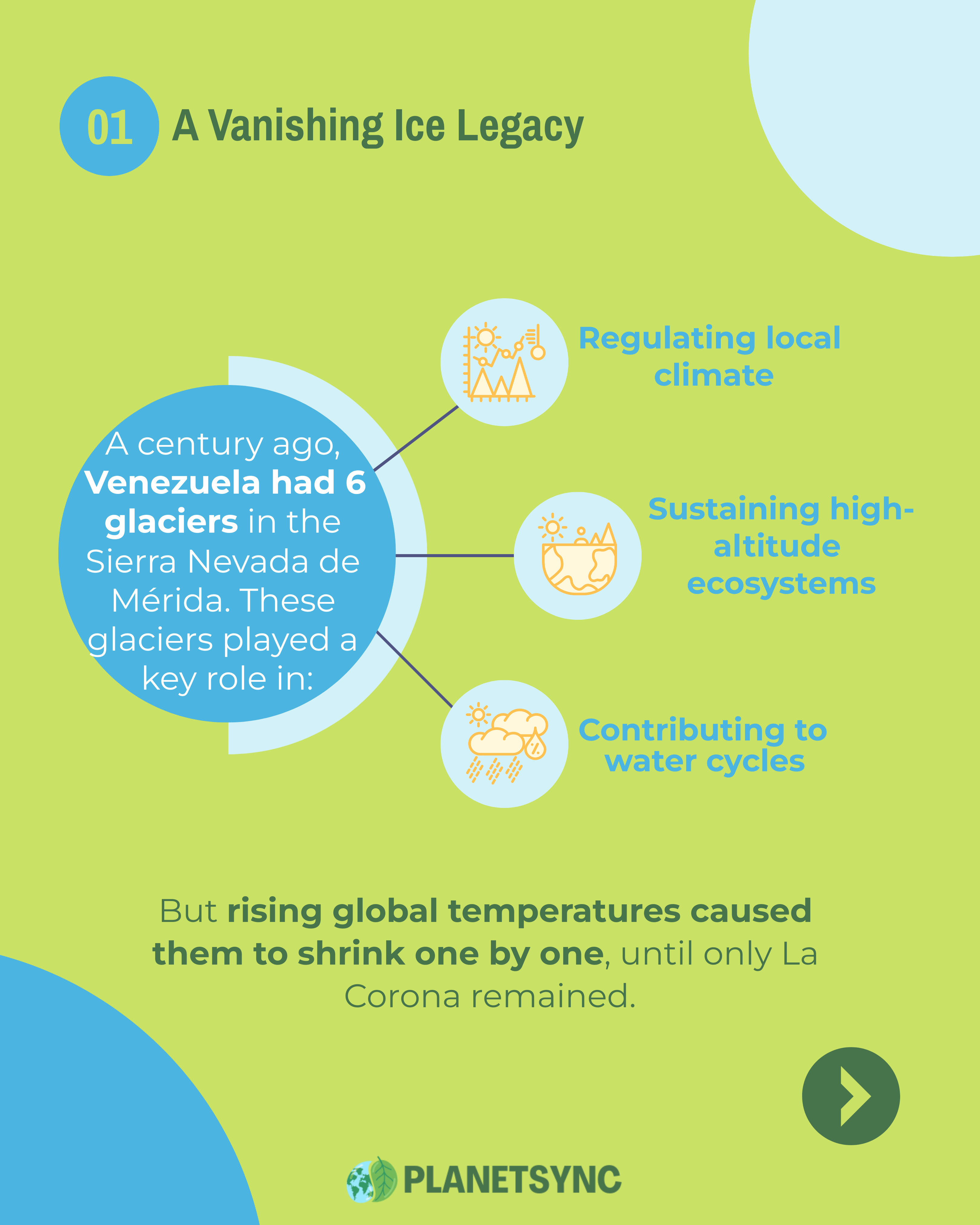
At the start of the 20th century, Venezuela was home to six glaciers in the Sierra Nevada de Mérida, the highest part of the Andes within the country. These frozen reservoirs shaped the region’s landscape and played a crucial role in regulating local climate patterns, sustaining unique high-altitude ecosystems, and serving as sources of water. However, as global temperatures steadily rose over the decades, glaciers began to shrink. One by one, they vanished, until only a single glacier remained: La Corona, a surviving fragment of the former Humboldt Glacier.
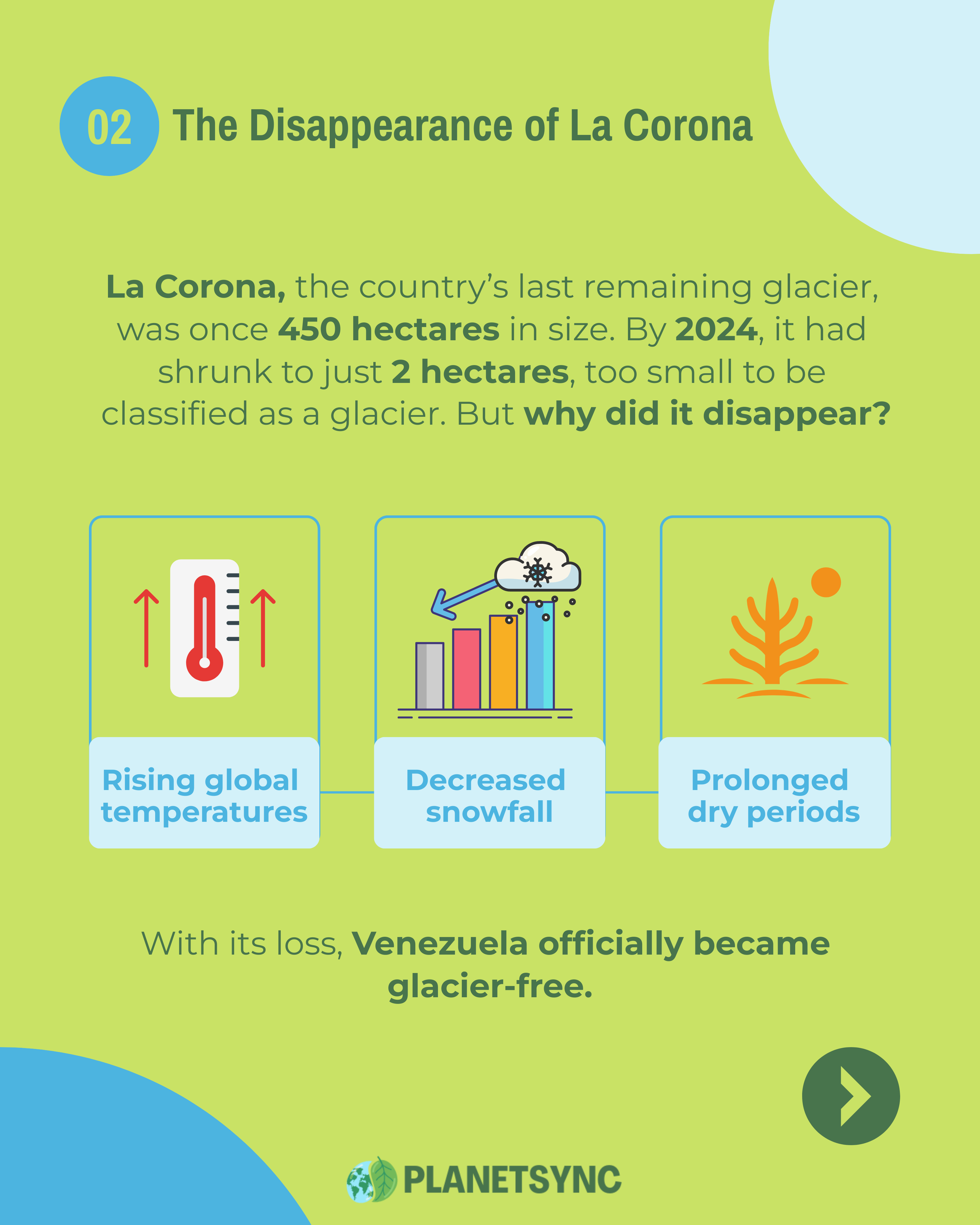
By 2024, that last glacier was gone. The International Cryosphere Climate Initiative (ICCI) confirmed that La Corona had dwindled from a vast 450 hectares to just 2, too small to sustain itself or meet the criteria to be classified as a glacier. With this loss, Venezuela became the first country in modern history to lose all of its glaciers.
Why Did Venezuela’s Glaciers Disappear?
The disappearance of Venezuela’s glaciers was not a sudden event but part of a long-term trend. Scientists have linked their decline to rising global temperatures, decreased snowfall, and prolonged dry periods, particularly after the 1970s. Climate variations such as El Niño–Southern Oscillation events contributed to the problem by bringing drier conditions to the region, but the dominant factor was the overall warming of the planet. As temperatures increased, glacial melt rates accelerated, and without sufficient snowfall to replenish lost ice, the glaciers became unsustainable.
A Desperate Attempt to Save the Last Glacier
In a last-ditch effort to slow the melting of La Corona Glacier, the Venezuelan government attempted a strategy used in other parts of the world: covering the ice with a thermal blanket to shield it from the sun. This technique has been successful in places like Switzerland and Austria, where seasonal snowfall helps maintain glaciers. However, it failed in Venezuela. The region’s intense solar radiation, warm temperatures, and inconsistent snowfall meant that there was no fresh ice to replenish what was lost. By the time the thermal blanket was applied, La Corona was already too small and fragmented to benefit from the intervention.
Even in the best conditions, thermal blankets are only a temporary measure, capable of delaying ice loss in specific areas but powerless against large-scale glacial retreat. More importantly, they do nothing to address the root cause of the problem: climate change.
Why Does This Matter?
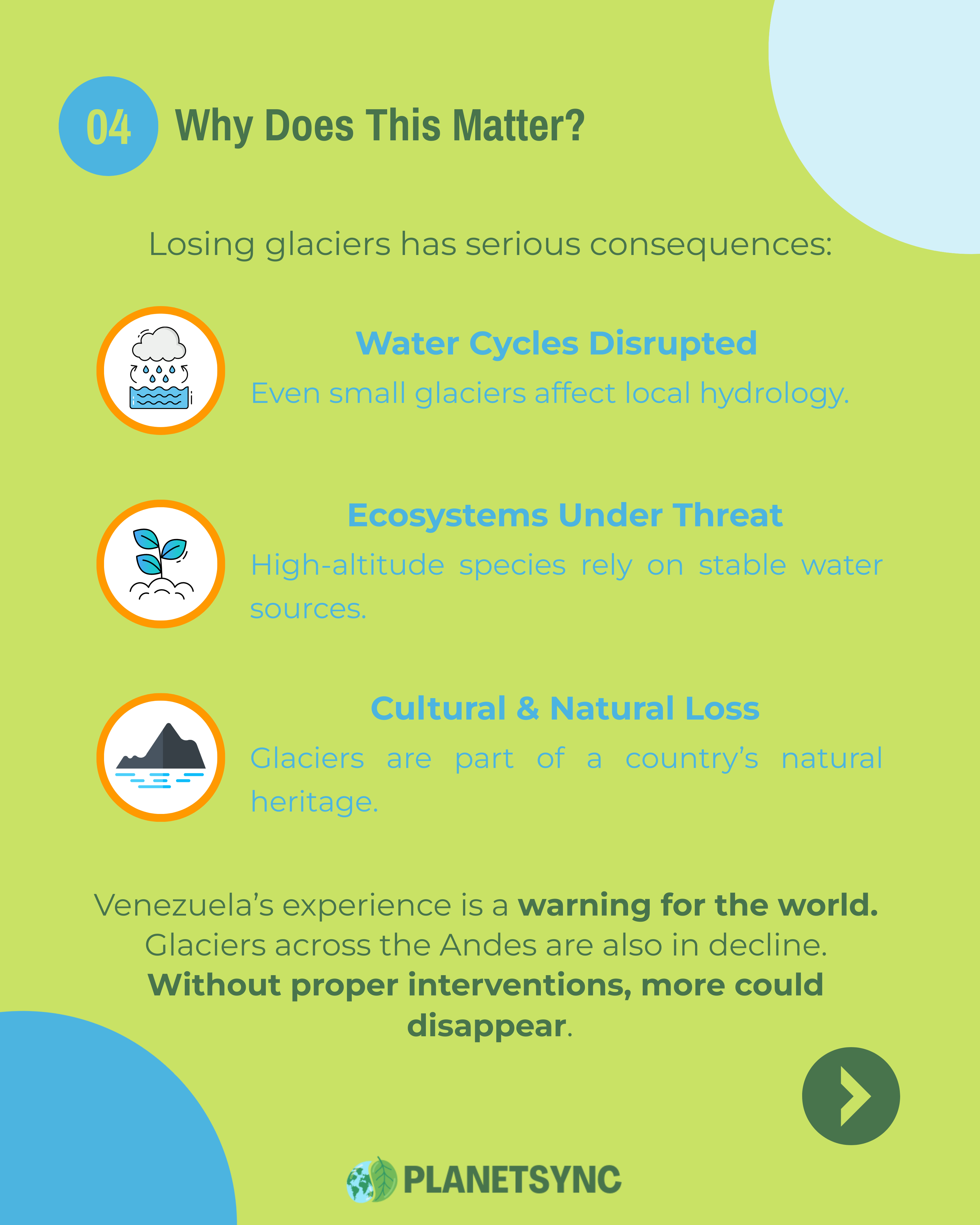
The loss of glaciers has serious consequences:
- Changes in Local Hydrology: While glaciers were not a primary water source in Venezuela, they contributed to high-altitude water cycles. Their disappearance affects mountain ecosystems and microclimates.
- Threats to Biodiversity: The páramo ecosystem, a unique Andean environment, depends on stable local water sources. The loss of glacial melt alters conditions for plant and animal species there.
- Loss of Natural Heritage: Venezuela’s glaciers were part of the country’s natural legacy. Their disappearance is a significant environmental and historical loss.
Venezuela’s experience is a warning for the world. Glaciers across the Andes, in Peru, Colombia, Ecuador, and Bolivia, are also in decline. Without proper interventions more glaciers will disappear, altering landscapes, disrupting ecosystems, and threatening water supplies for millions of people worldwide.
What Can Be Done?
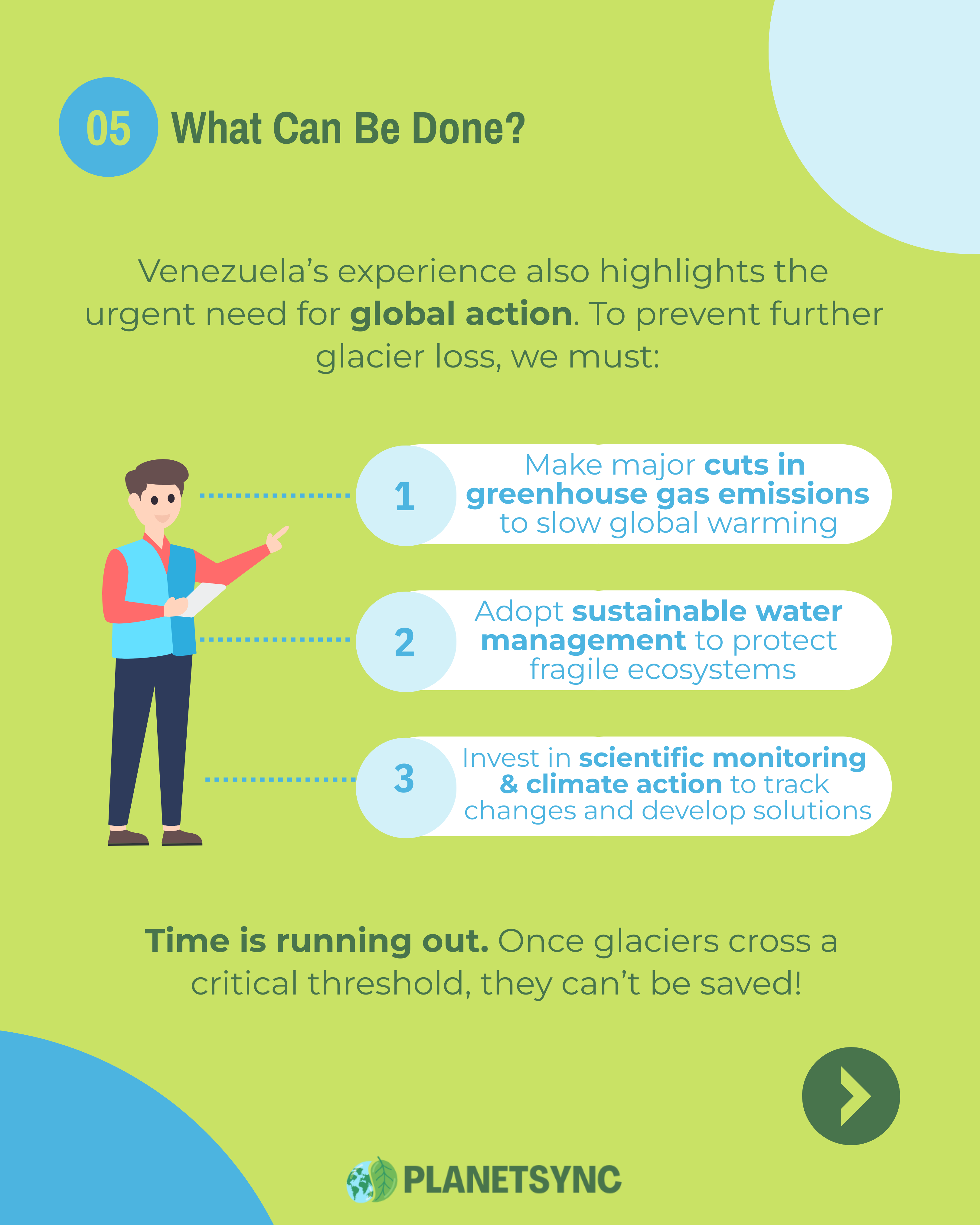
Venezuela’s experience also underscores the urgent need for global action. To prevent further glacier loss worldwide, key steps include:
- Reducing Greenhouse Gas (GHG) Emissions: Significant cuts in GHG emissions can slow global warming and help to preserve remaining glaciers.
- Sustainable Water Management: As glaciers vanish, protecting watersheds and improving water conservation efforts become even more critical.
- Continued Scientific Monitoring: Funding for climate and glacier research is essential to track changes and develop adaptation strategies.
Without proper interventions more glaciers will disappear, altering landscapes, disrupting ecosystems, and threatening water supplies for millions of people worldwide.
We Must Act Now
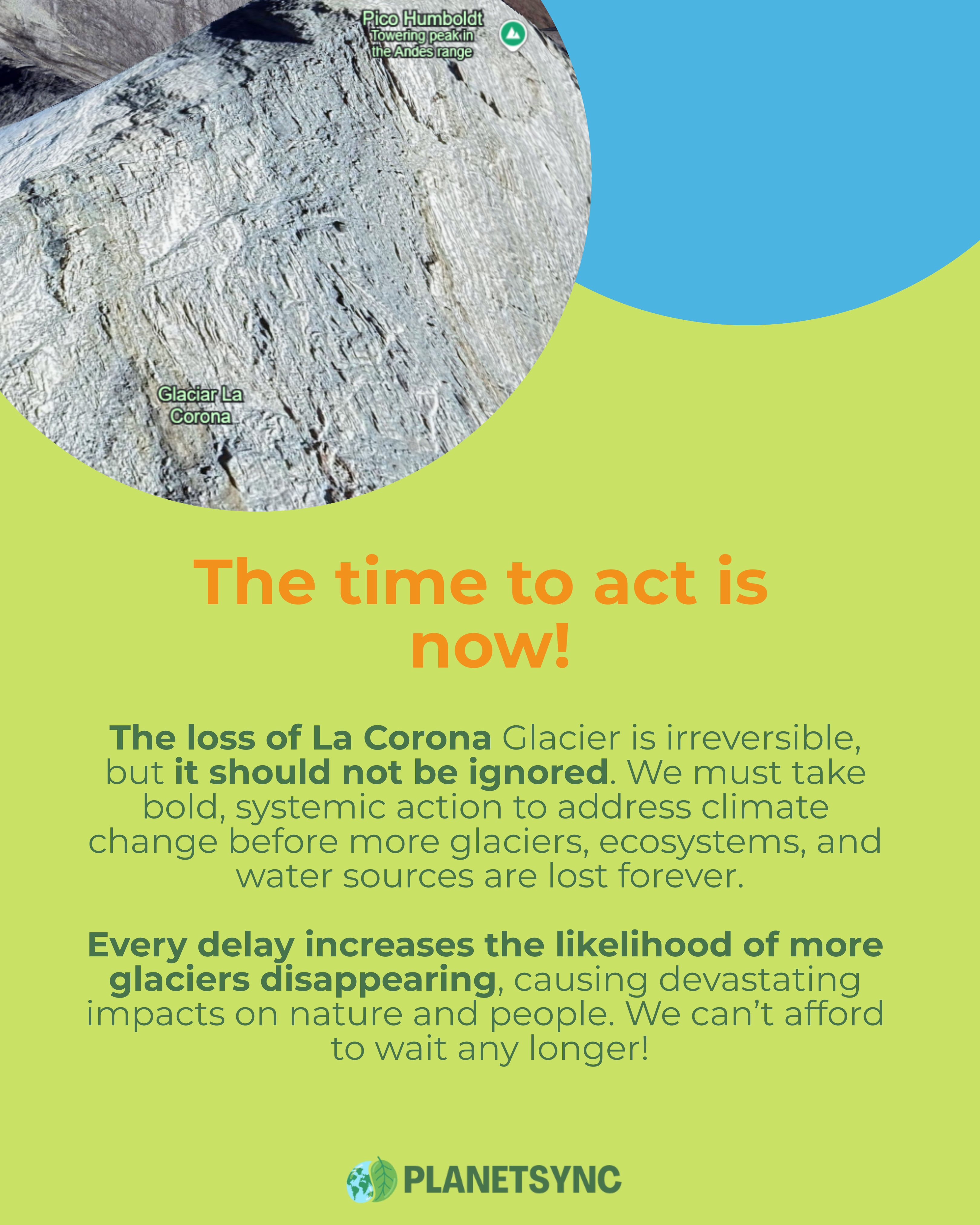
Venezuela’s last glacier is gone, but its story should not be forgotten. La Corona’s disappearance is a reminder that climate change is real, accelerating, and affecting every corner of the planet. As we mark World Water Day 2025, let Venezuela’s lost glaciers serve as powerful warning: once glaciers pass a critical threshold, no local intervention can save them. The only way to slow this process is through decisive global action.
The world must act now to protect the glaciers worldwide!
References & Resources
- NASA Earth Observatory (2024). Humboldt Glacier’s Demise
- NASA Jet Propulsion Laboratory (2024). Humboldt Glacier, Venezuela
- European Union, Copernicus Sentinel-3 imagery (2024). The decline of glaciers in Venezuela
- Ramírez, N., Melfo, A., Resler, L. M., & Llambí, L. D. (2020). The end of the eternal snows: Integrative mapping of 100 years of glacier retreat in the Venezuelan Andes. Arctic, Antarctic, and Alpine Research, 52(1), 563–581.
- NASA Science Editorial Team (2018). Last glacier standing in Venezuela


 planetsync.blog
Leave a comment