


On March 25, OpenAI released a powerful new feature: image generation through GPT-4o. Almost instantly, it went viral. People were amazed by what this AI could do: creating art, visual ideas, and more with just a few words.
But while we celebrate the magic, there’s an invisible cost we need to talk about: water.
Need the Gist? Swipe through the visuals below for a quick summary!

AI and Water: What’s the Connection?
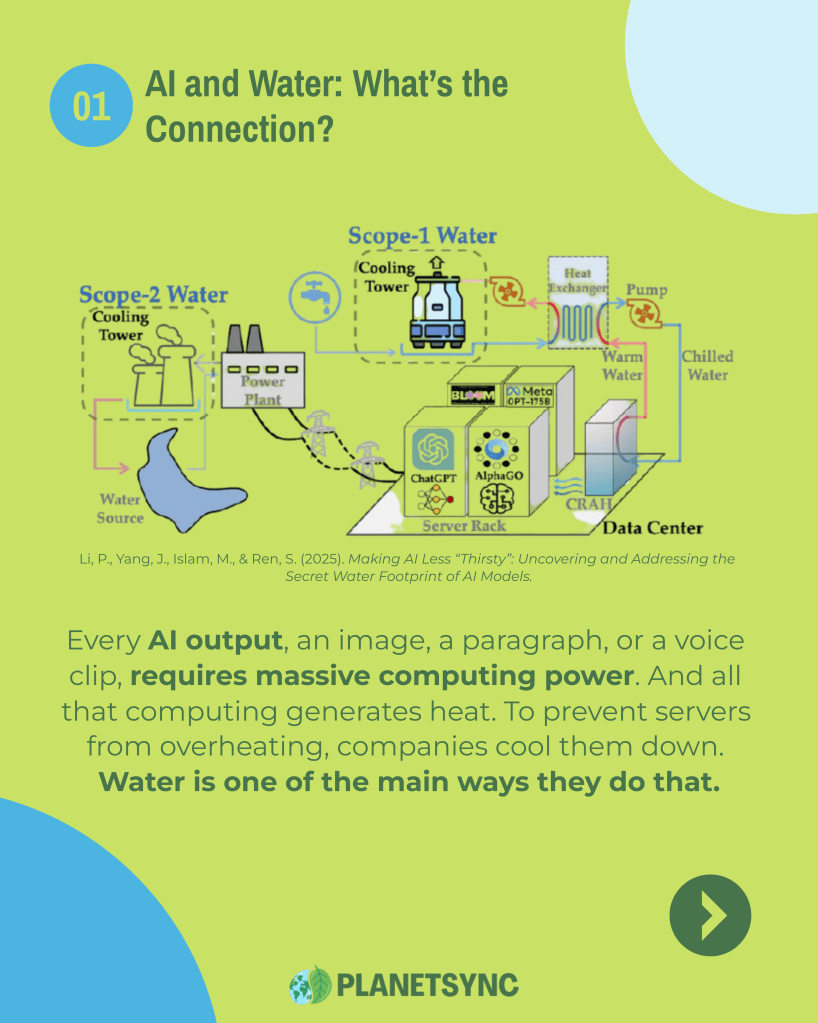
Most people don’t think of water when they think of artificial intelligence (AI). But every time you use AI, whether to generate an image or write a paragraph, you’re also using a vast amount of computer power. And that power needs to be kept cool.
To do that, AI companies rely on data centers: massive buildings filled with thousands of servers that process your requests. These machines heat up fast, so they need constant cooling, and often, water is the main way to do it.
How AI Uses Water
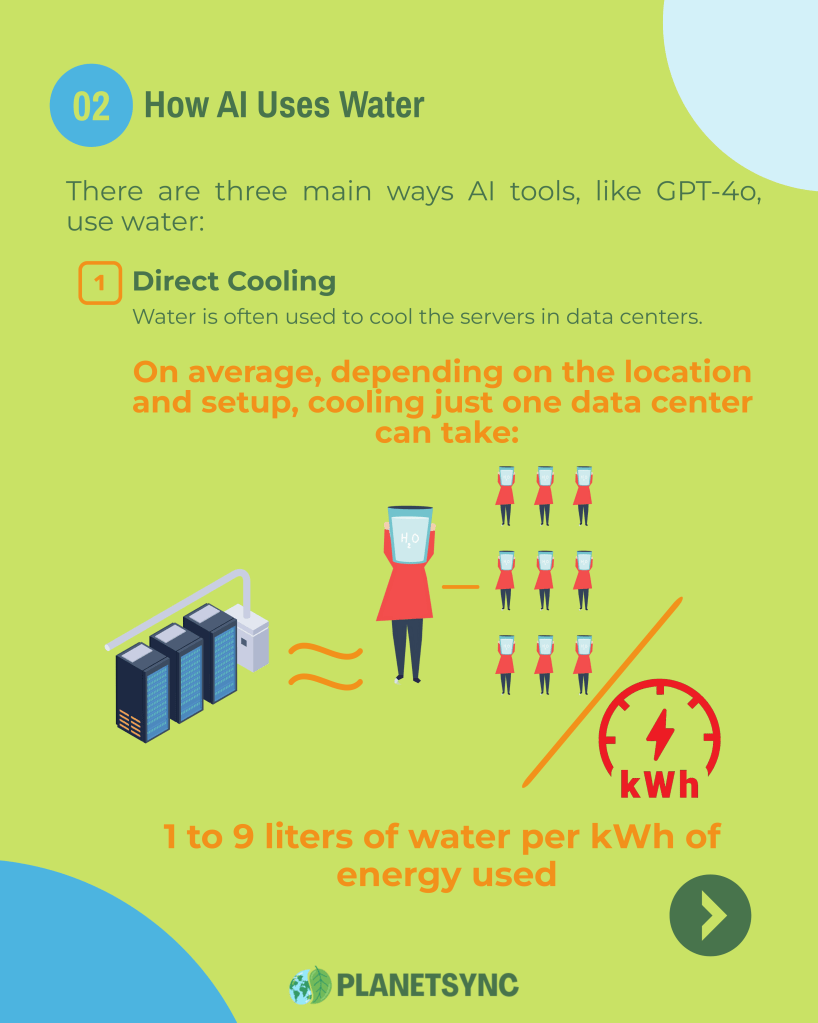
There are three main ways AI tools, like GPT-4o, use water:
- Direct Cooling: Water is often used to cool the servers in data centers. On average, depending on the location and setup, data centers in the U.S. can use 1 to 9 liters of water per kilowatt-hour (kWh) of energy used. That’s just for keeping the machines cool.
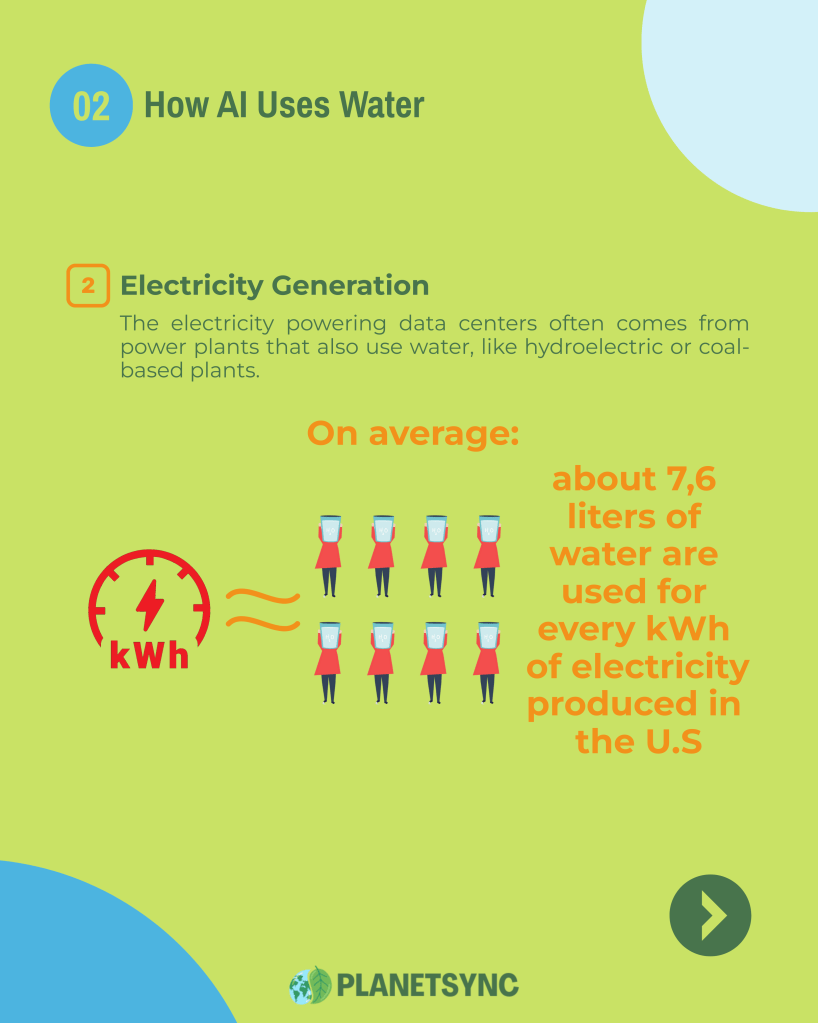
- Electricity Generation: The electricity powering data centers often comes from power plants that also use water, like hydroelectric or coal-based plants. On average, about 7,6 liters of water are used for every kWh of electricity produced in the U.S. That’s enough water to fill almost 7 Stanley quencher tumblers, just to power the computers for 1 hour.
- The Supply Chain: Building the tech that runs AI, like microchips, also takes a lot of water. Making just one microchip can use between 28 and 100 liters of water during the manufacturing process. That’s like using up to 6 full bathtubs of water for a single component smaller than your fingernail.
How Much Water Does an AI-generated Image Use?
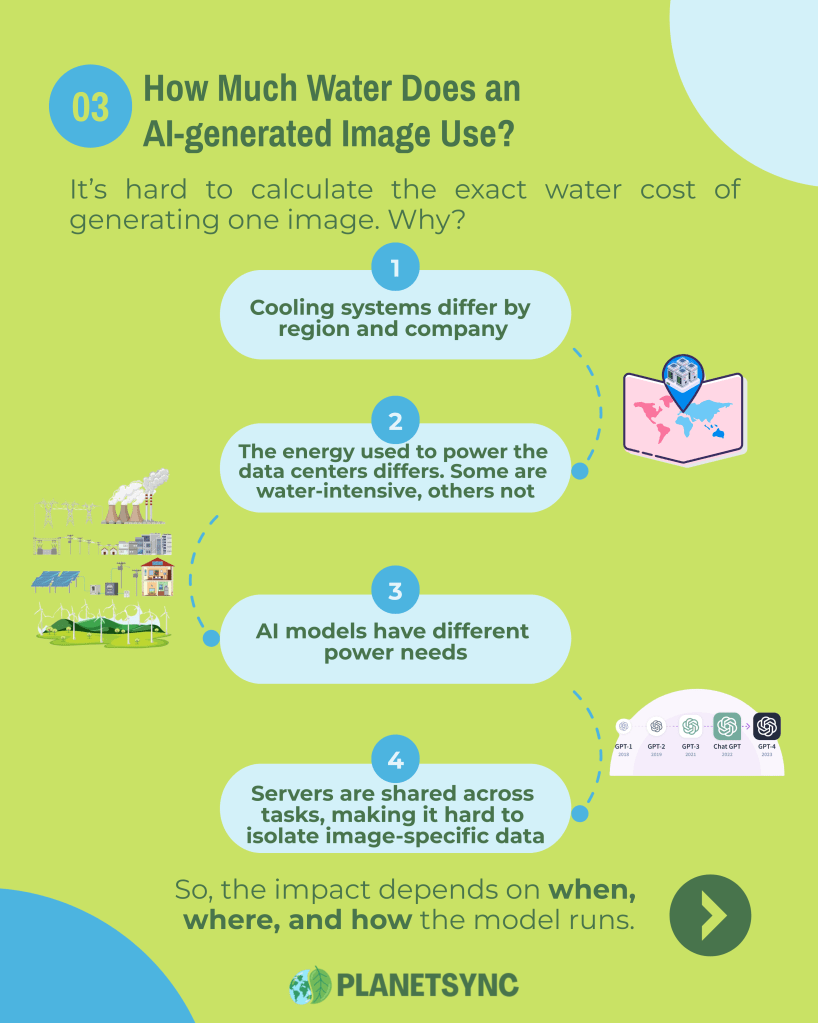
You might be wondering: how much water does it take to generate just one image with GPT-4o? That’s a good question, but it’s really hard to answer for a few reasons:
- Cooling methods vary: Some data centers use water; others use air or a mix. So, efficiency varies.
- Location Matters: Climate significantly impacts cooling needs, and the type of cooling system used. Data centers in hot, dry climates will likely have higher evaporative water consumption.
- Energy Sources differ: The energy used to power the data centers differs. Some electricity comes from water-intensive sources; others, like wind and solar, don’t use much water at all.
- Shared Infrastructure: The servers running GPT-4o handle many other tasks besides image generation, making it hard to isolate the energy and water specifically for this function.
- Model Differences: Different AI models and even different generations of the same model (like GPT-4o vs. previous versions) can have varying computational demands, affecting the energy required and thus the cooling needed.
What We Do Know
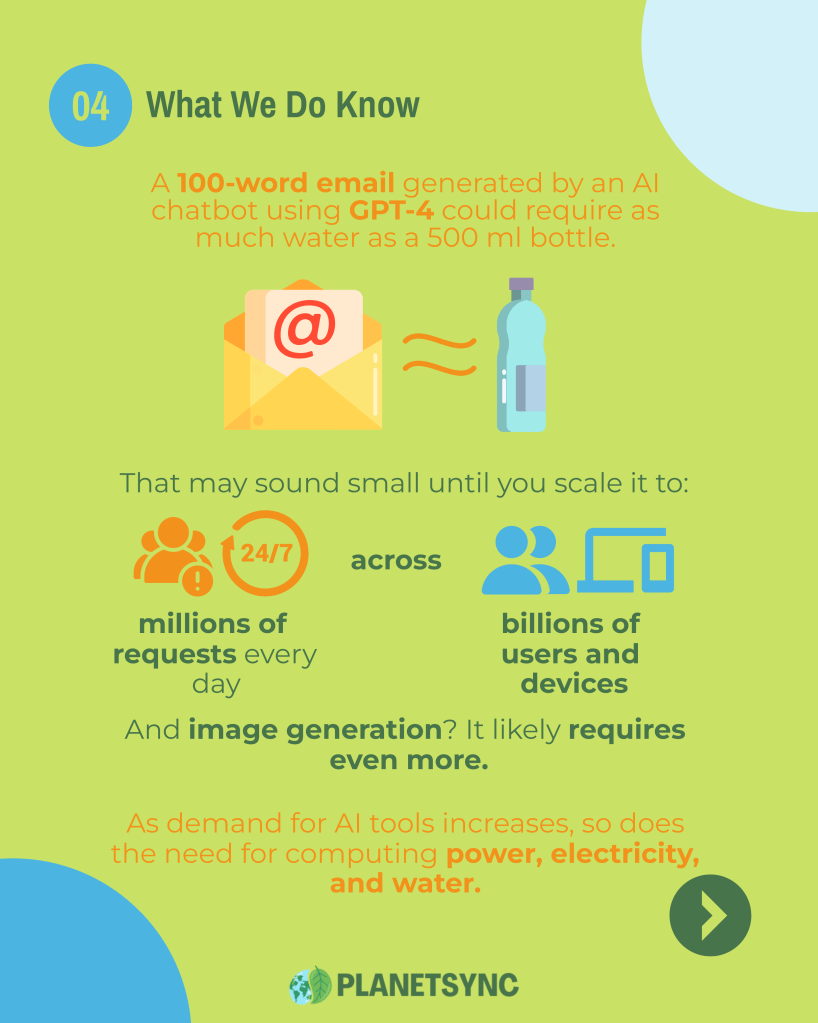
Even though it’s difficult to calculate the exact water cost of generating a single AI-generated image, we do have some other eye-opening numbers. For example, writing a simple 100-word email using ChatGPT-4 could require 519 millilitres of water, a little more than a bottle, depending on where and when the system is running. Most of that water is used indirectly, through the electricity powering the servers and the cooling systems, keeping data centers from overheating. And that’s likely an underestimate.
As AI tools become more powerful and more widely used, the demand for computing power is rapidly increasing, and so is the water required to support it. At the same time, global data center water usage is rising fast, driven by the explosive growth of AI and cloud-based services.
What Tech Companies Are Doing
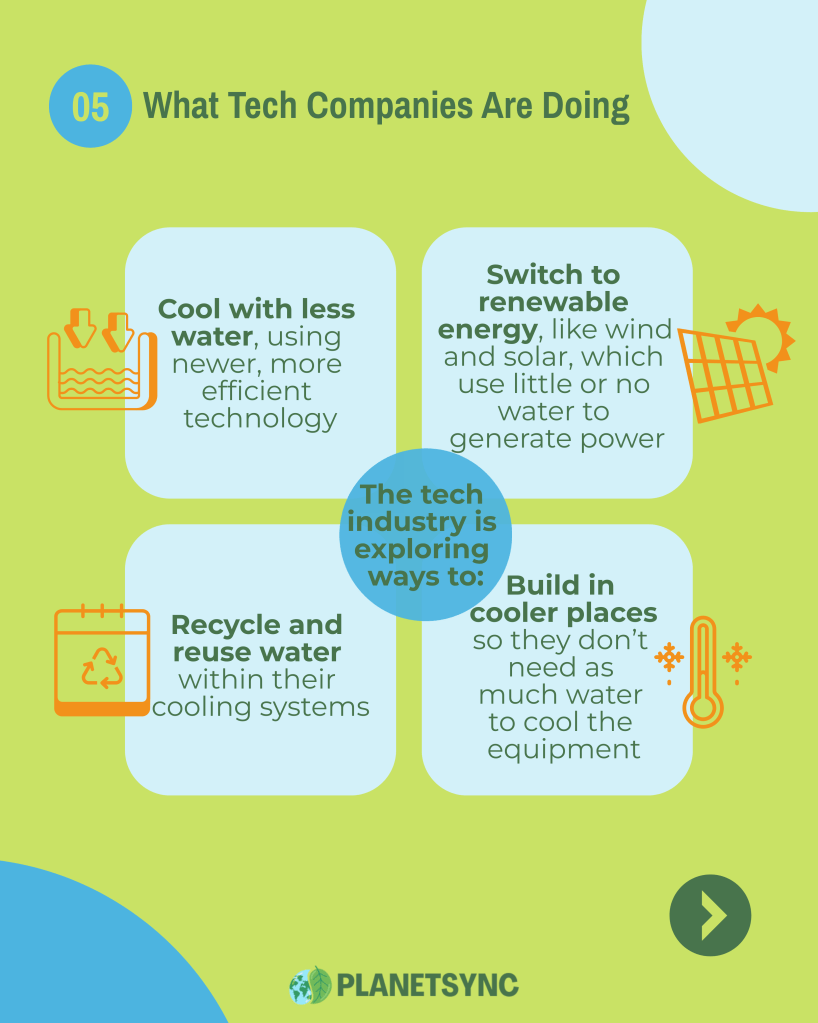
The tech industry is aware of the environmental impact of data centers, including water consumption. They’re exploring ways to:
- Cool with less water, using newer, more efficient technology.
- Switch to renewable energy, like wind and solar, which use little or no water to generate power.
- Recycle and reuse water within their cooling systems.
- Build in cooler places, so they don’t need as much water to cool the equipment.
What You Can Do
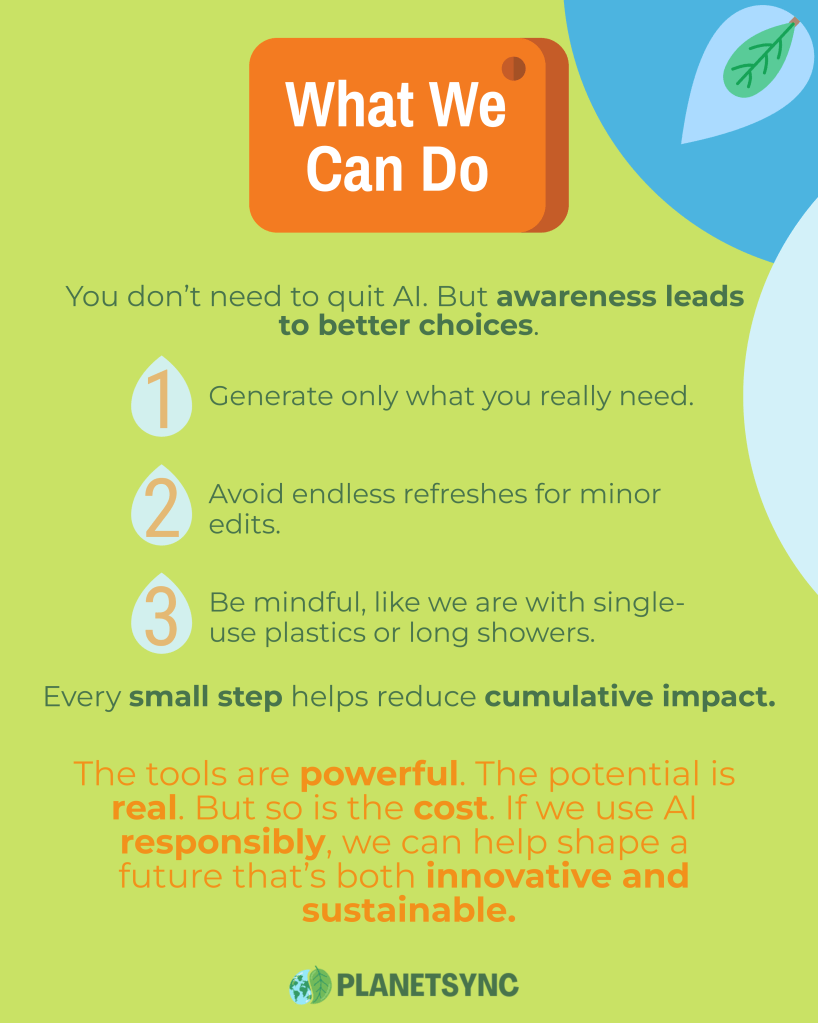
You don’t need to swear off AI entirely. These tools can be helpful, fun, and even transformative. But just like we’re learning to be more conscious about things like single-use plastics or long showers, we also need to think about the digital resources we use.
So, the next time you find yourself generating dozens of images just for fun, or hitting “refresh” again and again to see what looks best, try pausing to ask yourself: Do I really need this?
Awareness leads to better choices. Small actions add up. And if we all use these powerful tools more thoughtfully, we can help shape a tech future that’s creative and sustainable.
References & Resources
- Li, P., Yang, J., Islam, M., & Ren, S. (2025). Making AI Less “Thirsty”: Uncovering and Addressing the Secret Water Footprint of AI Models.
- Zewe, A. (2025, January). Explained: Generative AI’s environmental impact. MIT News.
- Verma, P., & Tan, S. (2024, September 18). A bottle of water per email: the hidden environmental costs of using AI chatbots. The Washington Post.
- Ziegler, M. (2024, March 22). The world’s AI generators: rethinking water usage in data centers to build a more sustainable future. Lenovo StoryHub.
- Grainger. (2024). AI’s Challenging Waters. University of Illinois.
- Spindler, W., Hahn-Petersen, L. A., Hosseini, S., & World Economic Forum. (2024, November 7). Circular water solutions key to sustainable data centres. World Economic Forum.


 planetsync.blog
Leave a comment