


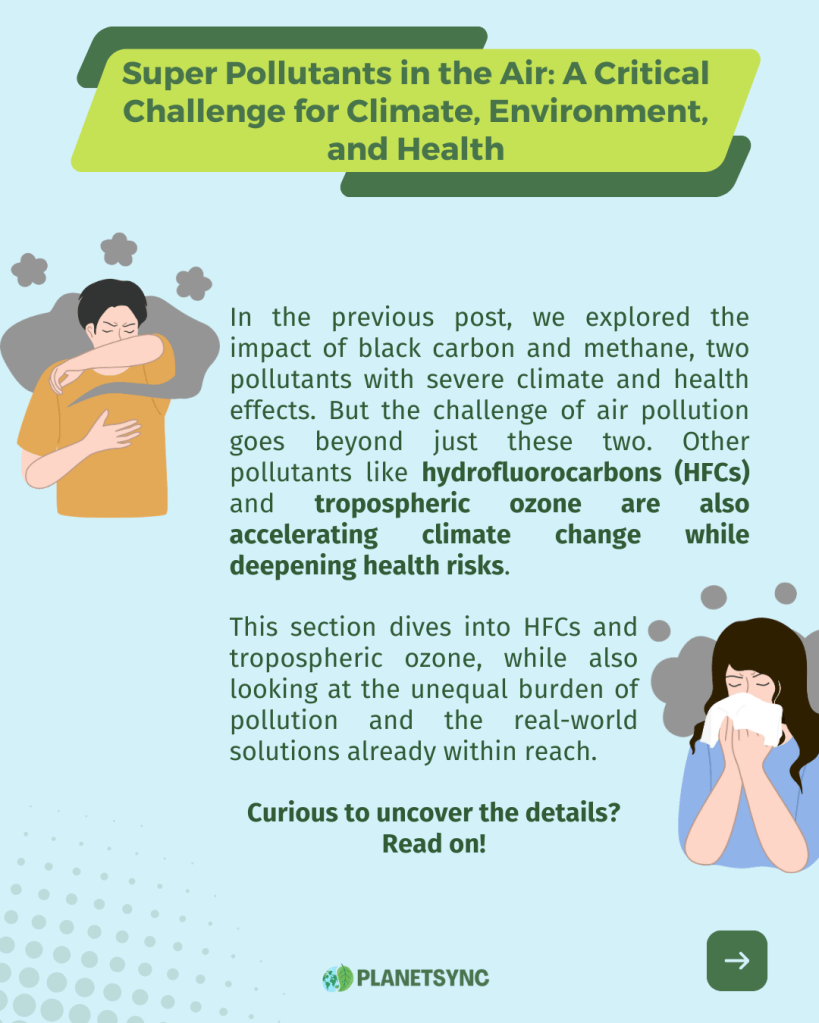
In Super Pollutants in the Air: Black Carbon and Methane, we explored the impact of black carbon and methane, two air pollutants with severe climate and health effects. But the challenge of air pollution goes beyond just these two. Other pollutants like hydrofluorocarbons (HFCs) and tropospheric ozone are also accelerating climate change while deepening health risks.
This section dives into HFCs and tropospheric ozone, while also looking at the unequal burden of pollution and the real-world solutions already within reach. Reducing “super pollutants” is one of the fastest, most cost-effective ways to cool the planet and protect lives, especially in the places that need it most.
Curious to uncover the details? Read on!
Need the Gist? Swipe through the visuals below for a quick summary!

Hydrofluorocarbons (HFCs)
Sources & Formation
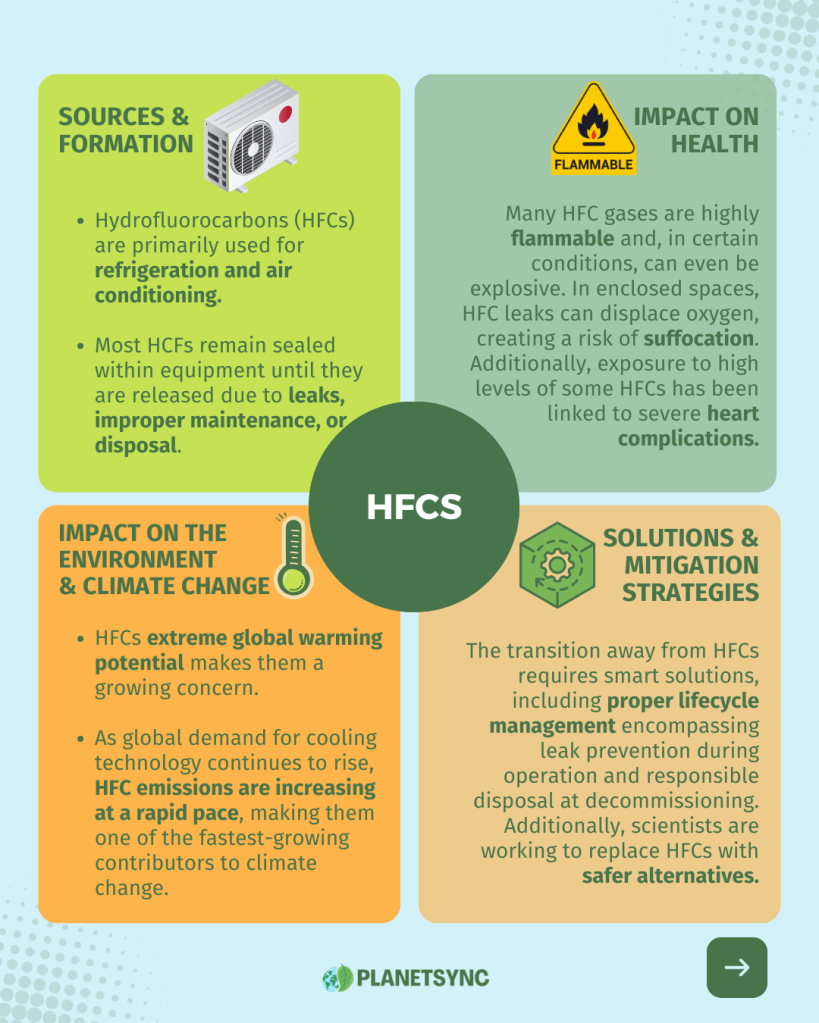
Hydrofluorocarbons (HFCs) are a group of synthetic greenhouse gases (GHG) primarily used for refrigeration and air conditioning. Most HCFs remain sealed within equipment until they are released due to leaks, improper maintenance, or disposal at the end of a product’s life cycle.
Impact on Environment & Climate Change
HFCs currently account for 2% of total GHG emissions, but their extreme global warming potential makes them a growing concern. Many of these chemicals are far more powerful than CO₂ when it comes to the warming effect. One particularly concerning example is HFC-23, which has a global warming potential (GWP) 14,800 times higher than CO₂ over a 100-year period.
As global demand for cooling technology continues to rise, especially in developing countries, HFC emissions are increasing at a rapid pace, making them one of the fastest-growing contributors to climate change.
Impact on Health
HFCs can also pose serious risks to human health and safety. Many HFC gases are highly flammable and, in certain conditions, can even be explosive. In enclosed spaces, HFC leaks can displace oxygen, creating a risk of suffocation. Additionally, exposure to high levels of some HFCs has been linked to severe heart complications.
Solutions & Mitigation Strategies
Although HCFs only remain in the atmosphere for an average of 15 years, their short-term impact is enormous. This means that reducing HFC emissions can bring relatively quick climate benefits.
Efforts to phase down HFCs are already underway. Under the Kigali Amendment to the Montreal Protocol, more than 140 countries have committed to gradually eliminating the production and use of HFCs. Thanks to these efforts, global HFC emissions have already dropped by about 20% compared to previous projections. If fully implemented, this agreement could prevent up to 0.4°C of global warming by 2100, a significant step toward keeping global temperature rise within safe limits.
The transition away from HFCs requires smart solutions, including proper lifecycle management encompassing leak prevention during operation and responsible disposal at decommissioning. Additionally, scientists are working to replace HFCs with safer alternatives, such as advanced gas-less cooling technologies or low-warming-potential gases that have minimal climate impact.
Tropospheric Ozone
Sources & Formation
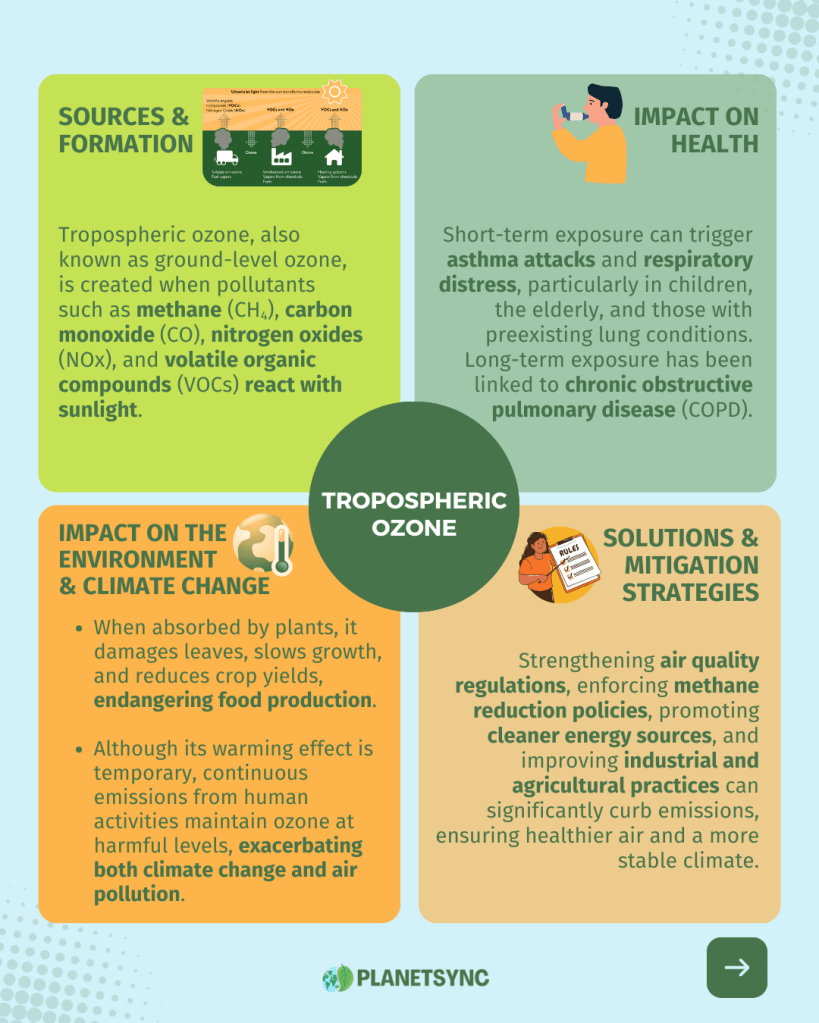
Tropospheric ozone, also known as ground-level ozone, is a harmful air pollutant that forms through complex chemical reactions. Unlike the protective ozone layer high in the atmosphere, ground-level ozone is not directly emitted but is instead created when pollutants such as methane (CH4), carbon monoxide (CO), nitrogen oxides (NOx), and volatile organic compounds (VOCs) react with sunlight. These pollutants come primarily from human activities, including burning fossil fuels in cars, power plants, and factories, as well as from industrial processes like oil and gas extraction.
Because tropospheric ozone forms through chemical reactions in the air, its levels vary by location and time. In heavily polluted urban areas, it may persist for only a few hours to a few weeks before breaking down or reacting with other substances. Despite this short lifespan, its impact could be severe.
Impact on Environment & Climate Change
Tropospheric ozone poses a serious threat to agriculture and biodiversity. When absorbed by plants, it damages leaves, slows growth, and reduces crop yields, endangering food production. Scientists estimate that by 2050, Europe could lose up to 16.8 million metric tons of wheat due to ground-level ozone exposure, threatening global food security and nutrition for millions of people worldwide.
In addition to harming ecosystems, tropospheric ozone is a potent GHG. While it has a short atmospheric lifespan, it effectively traps heat, contributing to global warming. Although its warming effect is temporary, continuous emissions from human activities maintain ozone at harmful levels, exacerbating both climate change and air pollution.
Impact on Health
Short-term exposure can trigger asthma attacks and respiratory distress, particularly in children, the elderly, and those with preexisting lung conditions. Long-term exposure has been linked to chronic obstructive pulmonary disease (COPD), a serious condition that causes inflammation and permanent damage to the lungs, making it increasingly difficult to breathe.
Solutions & Mitigation Strategies
Reducing emissions of ozone-forming pollutants, particularly methane, is crucial for lowering ozone pollution and mitigating climate change. Strengthening air quality regulations, enforcing methane reduction policies, promoting cleaner energy sources, and improving industrial and agricultural practices can significantly curb emissions, ensuring healthier air and a more stable climate.
The Unequal Burden of Air Pollution
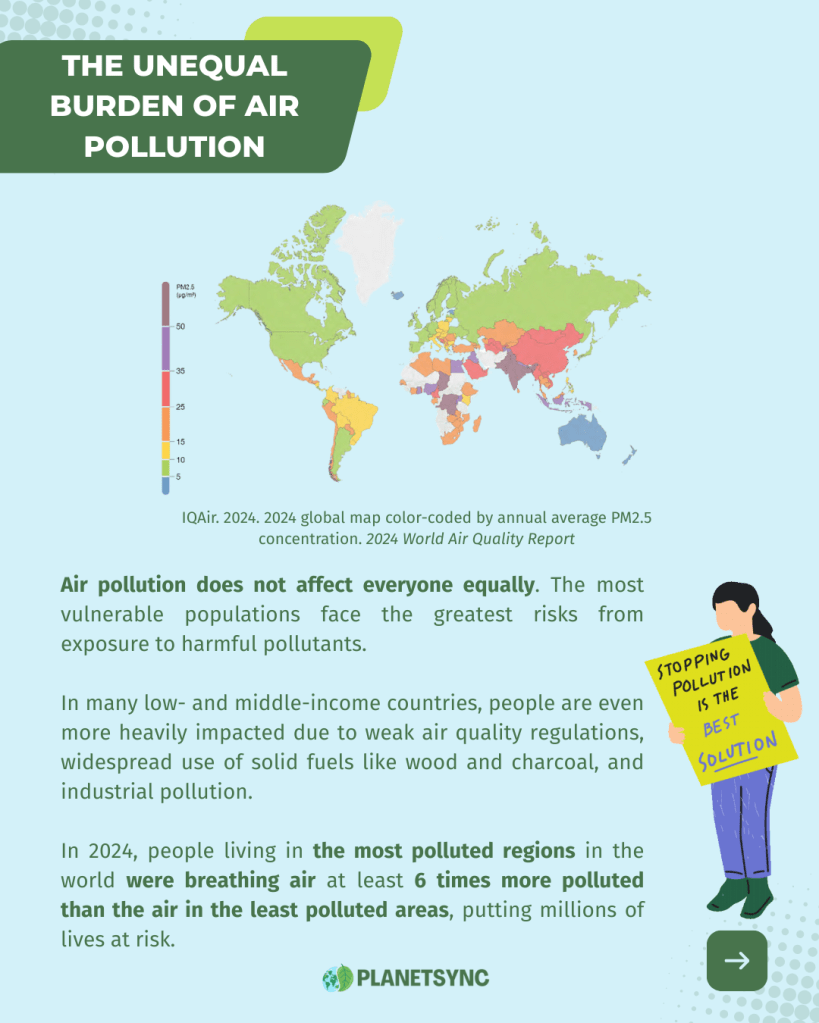
Air pollution does not affect everyone equally. The most vulnerable populations, including children, pregnant women, the elderly, and individuals with pre-existing health conditions, face the greatest risks from exposure to harmful pollutants.
In many low- and middle-income countries, people are even more heavily impacted due to weak air quality regulations, widespread use of solid fuels like wood and charcoal, and industrial pollution. In 2024, people living in the most polluted regions in the world were breathing air at least six times more polluted than the air in the least polluted areas, putting millions of lives at risk.
Addressing Super Pollutants: A Path to Cleaner Air and Climate Stability
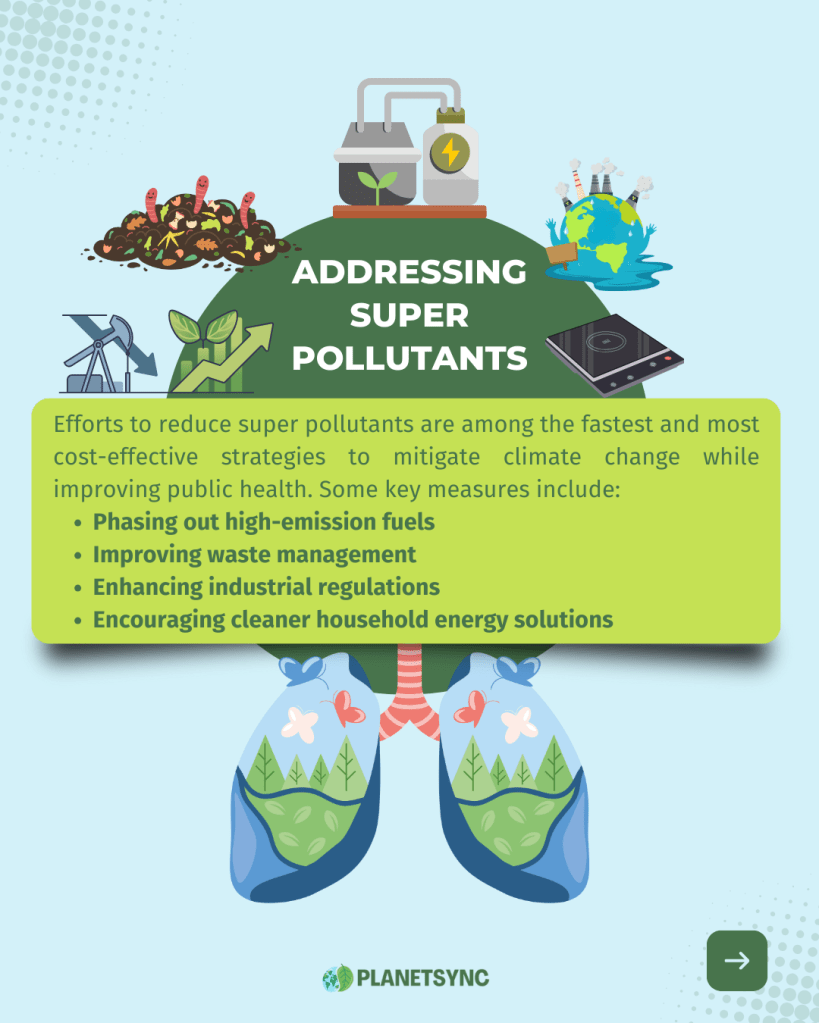
Efforts to reduce super pollutants are among the fastest and most cost-effective strategies to mitigate climate change while improving public health. Some key measures include:
- Phasing out high-emission fuels. Transitioning from coal, diesel, and biomass to cleaner energy sources like wind, solar, or natural gas would significantly reduce black carbon and methane emissions.
- Improving waste management. Capturing methane from landfills and promoting composting or anaerobic digestion can significantly cut methane emissions.
- Enhancing industrial regulations. Stricter limits on HFCs and NOₓ emissions can lower ozone pollution and prevent further warming.
- Encouraging cleaner household energy solutions. Shifting from biomass-based stoves to cleaner alternatives like electric stoves reduces household emissions of black carbon.
A Critical Moment to Tackle Super Pollutants
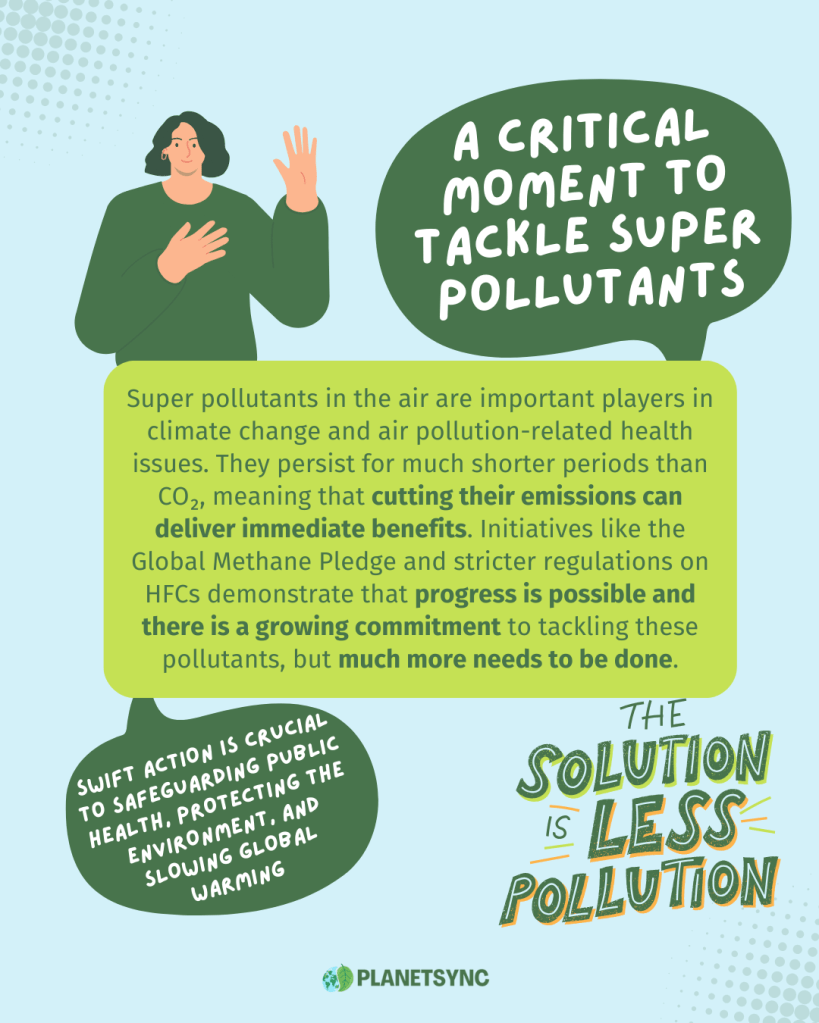
Super pollutants in the air are important players in climate change and air pollution-related health issues. They persist for much shorter periods than CO₂, meaning that cutting their emissions can deliver immediate benefits. Initiatives like the Global Methane Pledge and stricter regulations on HFCs demonstrate that progress is possible and a growing commitment to tackling these pollutants, but much more needs to be done. Swift action is crucial to safeguarding public health, protecting the environment, and slowing global warming. The solutions are clear, but bold action and global commitment are needed to put them into practice.
References & Resources
- Bessagnet, B., Belis, C., Crippa, M., Dentener, F., Van, D. R., & Thunis, P. (2024). Trends of methane emissions and their impact on ozone concentrations at the European and Global levels. JRC Publications Repository. https://doi.org/10.2760/376659
- Climate-friendly alternatives to HFCs. (n.d.). European Commission.
- Cutting methane emissions key to fighting climate change and harmful ozone. (2024). European Commission.
- Europe’s air quality status 2023. (2023.). European Environment Agency.
- Global Methane Pledge. (n.d.). Climate and Clean Air Coalition (CCAC).
- Global Risks Report 2025. (n.d.). World Economic Forum.
- Gul, C., Mahapatra, P. S., Kang, S., Singh, P. K., Wu, X., He, C., Kumar, R., Rai, M., Xu, Y., & Puppala, S. P. (2021). Black carbon concentration in the central Himalayas: Impact on glacier melt and potential source contribution. Environmental Pollution, 275, 116544. https://doi.org/10.1016/j.envpol.2021.116544
- State of Global Air 2024. Special Report. (2024). Health Effects Institute.
- Hydrofluorocarbons (HFCs). (n.d.). Swedish Pollutant Release and Transfer Register.
- Hydrofluorocarbons (HFCs). (n.d.). Climate and Clean Air Coalition (CCAC).
- Kang, S., Zhang, Y., Qian, Y., & Wang, H. (2020). A review of black carbon in snow and ice and its impact on the cryosphere. Earth-Science Reviews, 210, 103346. https://doi.org/10.1016/j.earscirev.2020.103346
- Scientific Assessment of Ozone Depletion 2022: Executive Summary. (n.d.). Chemical Sciences Laboratory (CSL).
- Li, C., Bosch, C., Kang, S., Andersson, A., Chen, P., Zhang, Q., Cong, Z., Chen, B., Qin, D., & Gustafsson, Ö. (2016). Sources of black carbon to the Himalayan–Tibetan Plateau glaciers. Nature Communications, 7(1), 12574. https://doi.org/10.1038/ncomms12574
- Liu, Z., Doherty, R. M., Wild, O., O’Connor, F. M., & Turnock, S. T. (2022). Tropospheric ozone changes and ozone sensitivity from the present day to the future under shared socio-economic pathways. Atmospheric Chemistry and Physics, 22(2), 1209–1227. https://doi.org/10.5194/acp-22-1209-2022
- Lu, X., Zhang, L., & Shen, L. (2021). Chapter 2—Tropospheric ozone interacts with weather and climate. In M. Gao, Z. Wang, & G. Carmichael (Eds.), Air Pollution, Climate, and Health (pp. 15–46). Elsevier. https://doi.org/10.1016/B978-0-12-820123-7.00006-1
- Mar, K. A., Unger, C., Walderdorff, L., & Butler, T. (2022). Beyond CO2 equivalence: The impacts of methane on climate, ecosystems, and health. Environmental Science & Policy, 134, 127–136. https://doi.org/10.1016/j.envsci.2022.03.027
- Methane. (n.d.). Climate & Clean Air Coalition.
- Methane & Health. (n.d.). The Global Climate and Health Alliance.
- Methane emissions. (n.d.). European Commission.
- Prather, M. J., & Zhu, X. (2024). Lifetimes and timescales of tropospheric ozone. Elementa: Science of the Anthropocene, 12(1), 00112. https://doi.org/10.1525/elementa.2023.00112
- Schraufnagel, D. E., Balmes, J. R., Cowl, C. T., De Matteis, S., Jung, S.-H., Mortimer, K., Perez-Padilla, R., Rice, M. B., Riojas-Rodriguez, H., Sood, A., Thurston, G. D., To, T., Vanker, A., & Wuebbles, D. J. (2019). Air Pollution and Noncommunicable Diseases. Chest, 155(2), 417–426. https://doi.org/10.1016/j.chest.2018.10.041
- The latest EU Background News on Black Carbon. (n.d.). Arctic Monitoring and Assessment Programme Working Group (AMAP).
- Toxic blaze: The true cost of crop burning. (2021, August 16). United Nations Environment Programme (UNEP).
- Ground-level Ozone Pollution. US EPA.
- Importance of Methane [Overviews and Factsheets]. US EPA.
- Why measuring black carbon is key to climate change mitigation. (2025, February 25). World Economic Forum.
- Xie, X., Zhao, Z., Li, S., Lu, Z., Chen, L., & Cai, J. (2024). Spatiotemporal variations of atmospheric black carbon concentration and its correlation with meteorological and environmental factors in Xinjiang, China, from 2010 to 2022. PeerJ, 12, e18187. https://doi.org/10.7717/peerj.18187
- Zhang, Y., Zhang, Q., Cheng, Y., Su, H., Li, H., Li, M., Zhang, X., Ding, A., & He, K. (2018). Amplification of light absorption of black carbon associated with air pollution. Atmospheric Chemistry and Physics, 18, 9879–9896. https://doi.org/10.5194/acp-18-9879-2018


 planetsync.blog
Leave a comment