


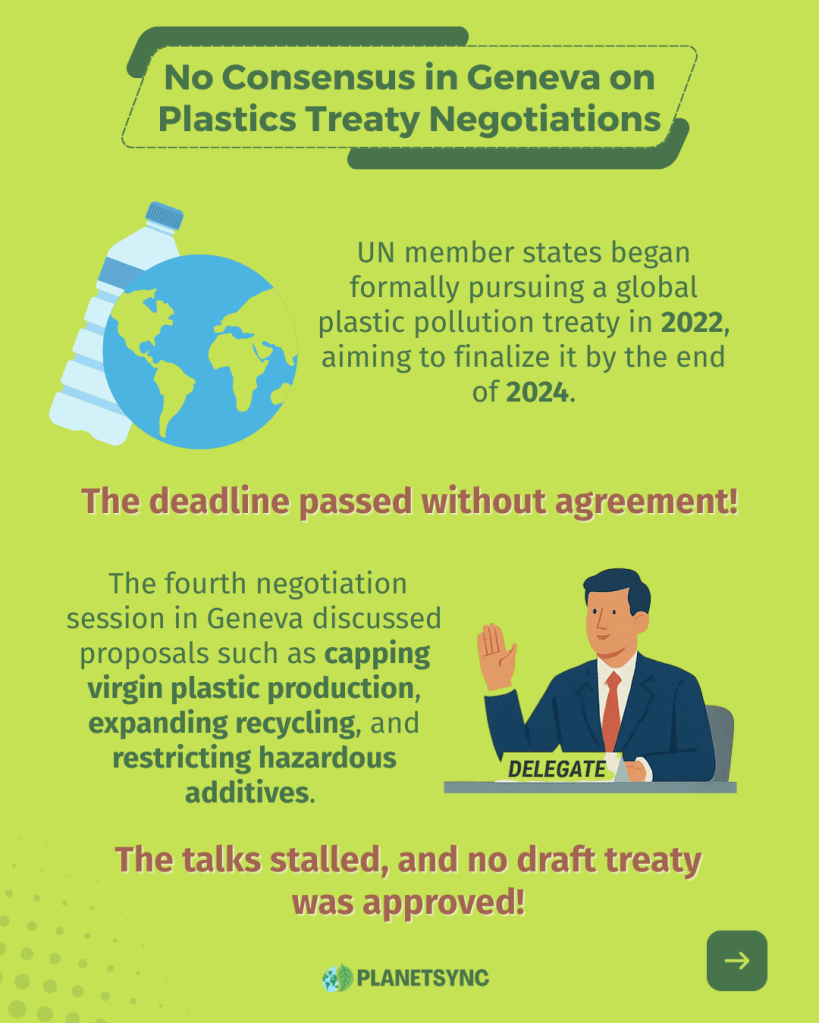
The push for a global treaty on plastic pollution has been underway for years, gaining formal momentum in 2022 when UN member states committed to finalize a legally binding agreement by the end of 2024. The goal passed without a deal. The Geneva meeting, the fourth formal negotiation session, was part of extended talks intended to close persistent gaps between negotiating blocs. Over 2 weeks, delegates considered proposals ranging from limits on virgin plastic production to expanded recycling systems and tighter controls on hazardous additives. By the close, entrenched differences over both ambition and decision-making procedures left the process without a consolidated draft or even a timetable for the next round.
Need the Gist? Swipe through the visuals below for a quick summary!
Main Points of Disagreement
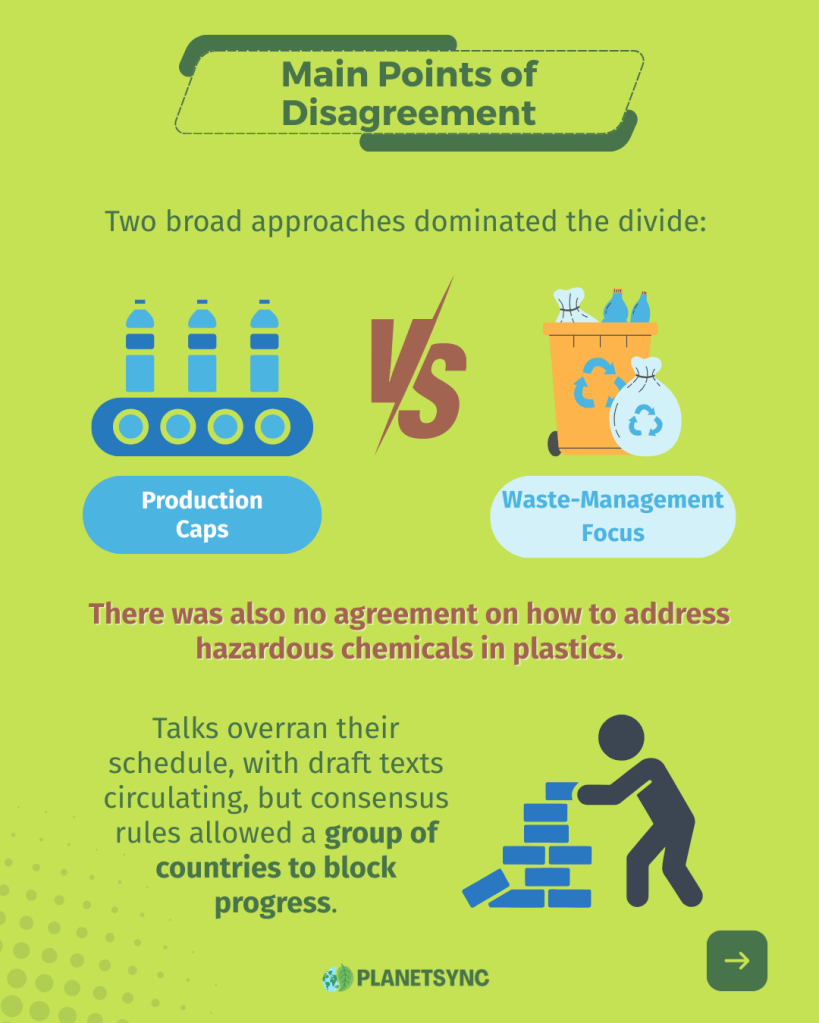
Production Caps
The EU, small island states, and many environmental advocates pushed for binding restrictions on virgin plastic production, arguing that without curbing production at the source, waste management measures will be insufficient to address the scale of the problem.
Waste-Management Focus
The U.S., Saudi Arabia, Russia, and other major petrochemical producers resisted caps. They favored measures to improve recycling infrastructure, promote product redesign, and expand waste collection systems.
There was also no agreement on how to address hazardous chemicals in plastics.
Negotiations ran past the scheduled end, with competing draft texts in circulation, but none gained the support required under the current consensus rules, enabling a small group of countries to block progress.
Implications of Stalemate
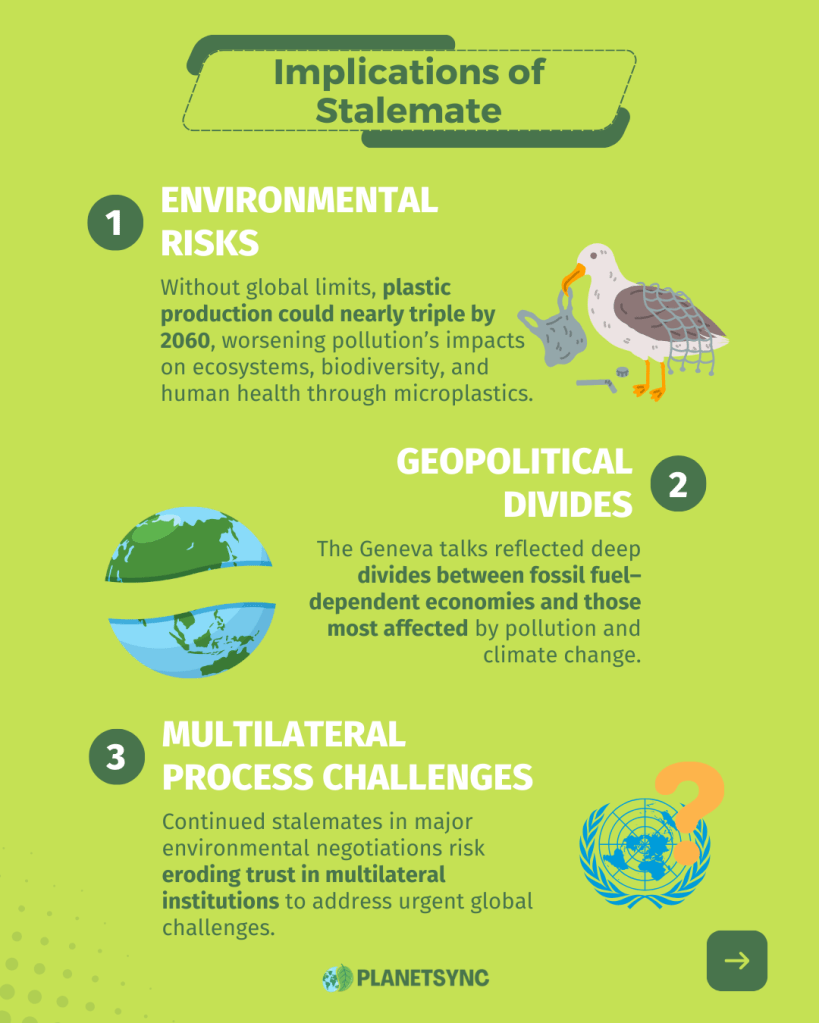
Environmental Risks
Without international limits or coordinated controls, global plastic production is projected by the OECD to nearly triple by 2060, with corresponding increases in pollution affecting oceans, freshwater, biodiversity, and human health through microplastic contamination.
Geopolitical Divides
The positions taken in Geneva echo broader divisions between economies heavily invested in fossil fuel–based industries and those facing disproportionate impacts from pollution and climate change.
Multilateral Process Challenges
Repeated stalemates in high-profile environmental negotiations could undermine confidence in the ability of multilateral institutions to deliver solutions to urgent, transboundary problems.
Breaking the Deadlock
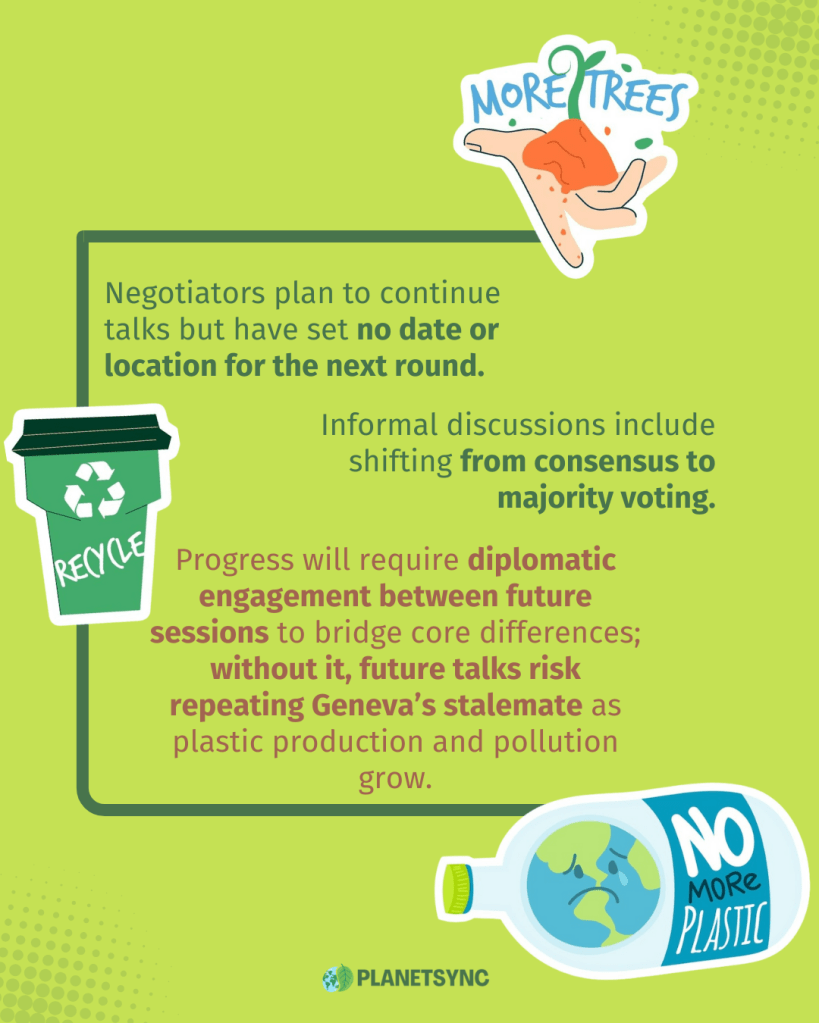
Although negotiators expressed commitment to continue the process, no formal date or location has been set for the next round. Options under informal discussions include modifying the decision-making process to allow for majority voting rather than requiring full consensus. Proponents argue this could reduce stalemates; opponents warn it could alienate key states and weaken compliance. Moving forward will depend on targeted diplomatic engagement between future sessions to reduce differences on core issues. Without such groundwork, subsequent rounds risk repeating the Geneva outcome, with plastic production and pollution continuing to rise in the meantime.
References & Resources
- Cate Bonacini. (n.d.). Geneva Plastics Treaty Talks End in Abject Failure. Center for International Environmental Law. https://www.ciel.org/news/geneva-plastics-treaty-talks-end-in-abject-failure/
- Civillini, M. (2025, August 15). Plastics treaty talks collapse without a deal after “chaotic” negotiations. Climate Home News. https://www.climatechangenews.com/2025/08/15/plastics-treaty-talks-collapse-without-a-deal-after-chaotic-negotiations/
- Farge, E., Poidevin, O. L., & Farge, E. (2025, August 15). Plastic pollution treaty stalled as Geneva talks end without deal. Reuters. https://www.reuters.com/sustainability/climate-energy/plastic-pollution-treaty-stalled-geneva-talks-end-without-deal-2025-08-15/
- McDERMOTT, J. (2025, August 15). Plastic pollution treaty talks in Geneva end without an agreement. AP News. https://apnews.com/article/plastic-pollution-treaty-negotiations-united-nations-geneva-e73090282a22be7ff5979ea2d648dc10
- OECD. (2022, June 3). Global plastic waste set to almost triple by 2060, says OECD. https://www.oecd.org/en/about/news/press-releases/2022/06/global-plastic-waste-set-to-almost-triple-by-2060.html
- Paddison, L. (2025, August 15). Global plastic treaty talks end in failure as countries remain bitterly divided over how to tackle the crisis. CNN. https://www.cnn.com/2025/08/15/climate/global-plastics-treaty-pollution-failure-un
- Poidevin, O. L., Farge, E., & Farge, E. (2025, August 14). Plastic pollution talks go into overtime as countries push for late breakthrough. Reuters. https://www.reuters.com/sustainability/climate-energy/plastic-pollution-talks-go-into-overtime-countries-push-late-breakthrough-2025-08-14/
- SPREP. (n.d.). Historic missed opportunity, plastic treaty talks end in Geneva with no deal | Pacific Environment. https://www.sprep.org/news/historic-missed-opportunity-plastic-treaty-talks-end-in-geneva-with-no-deal


 planetsync.blog
Leave a comment