

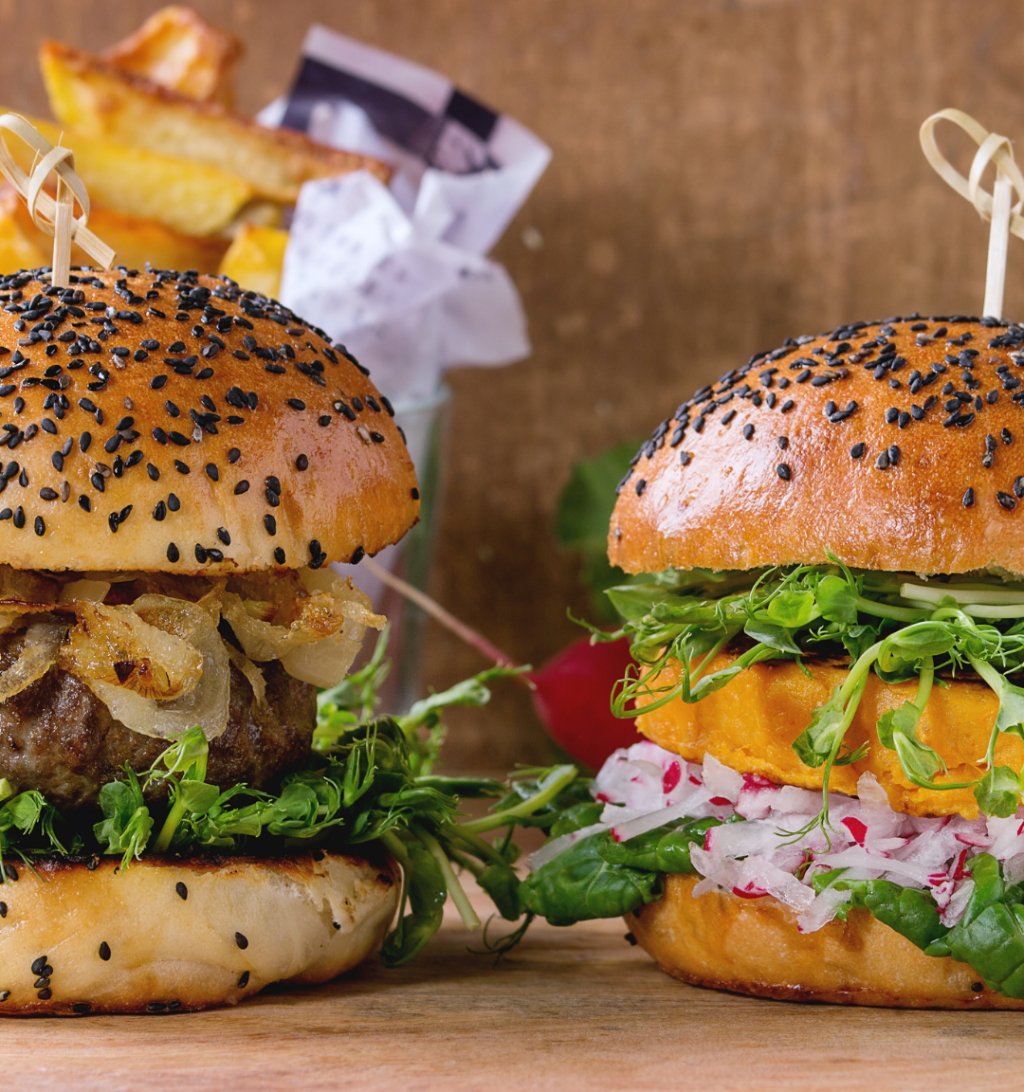
Last week, the European Parliament reignited a long-running debate over how plant-based foods should be labelled. Lawmakers voted to restrict the use of familiar “meaty” terms such as burger, sausage, or steak for products that do not contain animal meat. The amendment passed by 355 votes to 247 and forms part of a broader review of the EU’s Common Market Organisation regulations.
If ultimately approved through negotiations with the European Commission and member states, the measure would mean that terms like “veggie burger” or “soy sausage” could no longer appear on packaging or menus. Instead, producers might have to adopt new labels. The proposal, however, has sparked controversy far beyond Brussels.
Let’s take a closer look at what lies behind this linguistic dispute!
Need the Gist? Swipe through the visuals below for a quick summary!



Why propose such a ban?
Supporters of the restriction argue that the measure is primarily about consumer transparency and the protection of long-standing food traditions. They claim that names such as “burger” and “steak” are historically tied to animal products and using them for plant-based or lab-grown foods risks misleading consumers.
Behind this rhetoric lies a broader political concern. Europe’s livestock farmers, already under pressure from climate policies, rising costs, and changing diets, see the growth of plant-based products as both a market and cultural threat. Some parliamentarians view the proposed naming rules as a symbolic defence of rural livelihoods and culinary heritage.
What are the counterarguments?
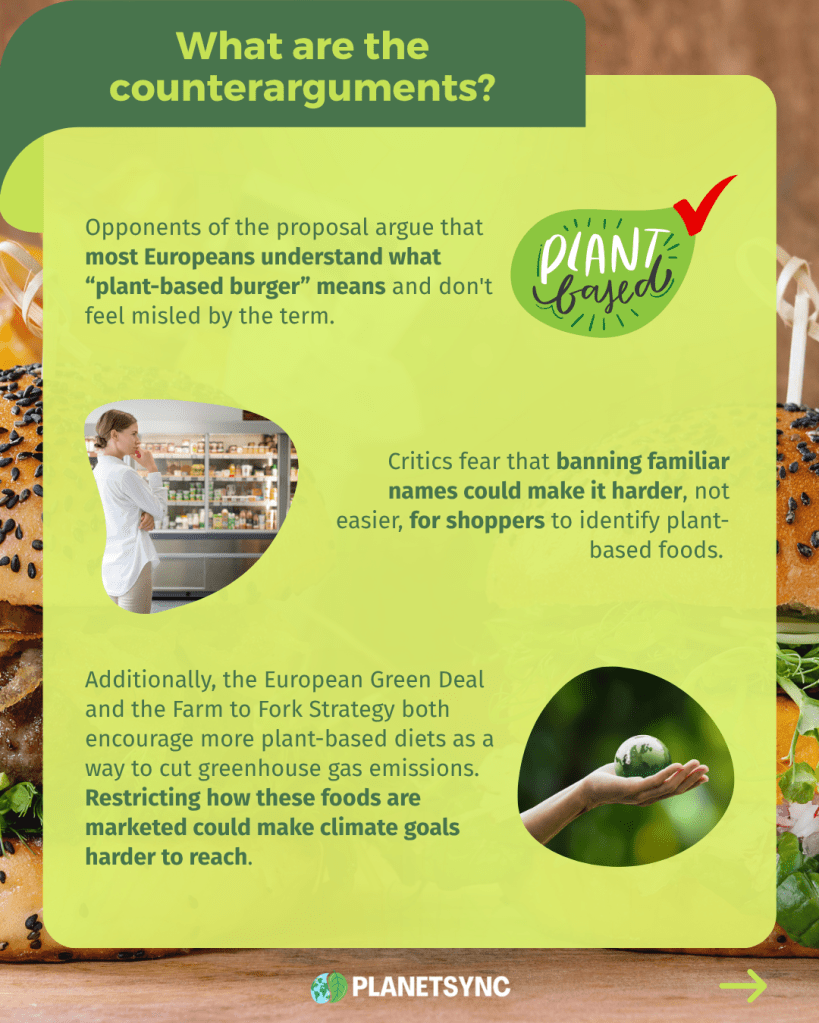
Opponents of the proposal see the issue differently. They argue that the public is not confused by terms like “veggie burger,” and products are clearly labelled as plant-based. Research suggests that a large majority of consumers understand what these terms mean and support their continued use.
Critics also point out that the amendment reflects political influence more than consumer demand. Agricultural lobbies have pushed for restrictions on plant-based marketing for years, framing it as a matter of fairness, while environmental and innovation groups view it as an attempt to slow competition from new, low-emission foods.
Banning well-known terms, they argue, could create more confusion rather than less. Replacing burger with an unfamiliar term such as plant disc might obscure, not clarify, what is being sold. It could also slow the transition toward more sustainable diets by making plant-based products less recognisable or appealing to mainstream consumers.
Environmental advocates highlight another tension: inconsistency within the EU’s own sustainability agenda. The Green Deal and the Farm to Fork Strategy both encourage a shift toward lower-emission diets and innovation in alternative proteins. Limiting how these foods can be named, they say, risks undermining those objectives by making it harder to promote climate-friendly choices.
What Could Happen Next
For now, the amendment remains a proposal. It will enter so-called trilogue negotiations among the European Parliament, the European Commission, and the Council of the EU, where national governments are represented. The final text could be softened, clarified, or even rejected. Some member states have signalled reservations, fearing an overly restrictive approach that may conflict with consumer preferences or national food cultures.
The outcome of those talks will determine whether the term “veggie burger” survives in Europe’s supermarkets. Even if the amendment is watered down, the debate has already highlighted how language, culture, and commerce intersect in the EU’s evolving food landscape.
References & Resources
- Rankin, J. (2025, October 8). “Veggie burgers” could be off EU menu as MEPs back renaming plant-based foods. The Guardian; The Guardian. https://www.theguardian.com/world/2025/oct/08/veggie-burgers-off-menu-meps-vote-ban-plant-based-food-terms
- Kupemba, D. (2025, October 8). EU parliament votes to ban meat names for plant-based foods. BBC News. https://www.bbc.com/news/articles/c3w5v75deewo
- Arboleas, M. (2025, October 8). Parliament pushes for “veggie burger” ban. Euractiv. https://www.euractiv.com/news/parliament-pushes-for-veggie-burger-ban/
- Reuters. (2025, October 8). EU lawmakers push to ban term “veggie-burger.” Reuters. https://www.reuters.com/business/eu-lawmakers-push-ban-term-veggie-burger-2025-10-08/
- Brzeziński, B. & Griera, M. (2025, October 9). EU Parliament votes to ban veggie burgers — then serves them for lunch. POLITICO. https://www.politico.eu/article/eu-parliament-veggie-burger-ban/


 planetsync.blog
Leave a comment