


You know that feeling when you order something tiny online, and it shows up in a box 3x bigger than necessary, and sometimes filled with an absurd amount of bubble wrap? Or when you’re at the grocery store, and even the cucumbers are wrapped in plastic… like, why? It’s frustrating, wasteful, and honestly feels ridiculous. Well, here’s some good news: the European Union (EU) is (finally) doing something about it!
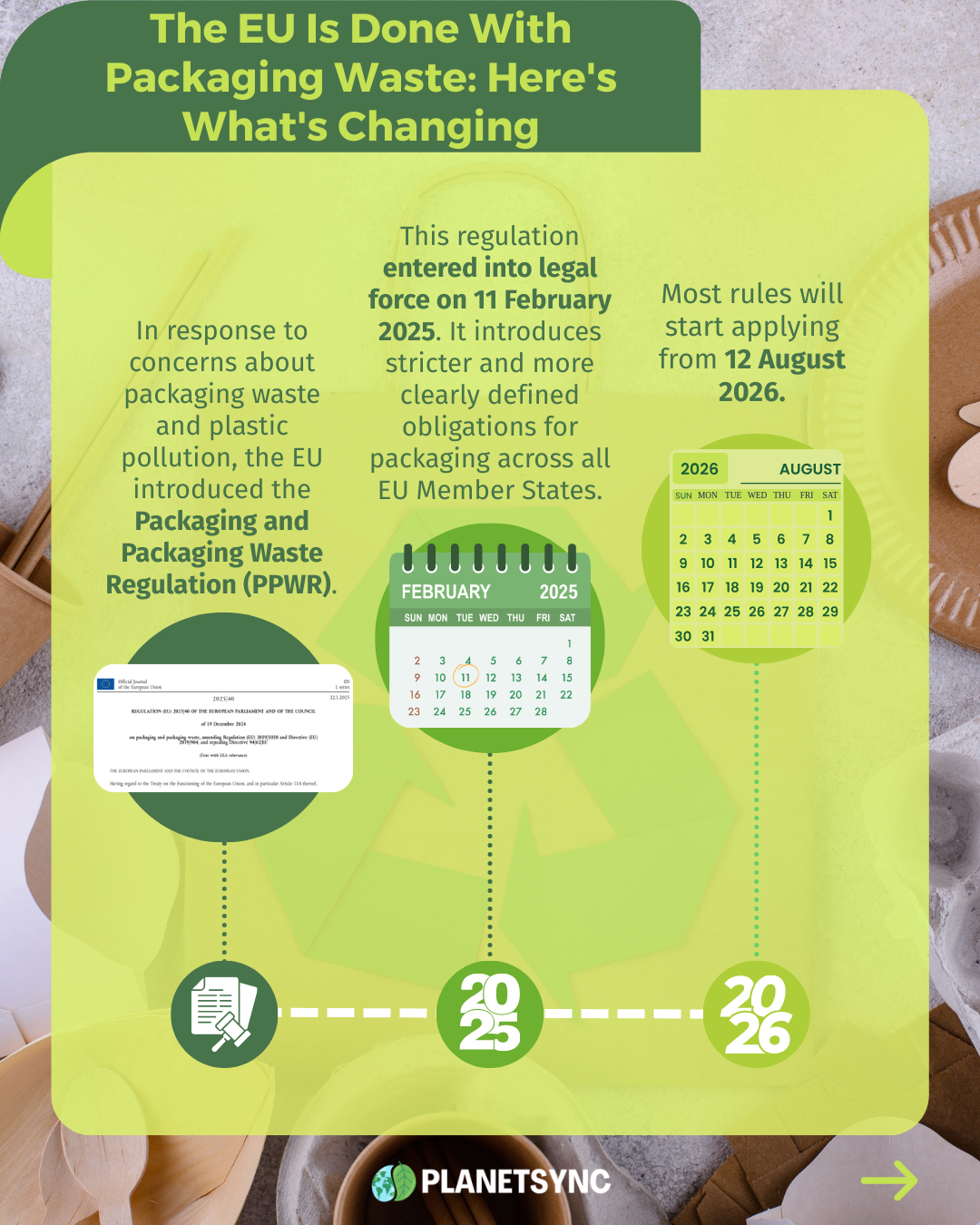
This year, the EU rolled out a new ‘framework’ called the Packaging and Packaging Waste Regulation (PPWR for short), which entered into legal force on February 11, 2025, replacing outdated rules from way back in 1994. The difference? These new rules actually have enforcement power.
So let’s unpack what’s changing and why it matters to you!
Need the Gist? Swipe through the visuals below for a quick summary!
Why the Old Rules Weren’t Working
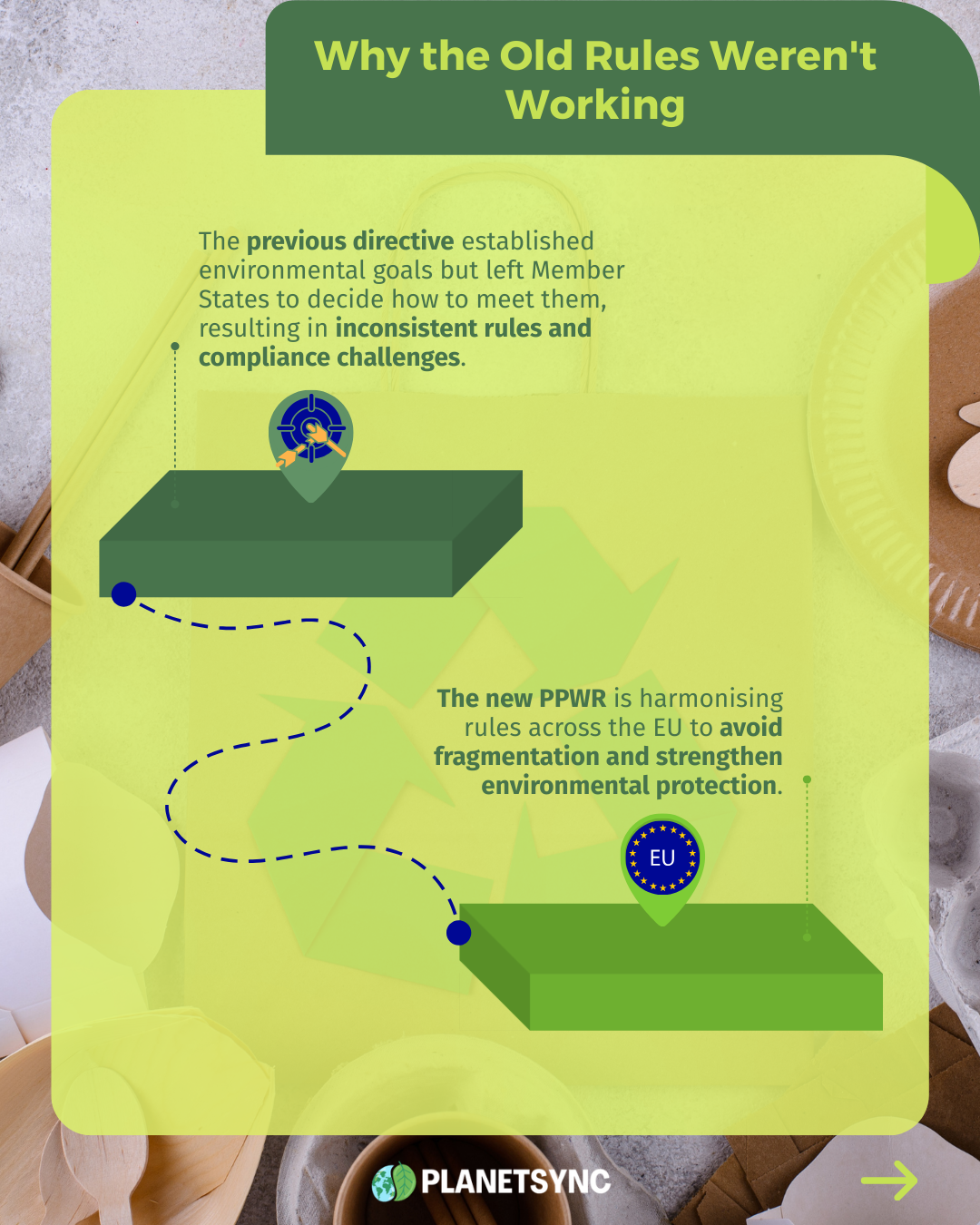
For the past 30 years, EU packaging rules came from something called a directive. These rules were written when the internet was barely a thing, and nobody had even heard of Amazon packaging nightmares yet! And here’s the thing about directives: they tell countries “hey, you need to hit these goals,” but then each country gets to make up its own specific rules for how to get there. Sounds reasonable in theory, but in practice, it created chaos. A company selling across Europe had to deal with different packaging rules in every country; what Germany allowed might be banned in France, or require completely different labels in Spain. It was a compliance nightmare, and all those gaps and inconsistencies meant wasteful packaging kept sneaking through.
Now they’ve switched to a regulation, which works completely differently. A regulation isn’t a goal countries have to figure out; it’s the actual law, word-for-word, the same in all 27 EU countries, effective immediately. No wiggle room, no “but we do it differently here.” One rule, everywhere!
The Main Things to Know
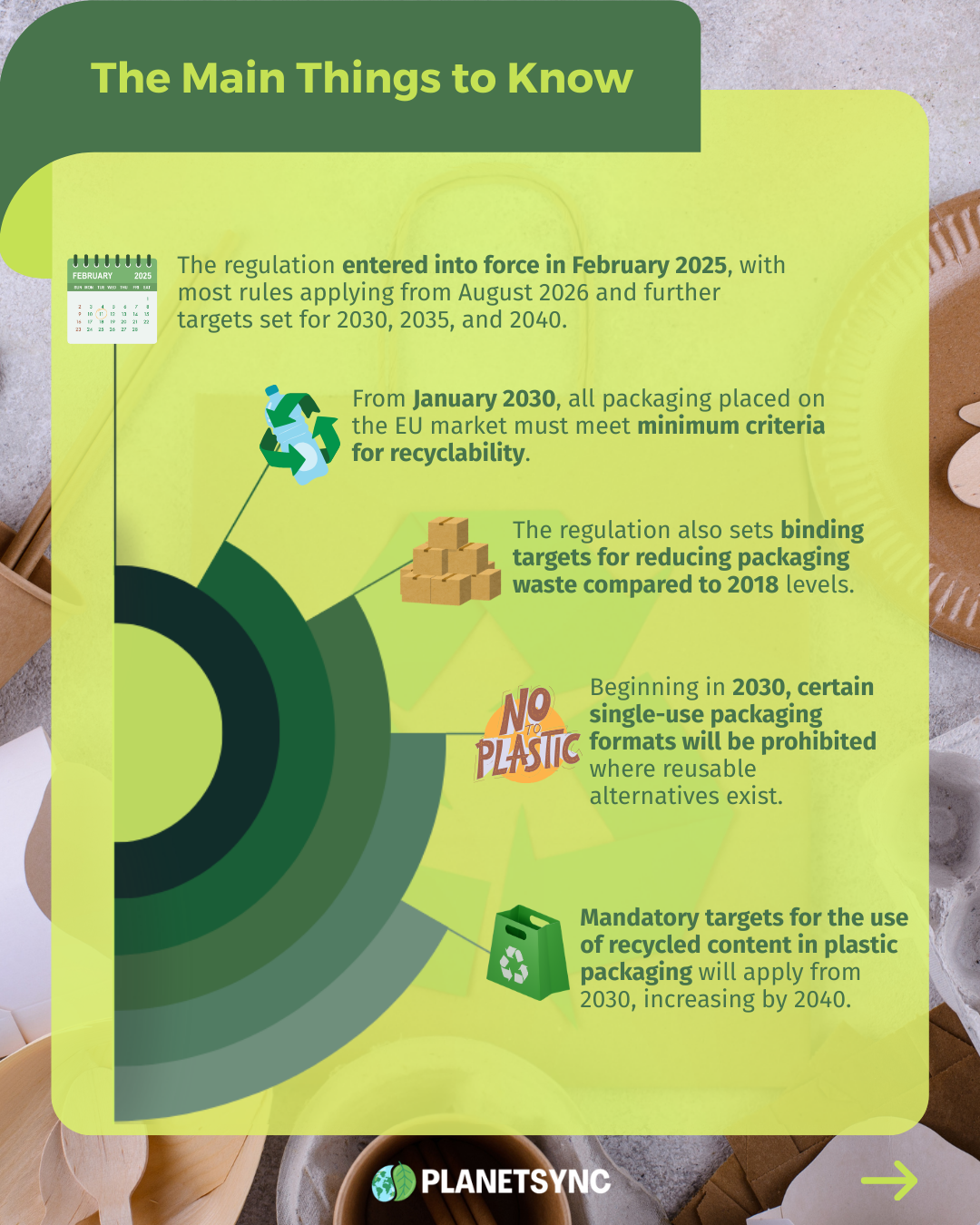
Although the regulation officially came into force in February 2025, it includes a transition period to give businesses and governments time to adapt.
Starting January 1, 2030, all packaging sold in the EU has to meet minimum recyclability standards. Think of it like a grade system, packaging needs at least a ‘C’ grade at first, then by January 1, 2038, it needs to hit ‘B’ or better. This means no more ‘technically recyclable’ packaging that your local facility can’t actually process. If it says recyclable, it has to actually be recyclable where you are.
EU countries also will need to cut packaging waste without compromising product safety by 5% by 2030, 10% by 2035, and 15% by 2040 (compared to 2018 levels). This means you’ll start seeing smaller boxes, less filler material, and hopefully an end to those ridiculously oversized packages.
From 2030 onwards, certain wasteful single-use items are getting banned, including those tiny shampoo bottles in hotels, single-use ketchup packets at restaurants, and plastic wrap on fruits and veggies that don’t need it. If there’s a reusable alternative that works just as well, the throwaway version must go, finally!
Plastic packaging will need to include minimum amounts of recycled content; the exact percentage depends on what it’s for, but the point is clear: companies can’t keep making new plastic from scratch when recycled material exists.
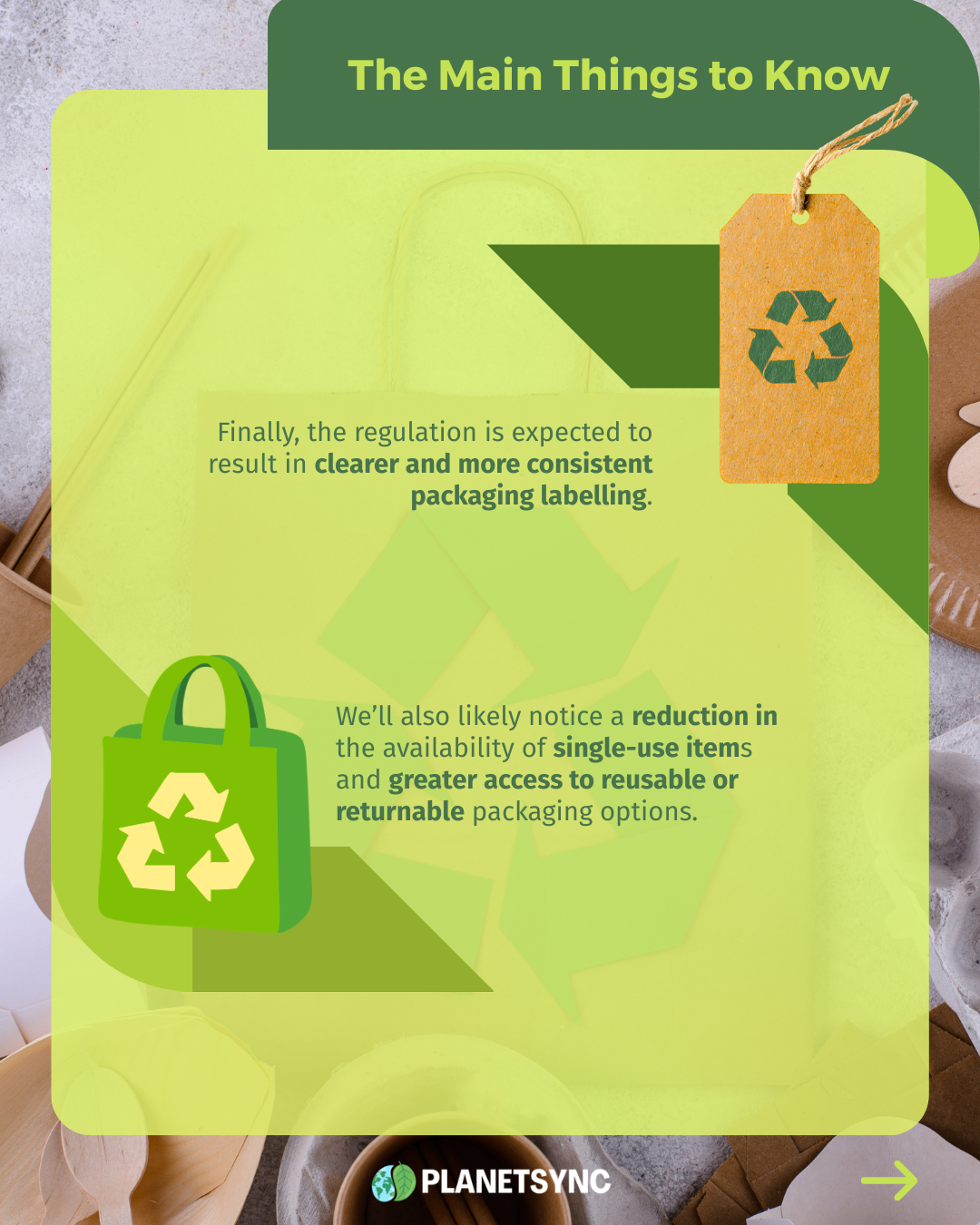
Finally, the regulation is also expected to result in clearer and more consistent packaging labelling. Packaging will need to include standardised labels indicating whether it is recyclable, reusable, or compostable, along with instructions for proper disposal. These measures are intended to reduce confusion about waste sorting and encourage environmentally responsible choices.
Reusable Packaging Is Making a Comeback
Do you remember when milk came in glass bottles that you’d return to the store? If you don’t, ask your grandparents, because that whole system is coming back, and not just for milk.
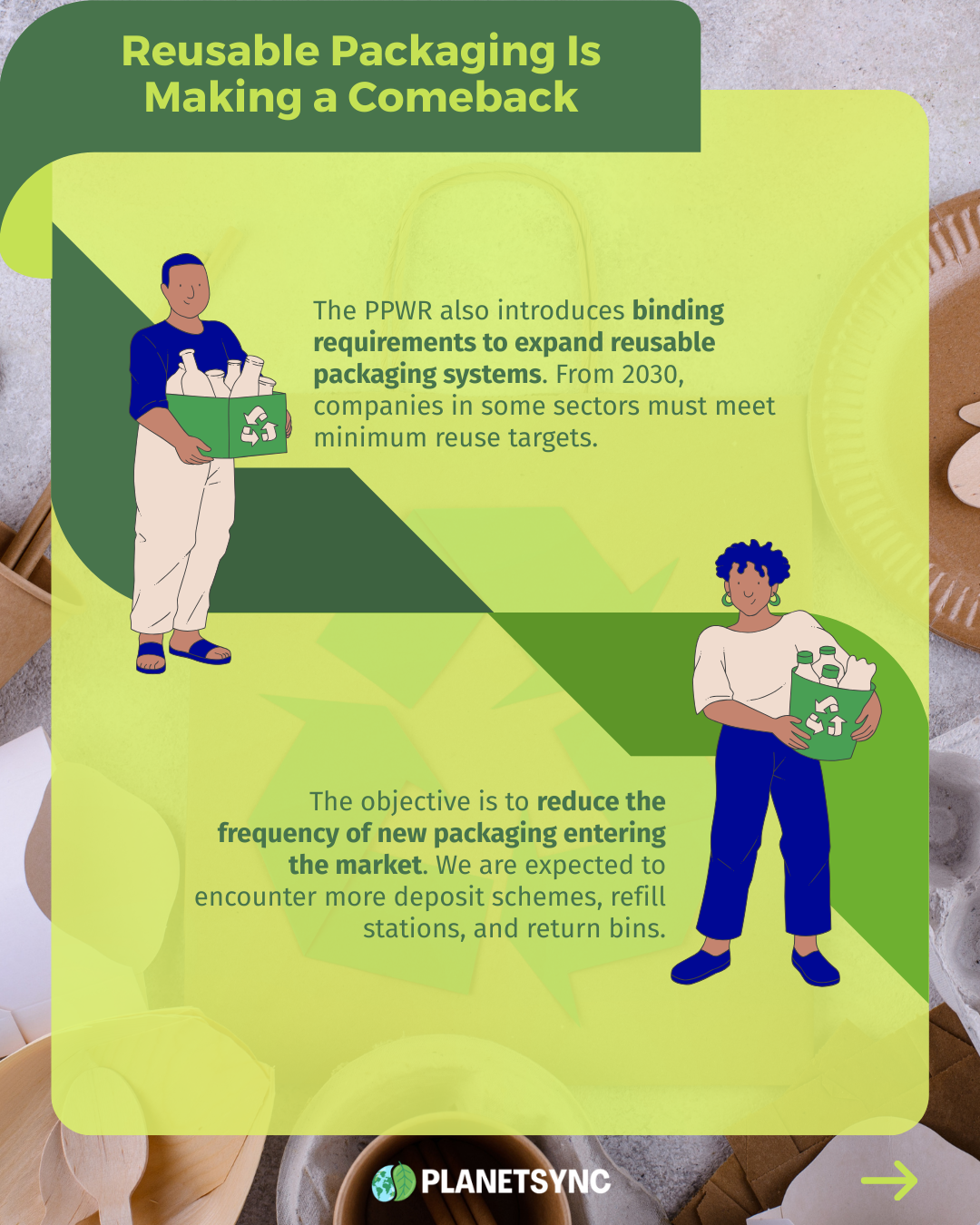
From 2030, businesses in hospitality, transport and logistics, and online retail will have to meet minimum reuse targets. That means they’ll need to offer packaging designed to be reused, along with actual systems to make it happen, like drop-off points, refill stations, or deposit programs where you get money back for returning containers.
The keyword here is reuse. The intention isn’t swapping plastic bags for paper ones and pretending that solves everything, but cutting down on how often we need any new packaging in the first place. Think of refillable coffee cups at your local cafe, returnable containers for takeout, or bring-your-own-container options at the grocery store.
Of course, reusable packaging has to actually work; it needs to be durable enough for multiple uses and still meet health and safety standards. But when done right, it massively cuts waste compared to the single-use cycle we’re stuck in now.
If you’re in the EU, get ready, because deposit schemes, refill stations, and return bins are about to become a normal part of your routine (and if you’re already doing this? Congrats, you’re ahead of the curve! The rest of Europe is about to catch up.)
Why This Matters to YOU
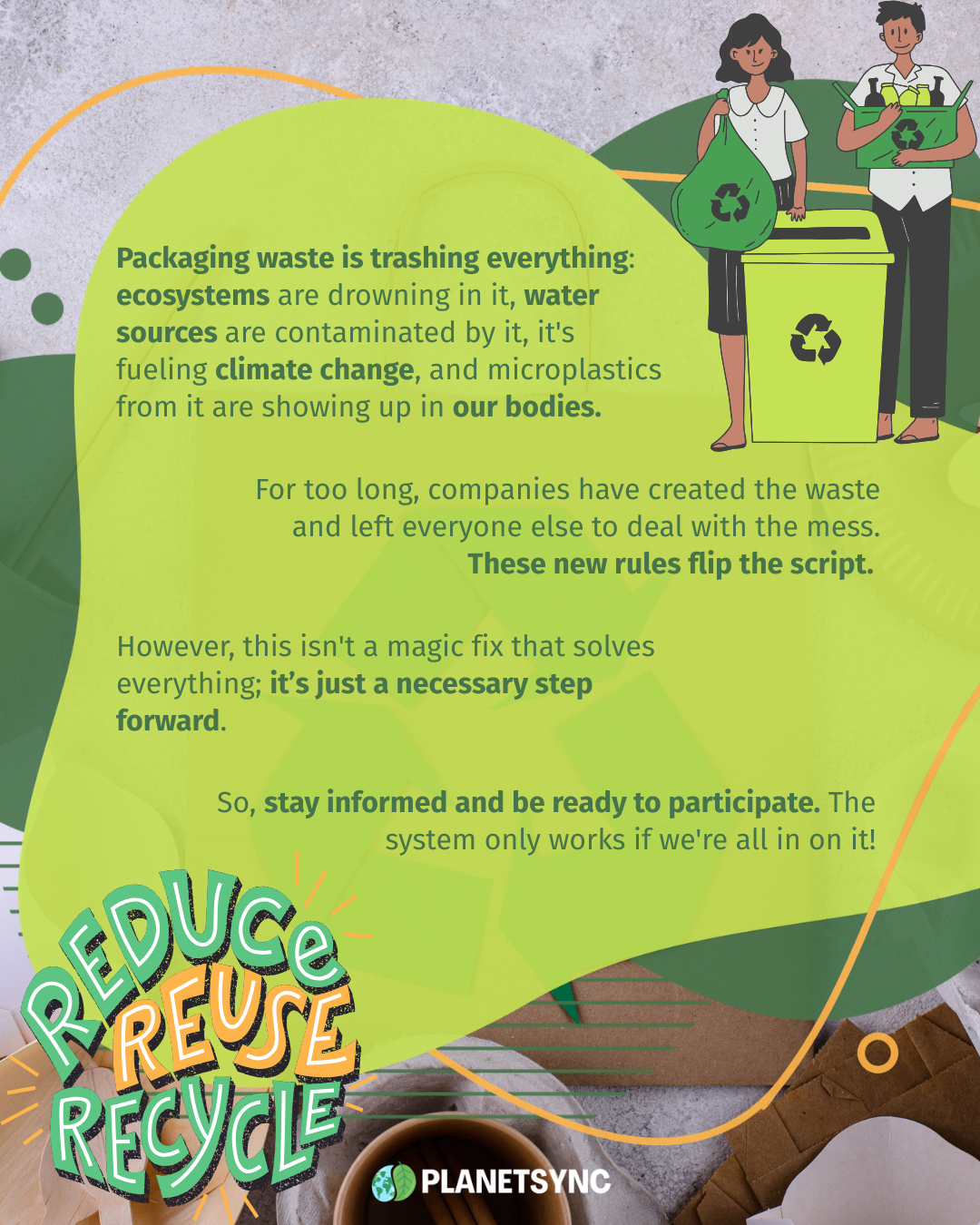
Packaging waste isn’t just ugly or annoying; it’s doing real damage. Mountains of it end up in landfills, where it sits for decades (or centuries). Plastic makes its way into rivers and oceans, breaking down into microplastics that end up in fish, water, and eventually, inside our own bodies. (Btw, I’ve written about this before if you want to go down that rabbit hole.) And producing all that packaging in the first place? It’s a carbon nightmare, pumping greenhouse gases into the atmosphere and accelerating climate change.
For too long, companies create the waste, make their profit, and then leave the rest of us (and the planet) to deal with the consequences. These new rules are designed to flip that dynamic. Businesses now have to take actual responsibility for the packaging they produce, from design to disposal.
Look, this isn’t going to fix everything overnight. There’s no magic wand here. But it’s a real, enforceable step in the right direction, and it’s already locked in. The key now is staying aware of how things are changing around you and being willing to adapt, whether that means returning containers, choosing refillable options, or just recycling properly. None of this works unless we actually show up for it.
References & Resources
- EUR-Lex. (n.d.). Regulation-EU – 2025/40. https://eur-lex.europa.eu/legal-content/EN/TXT/?uri=OJ:L_202500040&pk_campaign=todays_OJ&pk_source=EUR-Lex&pk_medium=X&pk_content=Environment&pk_keyword=Regulation
- European Commission. (2025, July 8). Packaging waste. https://environment.ec.europa.eu/topics/waste-and-recycling/packaging-waste_en
- European Union. (n.d.). Types of legislation. https://european-union.europa.eu/institutions-law-budget/law/types-legislation_en


 planetsync.blog
Leave a comment