

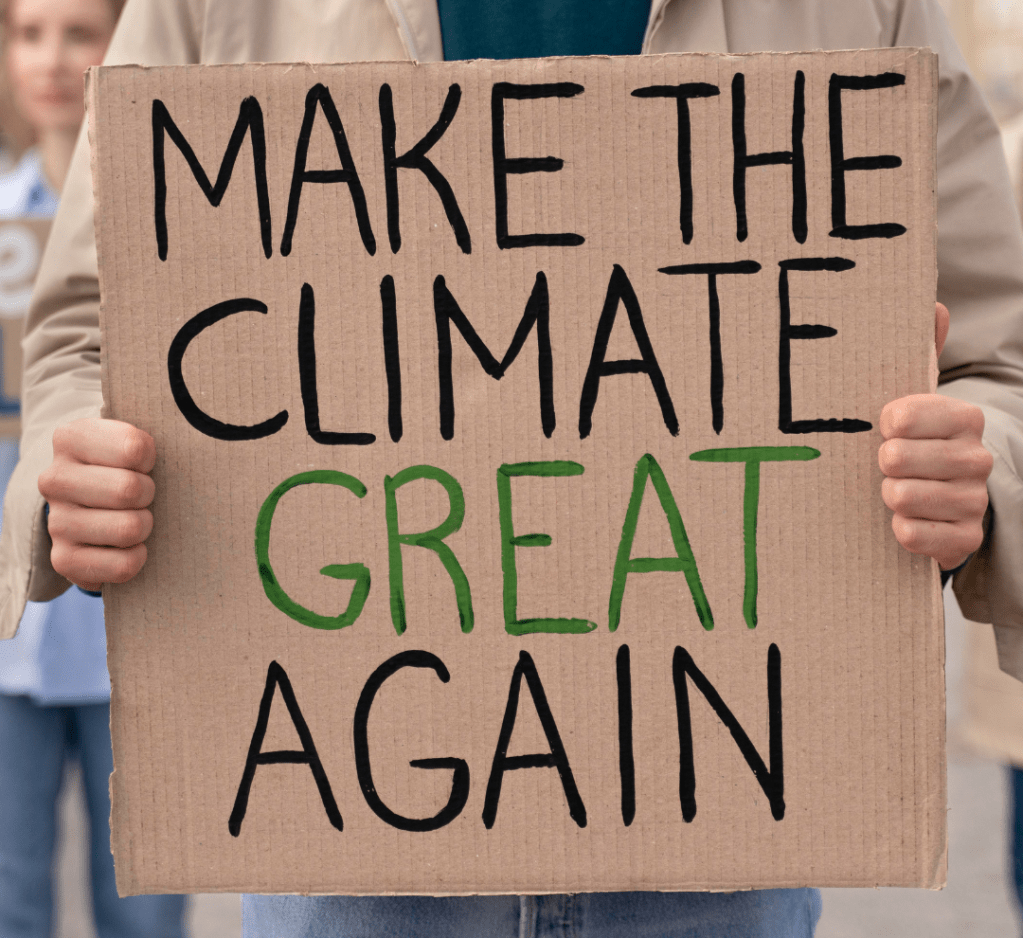
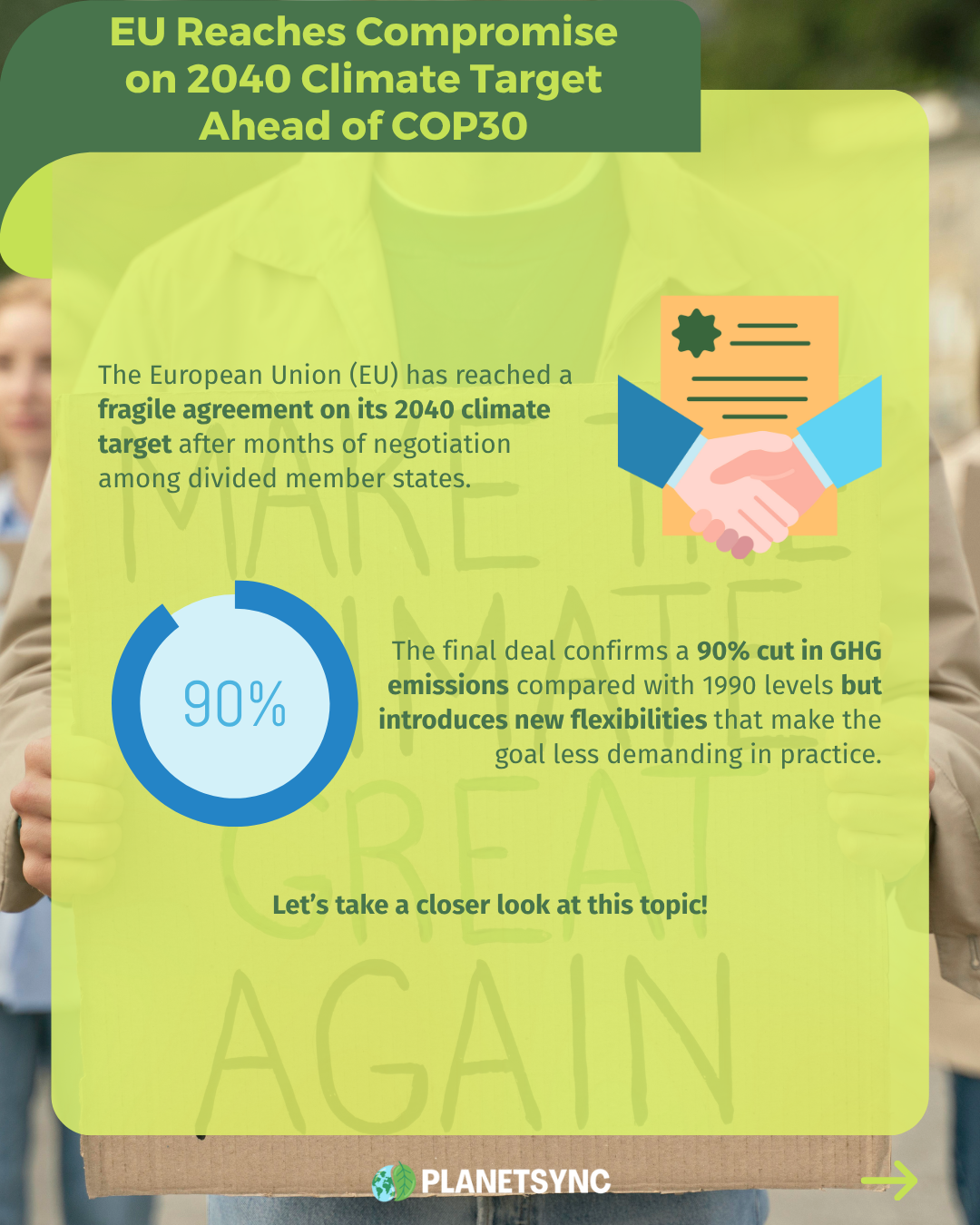
The European Union has reached a fragile agreement on its 2040 climate target, ending months of negotiation just days before the COP30 summit begins in Brazil. The final deal confirms a 90% cut in greenhouse-gas emissions (GHG) compared with 1990 levels but introduces new flexibilities that make the goal less demanding in practice. Let’s take a closer look at this topic!
Need the Gist? Swipe through the visuals below for a quick summary!


A Fragile Consensus
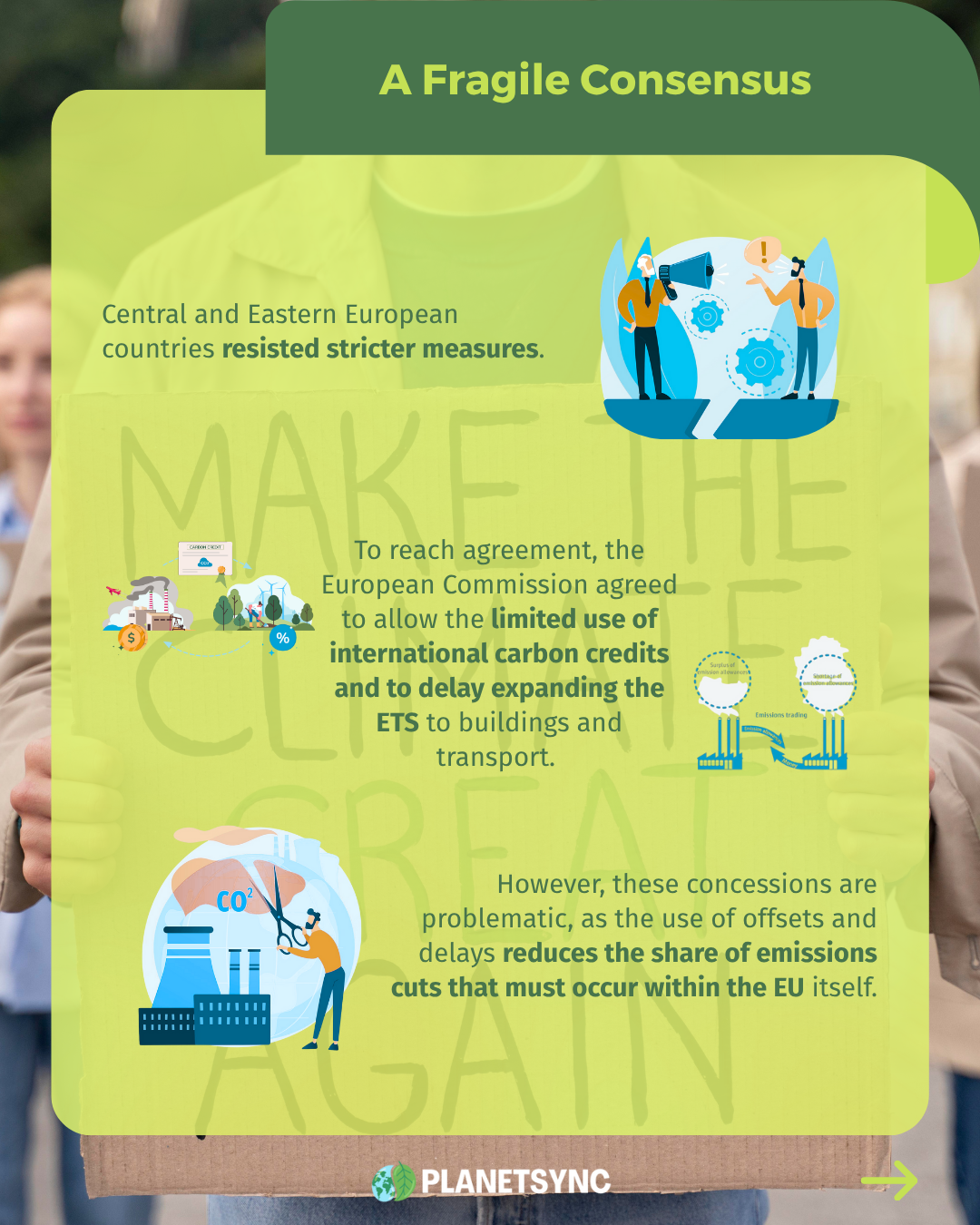
The compromise was secured after weeks of stalemate between member states demanding greater ambition and those warning of economic strain. Governments in Central and Eastern Europe, heavily reliant on coal and energy-intensive industries, had resisted the original proposal. To reach agreement, the European Commission accepted provisions allowing countries to meet part of the target through carbon credits purchased abroad and to delay the expansion of the emissions-trading system to buildings and transport until later in the decade.
While the deal preserves the 90% headline target, the inclusion of offsets and delays effectively lowers the share of emissions that must be reduced within the EU itself.
Balancing Ambition and Realism
The outcome is pragmatic rather than ideal. The concessions highlight a growing tension between environmental ambition and political or social feasibility.
Several governments argued that rapid decarbonisation could undermine industrial competitiveness, particularly amid high energy prices and global competition in low-carbon technologies. Others, especially in Western Europe, warned that a softer target risks weakening investor confidence in the clean-energy transition and sending mixed signals to global partners.
Europe’s Position Before COP30
The timing of the deal is significant. The COP30 summit in Belém, which begins next week, will focus on how countries align their long-term strategies with the Paris Agreement’s 1.5 °C limit. The EU’s decision to adopt a slightly weaker but unified position allows it to enter those talks with a formal commitment, avoiding the impression of internal division.
Still, the perception of reduced ambition could affect Europe’s standing in global climate diplomacy. For years, the EU has been regarded as a standard-setter in climate policy. Whether it can maintain that reputation will depend on whether the new target drives genuine domestic transformation or merely postpones it.
From Agreement to Implementation
The agreement must now pass through the European Parliament before becoming law. Member states will then prepare national plans outlining how they intend to achieve their respective shares of the reduction. The European Commission has pledged to conduct regular reviews to track progress and adjust measures if necessary.
The success of the policy will ultimately be judged not by its numbers on paper but by its implementation, in cleaner industries, energy systems that rely less on fossil fuels, and fair transition measures for workers and communities. Europe has avoided a political breakdown at a critical moment, but its credibility will depend on whether this compromise leads to tangible progress in the years ahead.
References & Resources
- 2040 climate target: Council agrees its position on a 90% emissions reduction. (2025). Consilium. https://www.consilium.europa.eu/en/press/press-releases/2025/11/05/2040-climate-target-council-agrees-its-position-on-a-90-emissions-reduction/
- 2040 climate target. (2025). Climate Action. https://climate.ec.europa.eu/eu-action/climate-strategies-targets/2040-climate-target_en
- Guillot, L. (2025, November 5). EU countries agree weakened 2040 climate goal and target for COP30. POLITICO. https://www.politico.eu/article/eu-countries-agree-weakened-2040-climate-goal-and-target-for-cop30/


 planetsync.blog
Leave a comment