

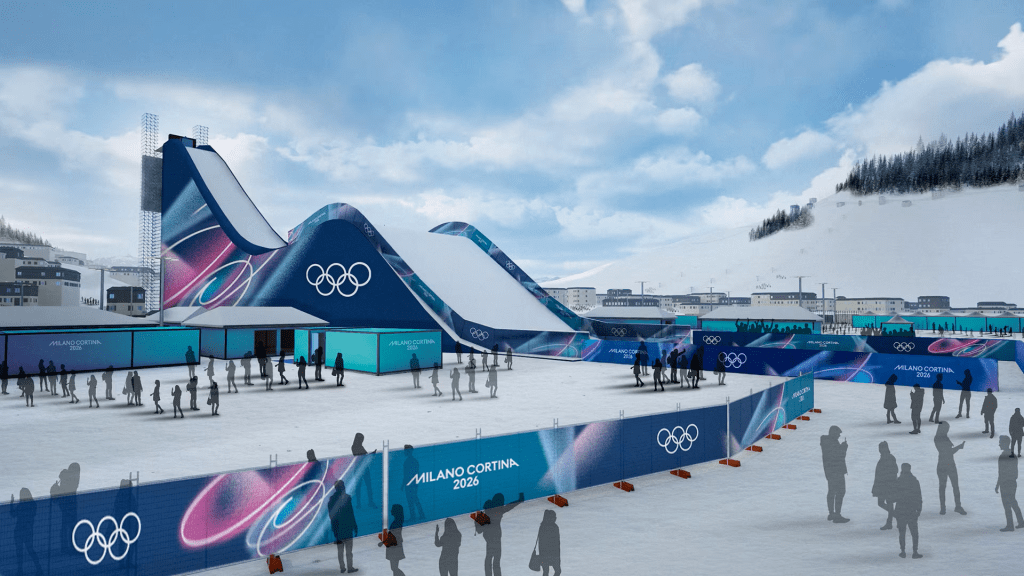
The 2026 Winter Olympic Games in Milan and Cortina d’Ampezzo are captivating the world. The slopes look flawless on television. But what we don’t see is how much work it now takes to make winter behave.
The European Alps have warmed by about 2°C since the late 19th century, according to assessments synthesized by the IPCC. That may not sound dramatic. But in mountain climates, small shifts matter. A degree or two can mean rain instead of snow, softer race surfaces, shorter preparation windows, and more reliance on artificial snow.
Why Climate Change Matters for the Games
Winter sport is engineered around consistency. Ski wax is selected for specific temperature ranges. Ice tracks are calibrated to fractions of a degree. Race preparation is planned weeks in advance.
Warmer winters do more than raise averages. They increase variability. More freeze and thaw cycles. More mid-season mild spells. More pressure on narrow cold windows.
Research examining past Olympic host cities suggests that higher altitude venues remain comparatively resilient. Lower elevation sites face increasing climatic risk if warming continues. Over time, the number of reliably suitable hosts may narrow.
Artificial Snow: A Tool With Limits
Machine-made snow is standard at elite competitions. It ensures uniformity and fills gaps when natural snowfall is insufficient. But snowmaking requires sustained cold air, water, and energy. As temperatures hover closer to freezing, production becomes less efficient. Physics sets boundaries: above certain wet-bulb temperatures, snow simply cannot form effectively. So, artificial snow helps, but it’s not a permanent solution.
What These Games Reveal
The competitions are running smoothly. Yet these Games are unfolding in a climate system that is measurably different from the one that shaped earlier Winter Olympics. The change is subtle but structural. The conditions that once came predictably now require tighter coordination, deeper technical oversight, and narrower operational margins.
The Winter Olympics provide a visible case study of how warming changes systems. Not by stopping them outright, but by making stability harder to secure.
References & Resources
- Almqvist, A., Supej, M., Düking, P., Stöggl, T., & Holmberg, H. ‐C. (2026). Technology on Snow and Ice: Innovation, Monitoring, and Performance for the Olympic Winter Games Milano Cortina 2026. Scandinavian Journal of Medicine & Science in Sports, 36(2), e70218. https://doi.org/10.1111/sms.70218
- CREA Mont-Blanc. (n.d.). Climate change and its impacts in the Alps. https://creamontblanc.org/en/climate-change-and-its-impacts-alps/
- Dumont, M., Monteiro, D., Filhol, S., Gascoin, S., Marty, C., Hagenmuller, P., Morin, S., Choler, P., & Thuiller, W. (2025). The European Alps in a changing climate: Physical trends and impacts. Comptes Rendus. Géoscience, 357(G1), 25–42. https://doi.org/10.5802/crgeos.288
- IPCC. (n.d.). Chapter 2: High Mountain Areas — Special Report on the Ocean and Cryosphere in a Changing Climate. https://www.ipcc.ch/srocc/chapter/chapter-2/
- Milano Cortina 2026: The science of speed skating and the tech driving new records. (n.d.). https://www.olympics.com/en/milano-cortina-2026/news/technology-speed-skating-success/
- Saini, V. (2026, February 5). Climate Change Poses Growing Threat to Future of Winter Olympics—Climate Fact Checks. https://climatefactchecks.org/climate-change-poses-growing-threat-to-future-of-winter-olympics/
- SLF. (n.d.). Artificial snow. https://www.slf.ch/en/snow/snow-sports/schnee-und-ressourcenmanagement/artificial-snow/
- Olympics. Study confirms significance of reducing global greenhouse gas emissions to protect the future of the Olympic Winter Games. (2024, November 12). https://olympics.com/ioc/news/study-confirms-significance-of-reducing-global-greenhouse-gas-emissions-to-protect-the-future-of-the-olympic-winter-games
- University of Waterloo. (n.d.). Olympic and Paralympic Winter Games in the Face of Climate Change | Waterloo Climate Institute. https://uwaterloo.ca/climate-institute/news/olympic-and-paralympic-winter-games-face-climate-change


 planetsync.blog
Leave a comment