

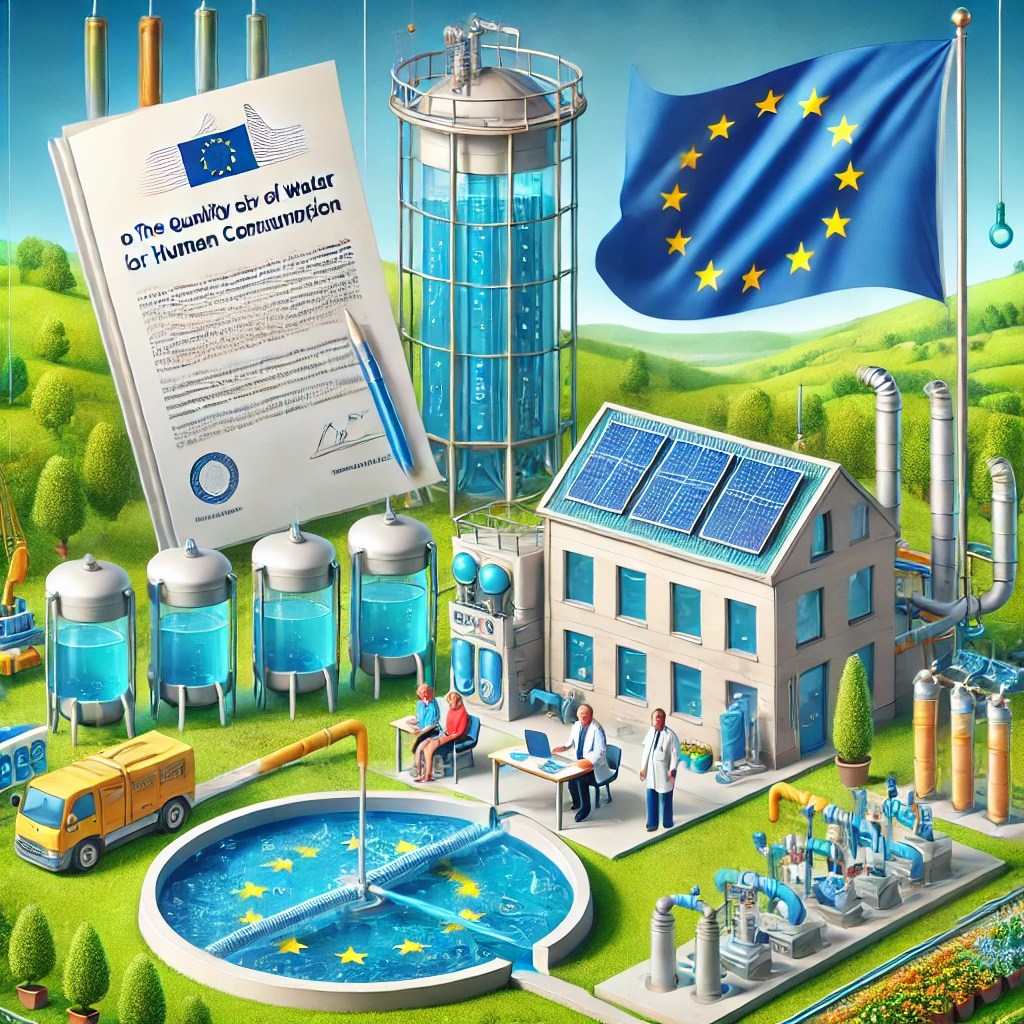
Ensuring safe drinking water has never been more critical as climate change, pollution, and new contaminants increasingly threaten water supplies. The European Union (EU) has responded by updating its Drinking Water Directive (DWD), reflecting modern water challenges. This revision isn’t just bureaucratic formality—it’s a crucial step toward ensuring that everyone in the EU has access to clean, safe drinking water.
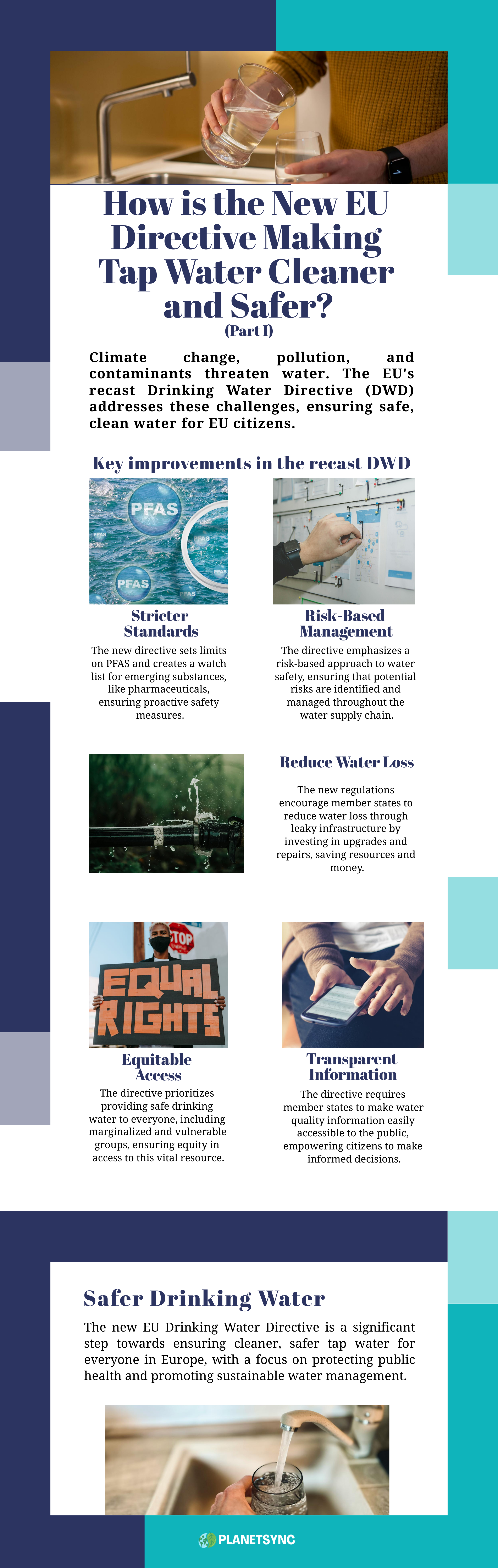
Need the Gist? Check out the infographic below for a quick, visual summary of the key points!
What is the EU Drinking Water Directive?
The EU Drinking Water Directive is a set of regulations established by the European Union to ensure that all people living in EU member states have access to safe, clean drinking water.
The EU’s commitment to providing safe drinking water began with its introduction of water quality standards in 1980, which evolved into the formal DWD. Over the years, the directive has evolved, keeping pace with scientific advancements and the growing understanding of waterborne risks.
In 1998, a major update revamped the directive, focusing not only on the cleanliness of water sources but also on the entire distribution system. This was essential because, even if water started out clean, it could become contaminated through aging or poorly maintained infrastructure.
New challenges emerged and the original regulations were no longer enough to handle the new threats, prompting the EU to undertake another significant revision. The recast DWD was adopted in December 2020, took effect in January 2021, and gave member states until January 2023 to implement the updated regulations. Some provisions have extended compliance timelines.
Key improvements in the recast DWD
Let’s break down some of the most important changes in the directive and why they’re so crucial:
Stricter Standards for Pollutants
The updated DWD sets limits on PFAS and establishes a watch list for emerging substances, such as pharmaceuticals. This list is coordinated at the EU level with input from member states, enabling proactive management of potential water safety threats instead of reactive crisis responses.
Risk-Based Water Safety Management
The directive also introduces a risk-based assessment and management approach to water safety, meaning that potential risks are assessed throughout the entire water supply chain. This covers everything from where the water comes from (rivers, lakes, groundwater) to how it’s treated and distributed to homes. By identifying risks early on, this approach helps to prevent problems like contamination before they even occur, ensuring the water that comes out of your tap is as safe as possible.
Reducing Water Loss from Leaky Infrastructure
Did you know that nearly a quarter of all treated water in Europe is lost due to leaks in aging pipes and infrastructure? That’s a huge amount of water—and resources—going to waste. The updated DWD includes specific provisions to reduce these water losses by requiring improvements to the pipes and systems that distribute water. This not only saves resources but also reduces the costs associated with treating and transporting water that simply ends up wasted.
Access to Safe Drinking Water for Everyone
A major emphasis of the updated directive is on providing equitable access to safe drinking water for everyone, including marginalized and vulnerable groups. EU member states are now required to take concrete steps to make safe drinking water accessible to all citizens. This move is part of the broader EU goal of ensuring that no one is left behind in the push for environmental sustainability and public health.
Greater Transparency for Consumers
Transparency is key. The directive requires that water quality information be easily accessible to the public. Many countries now use digital platforms to provide real-time data on local water quality, so you can check how safe your water is whenever you like. This not only empowers citizens but also builds trust in the systems that provide clean water.
Improving Water Availability in Public Spaces
The directive encourages member states to ensure that safe drinking water is made available in public spaces, free of charge, to promote public health and reduce plastic waste. By encouraging the use of refillable bottles, this initiative not only enhances access to water but also supports the EU’s broader sustainability goals by limiting single-use plastics.
Addressing Emerging Contaminants Like PFAS
PFAS, a group of synthetic chemicals found in products such as non-stick cookware and firefighting foam, are often referred to as “forever chemicals” due to their resistance to breaking down in the environment. Their persistence has been linked to serious health concerns, including cancer, making their regulation a crucial step in protecting public health.
The directive imposes strict limits on certain PFAS chemicals, helping to reduce exposure to these harmful and long-lasting contaminants.
Why Should You Care?
Water might not be something you think about every day, but it’s vital to your well-being. The changes in the DWD were designed to ensure that drinking water remains clean, safe, and accessible. These updates will benefit everyone across Europe by improving public health, reducing environmental waste, and building a more sustainable infrastructure for the future. With stricter safety standards, a smarter approach to managing risks, and a focus on protecting vulnerable populations, the EU is ensuring that water remains one of our most protected resources.
References & Resources
- Improving access to drinking water for all
- Directive (EU) 2020/2184 of the European Parliament and of the Council of 16 December 2020 on the quality of water intended for human consumption (recast)
- Zero pollution: Improved quality and access to drinking water
- Implementation of the Chemicals Strategy


 planetsync.blog
Leave a reply to How is the New EU Directive Making Tap Water Cleaner and Safer? (Part II) – PlanetSync Cancel reply