

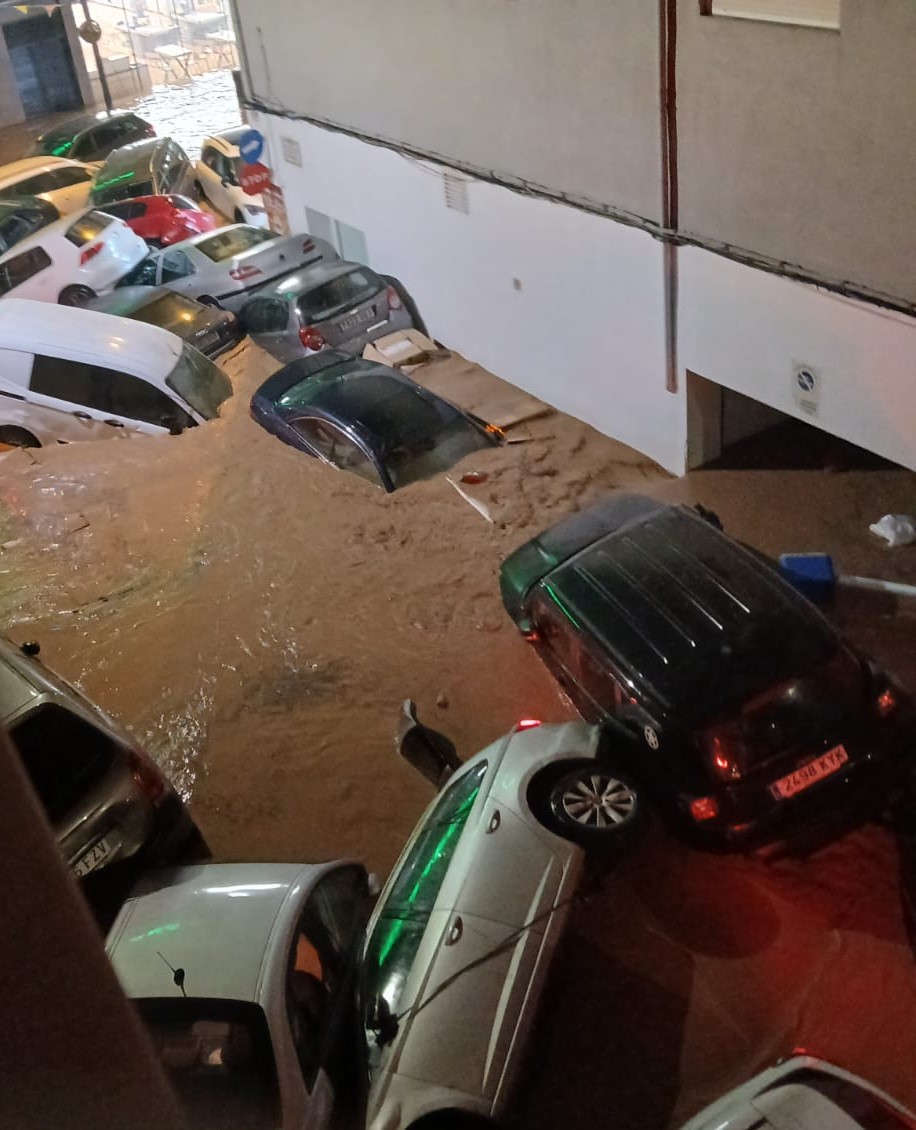
On October 29, 2024, an intense and deadly flash flood struck Spain’s Valencian Community, resulting in a tragic loss of over 158 lives and widespread damage across towns and rural areas. Driven by a DANA (Depresión Aislada en Niveles Altos) event, the storm delivered more than 200 mm of rain in some areas within 24 hours. The city of Valencia itself escaped the worst of the disaster, but nearby communities were devastated, with overflowing rivers and overwhelmed drainage systems turning streets into dangerous torrents.
Need the Gist? Check out the infographic below for a quick, visual summary of the key points!
Understanding DANA: The Force Behind the Floods
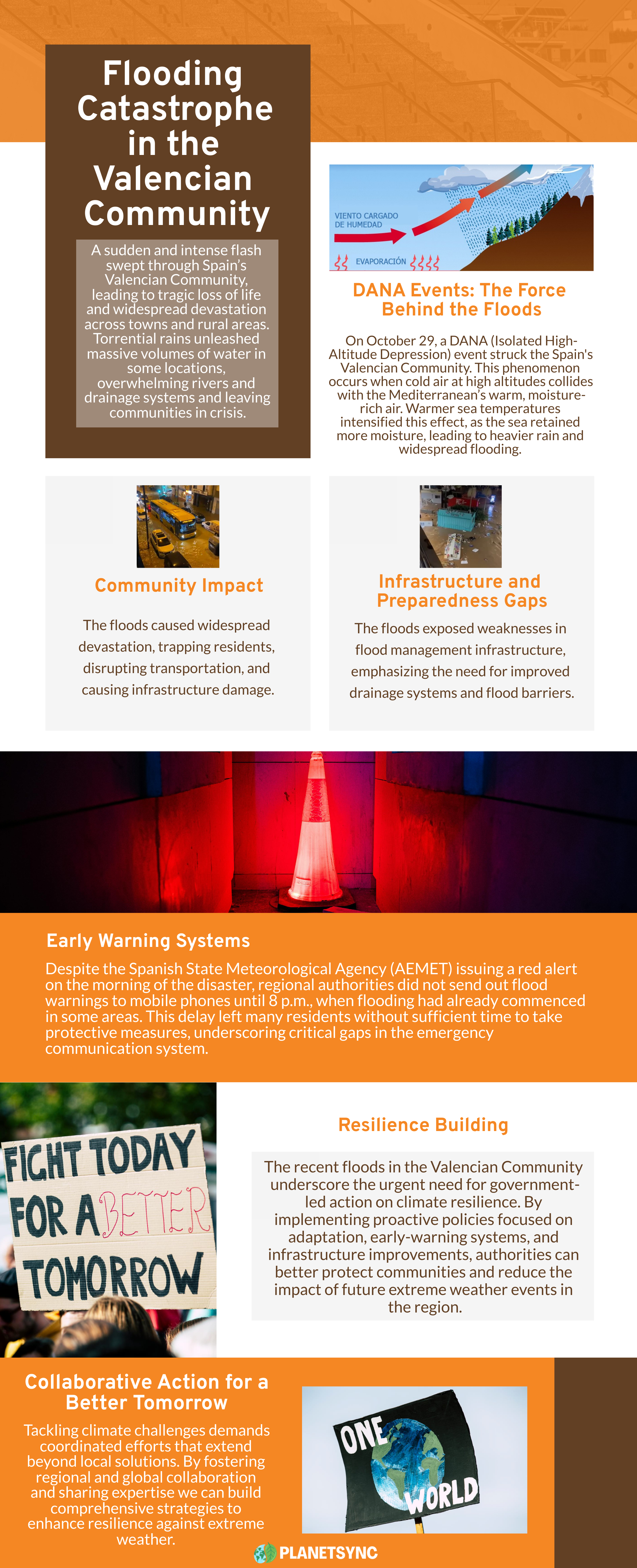
DANA events, caused by cold air masses at high altitudes meeting the Mediterranean’s warm, moisture-laden air, are known to bring extreme weather to the region. Although these storms have been typical of Mediterranean weather patterns, rising sea temperatures are increasingly intensifying them. Warmer seas increase the rate of evaporation, adding more moisture to the atmosphere, which can lead to heavier and more prolonged rainfall when cold air masses arrive. Scientists and climate experts have warned that climate change is amplifying the severity and frequency of these storms, especially in Southern Europe and other Mediterranean regions.
Community Impact
Many people were trapped in their vehicles, homes, and public spaces as the waters rose terrifyingly. Roads connecting major hubs were rendered impassable, isolating numerous communities, stranding travelers, and delaying critical aid. Some of these communities faced lengthy waits for assistance due to blocked access routes. Although Valencia City itself avoided catastrophic flooding, the surrounding areas experienced significant infrastructure breakdowns, including downed power lines, destroyed bridges, and washed-out roads. The intense impact on transportation networks, especially in hard-hit rural regions, highlighted the critical importance of accessible evacuation routes and well-coordinated emergency response frameworks for the region’s future safety.
Infrastructure and Preparedness Gaps
The Valencian Community’s ordeal highlights urgent weaknesses in local and regional flood management infrastructure, particularly in urban areas and densely populated towns where impermeable surfaces exacerbate flooding. Many urban and rural areas alike require updates to drainage systems, improved flood barriers, and more robust emergency evacuation plans to address climate-related risks effectively. This disaster underscores the necessity of expediting projects that can enhance community resilience to such extreme weather events.
Early Warning Systems: Reaching All Residents in Time
Despite the Spanish State Meteorological Agency (AEMET) issuing a red alert on the morning of the disaster, regional authorities did not send out flood warnings to mobile phones until 20:00 CET, when flooding had already commenced in some areas. This delay left many residents without sufficient time to take protective measures, underscoring critical gaps in the emergency communication system.
Strengthening Community Preparedness and Resilience Amid a Changing Climate
This tragic event stands as a stark reminder of the climate-driven challenges facing the Mediterranean region. Scientists agree that as global temperatures continue to rise, the Mediterranean is likely to see more frequent and intense storms, especially during the late summer and early autumn when the sea temperatures are at their highest. To meet these future challenges, local governments, scientists, and community leaders emphasize the importance of building resilience through proactive measures and community involvement.
Key strategies being discussed include ongoing emergency preparedness training, and improved infrastructure capable of withstanding extreme weather. Enhanced drainage systems, the establishment of additional flood barriers, and the expansion of accessible evacuation routes are just some of the measures necessary for reducing risks in both urban and rural settings. Regular emergency drills and public education campaigns also play a crucial role in preparing residents to act swiftly and safely in the event of future floods.
Collaborative Action for a Safer Future
Ultimately, building resilience to climate change in the Valencian Community—and across similar regions globally—requires collaborative action that spans local governments, scientific experts, and residents alike. Community-centered strategies are essential, as they empower residents with the knowledge and resources needed to face these extreme weather events. Climate-resilient infrastructure, clear and effective communication systems, and improved coordination between emergency response teams will be essential components of any long-term adaptation strategy.
By taking proactive steps to improve infrastructure, expanding early-warning systems, and increasing public awareness, the Valencian Community can be better prepared to respond to the mounting climate-related challenges of the future. This disaster serves as a powerful call to action for Mediterranean communities to build and sustain the resilience needed to protect lives, properties, and essential services from the rising threats of a changing climate.
References & Resources
- Warming Makes Droughts, Extreme Wet Events More Frequent, Intense
- Sea Surface Temperature
- The Mediterranean in the Face of the Climate Emergency and the Increase in Extreme Weather Events
- IPCC Sixth Assessment Report. Cross-Chapter Paper 4: Mediterranean Region
- Climate hazards are increasing in frequency and severity across Europe
- Avisos meteorológicos
- Comunitat Valenciana. Datos Precipitación


 planetsync.blog
Leave a reply to Floods in the Valencian Community: Analyzing the Systemic Failures Behind the Catastrophe – PlanetSync Cancel reply