

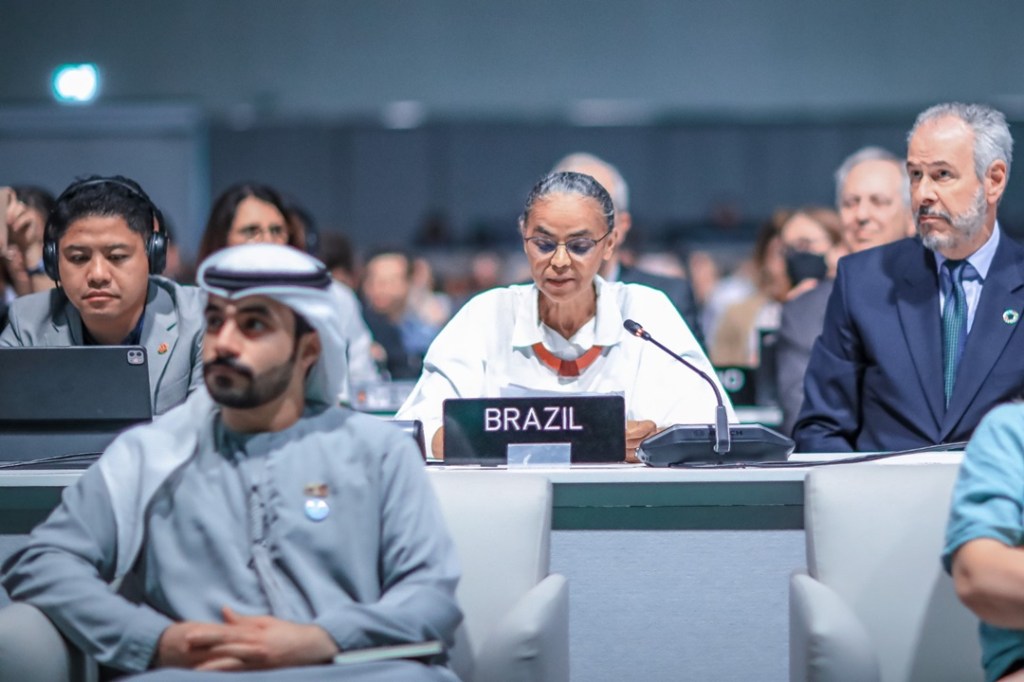
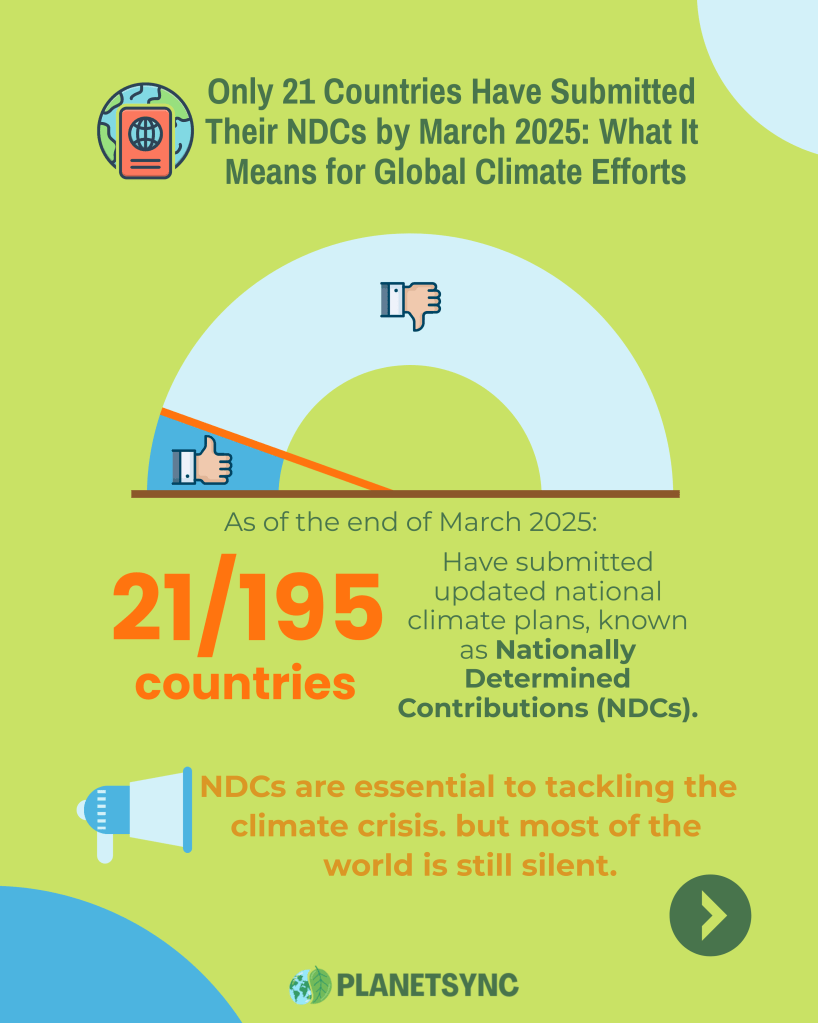
In a year when the world was supposed to show stronger climate action, most countries failed to deliver. By the end of March 2025, only 21 nations out of 195 had submitted their updated climate action plans, known as Nationally Determined Contributions (NDCs), to the United Nations. The rest of the world? Still missing in action.
These plans are the backbone of the global climate effort. Without them, the path to a safer, more stable future becomes much harder to see. So why have so few stepped up and what does it mean for our future?
Need the Gist? Swipe through the visuals below for a quick summary!
What Are NDCs?
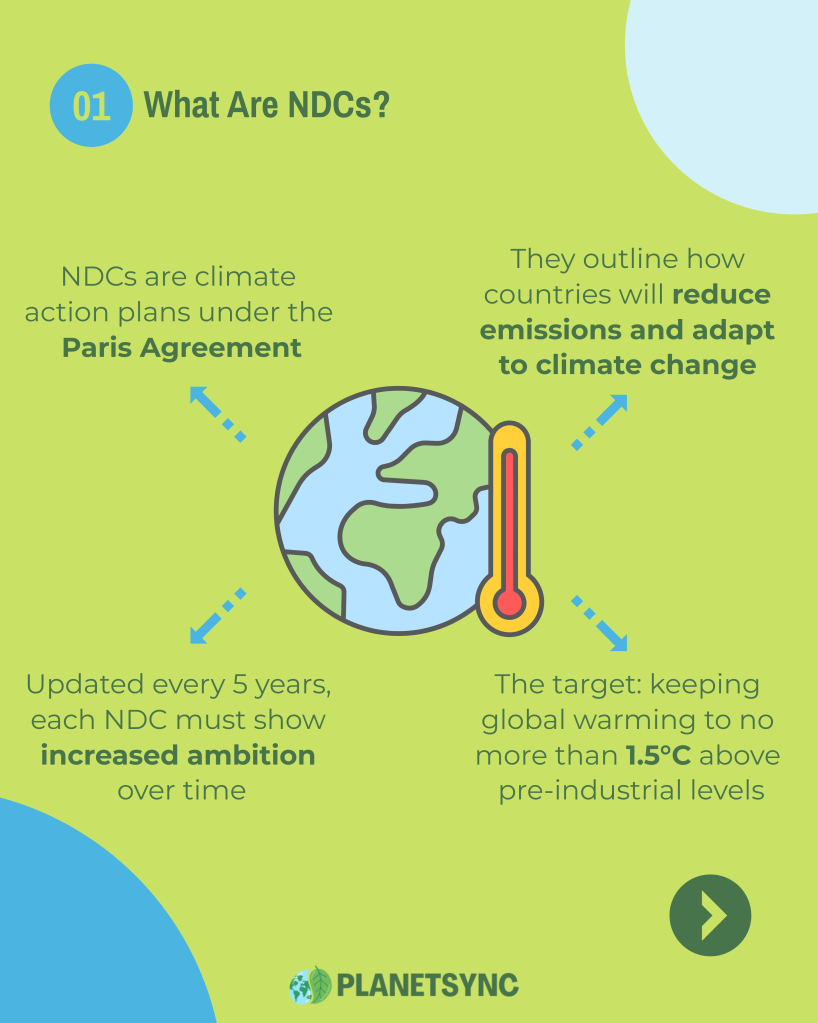
NDCs are climate action plans that each country creates under the Paris Agreement. They lay out what a country will do to reduce greenhouse gas emissions and how it will prepare for the impacts of climate change.
These plans are reviewed and updated every 5 years, with each revision requiring increased ambition that reflects progression beyond previous commitments. The big target: keeping global warming to no more than 1.5°C above pre-industrial levels, the threshold scientists say is critical.
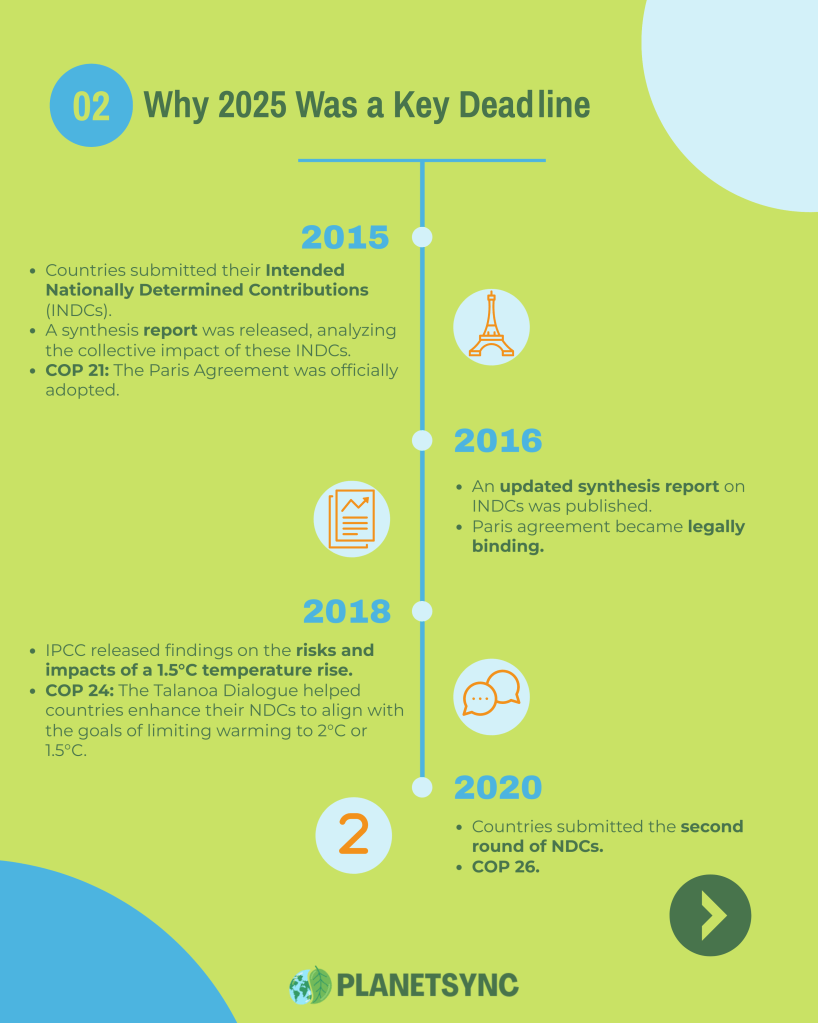
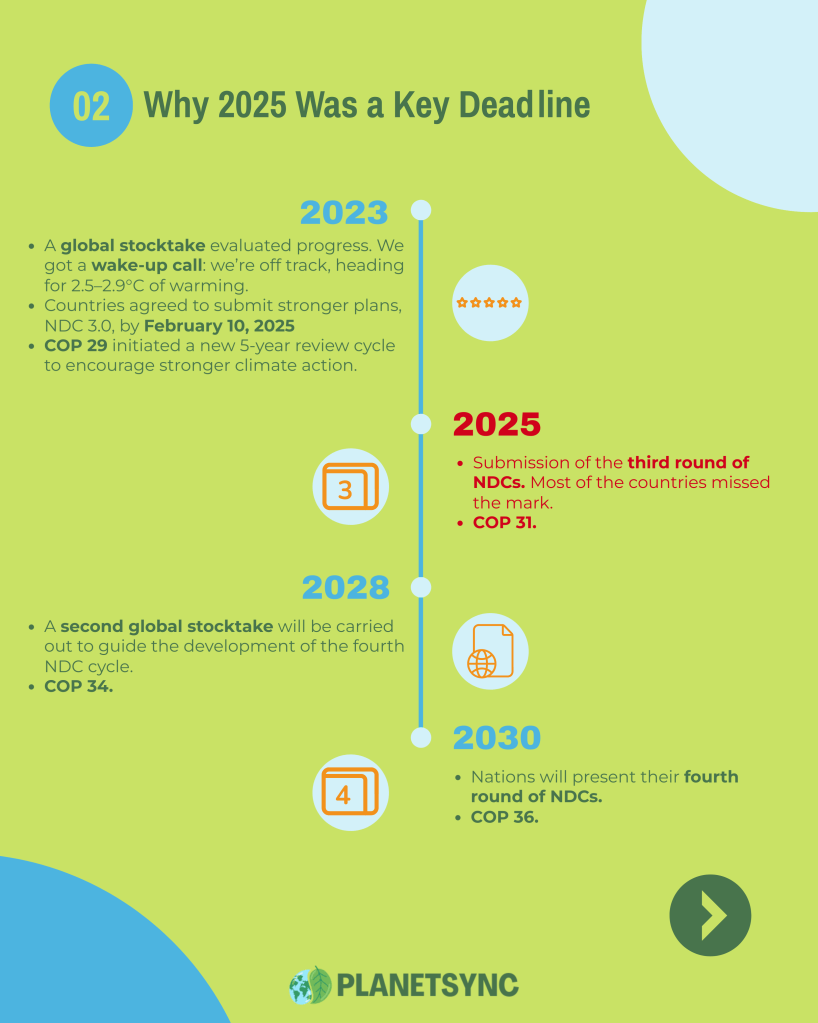
Why 2025 Was a Key Deadline
Back in 2023, at a major UN climate conference in Dubai (COP28), countries got a reality check. The “global stocktake” found that the world was still far off track. We are still pumping out far too many greenhouse gas emissions, and if we keep going this way, the planet could heat up by 2.5 to 2.9°C this century. Going beyond the 1.5°C limit agreed to in the Paris Agreement could have severe consequences: more extreme weather, deadly heatwaves, food and water shortages, and rising seas, especially for the most vulnerable people and countries.
So, countries agreed to come back with new and improved climate action plans by February 10th, 2025. These updated plans, called NDC 3.0, were supposed to show what each country will do between now and 2035 to cut pollution and prepare for the effects of climate change.
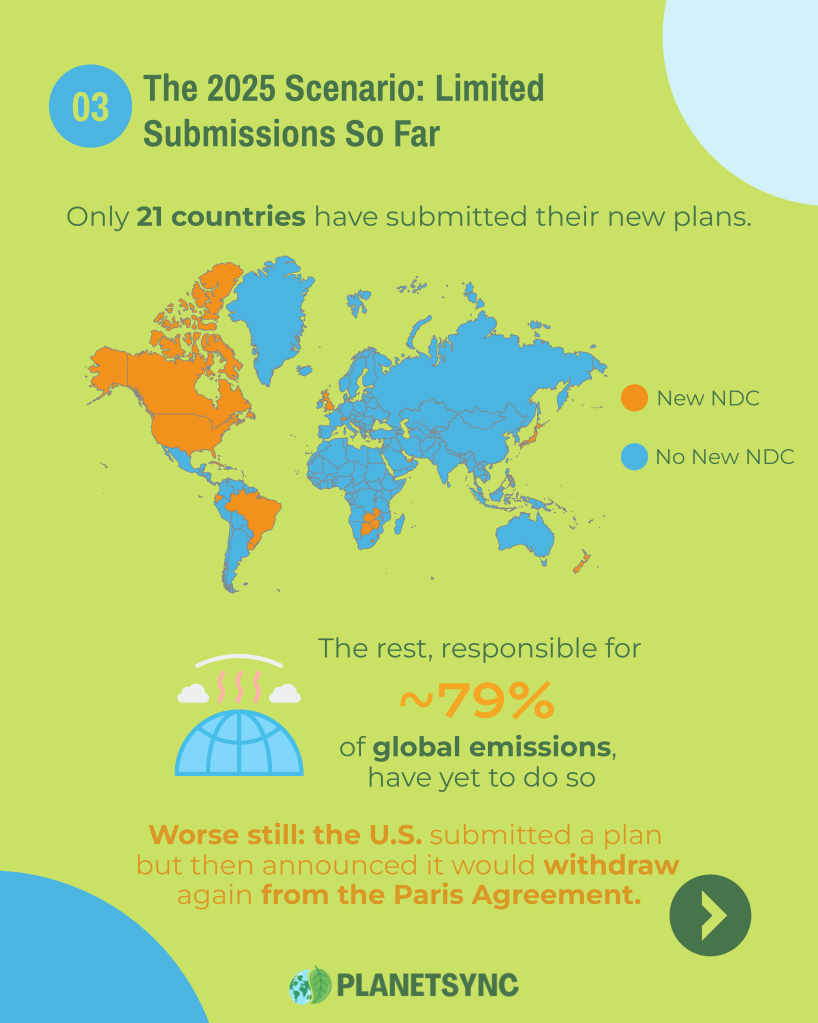
The 2025 Scenario: Limited Submissions So Far
As of the end of March 2025, only 21 countries had submitted their new plans, including Zambia, Cuba, Maldives, Montenegro, Japan, Canada, Zimbabwe, Singapore, Marshall Islands, Saint Lucia, Ecuador, Andorra, New Zealand, United Kingdom, Switzerland, Uruguay, United States, Brazil, Lesotho, Botswana, and United Arab Emirates.
According to Climate Watch data, the countries that missed the deadline are responsible for about 79% of global emissions. That’s a big problem. Even more concerning: while the United States submitted its plan in late 2024, the newly elected administration signed executive orders to pull the U.S. out of the Paris Agreement. That move throws the U.S. commitment, and global momentum, into serious doubt.
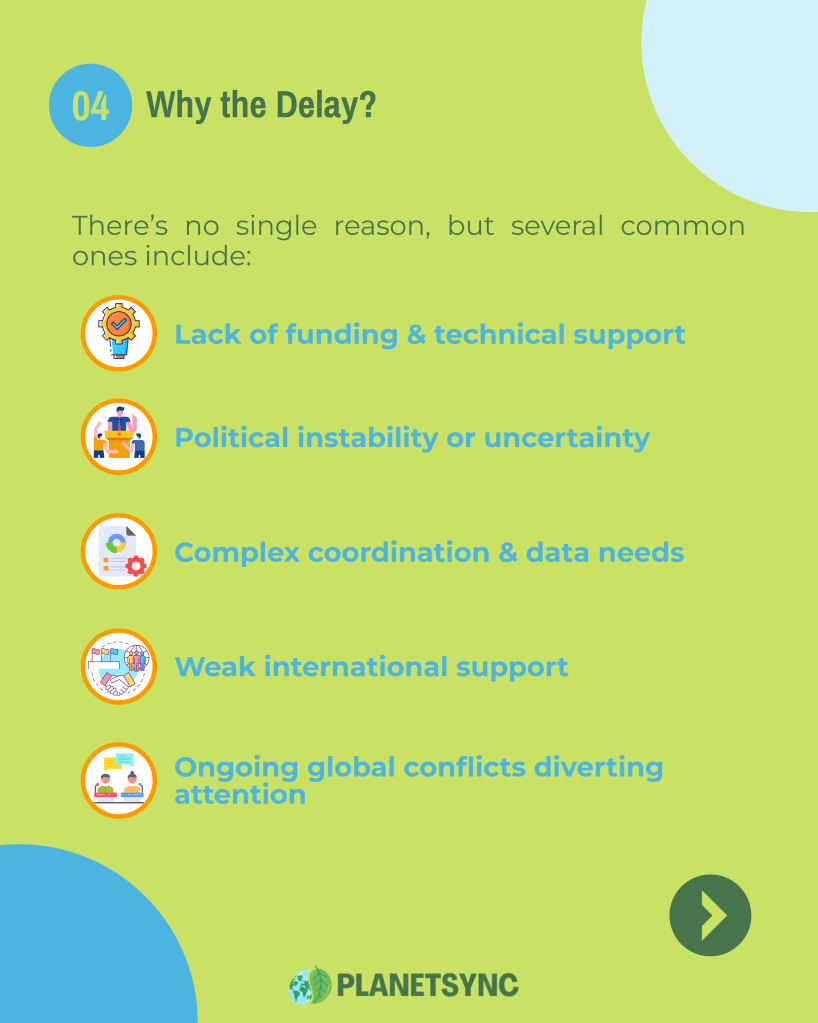
Why the Delay?
Several key factors may explain why most countries haven’t submitted their updated NDCs yet:
- Resource Constraints: Developing countries often lack the financial and technical resources to conduct emissions inventories, consult stakeholders, and develop detailed climate plans.
- Political Uncertainty: Elections, political transitions, and shifting national priorities can delay environmental policymaking. In some cases, climate action takes a back seat to short-term economic or security concerns.
- Administrative Complexity: Drafting a new NDC is a complex, multi-sectoral task. Governments must collect and verify data, coordinate across ministries, and engage with civil society, all while aligning with international reporting standards.
- Insufficient International Support: Many developing countries have called for clearer guidelines, capacity-building, and financial support to develop ambitious, implementable NDCs.
- Geopolitical Tensions: Ongoing geopolitical conflicts, including disruptions in energy markets or global supply chains, can divert attention and resources away from climate planning.
The Implications of Limited Submissions
The slow pace of submissions raises important concerns about:
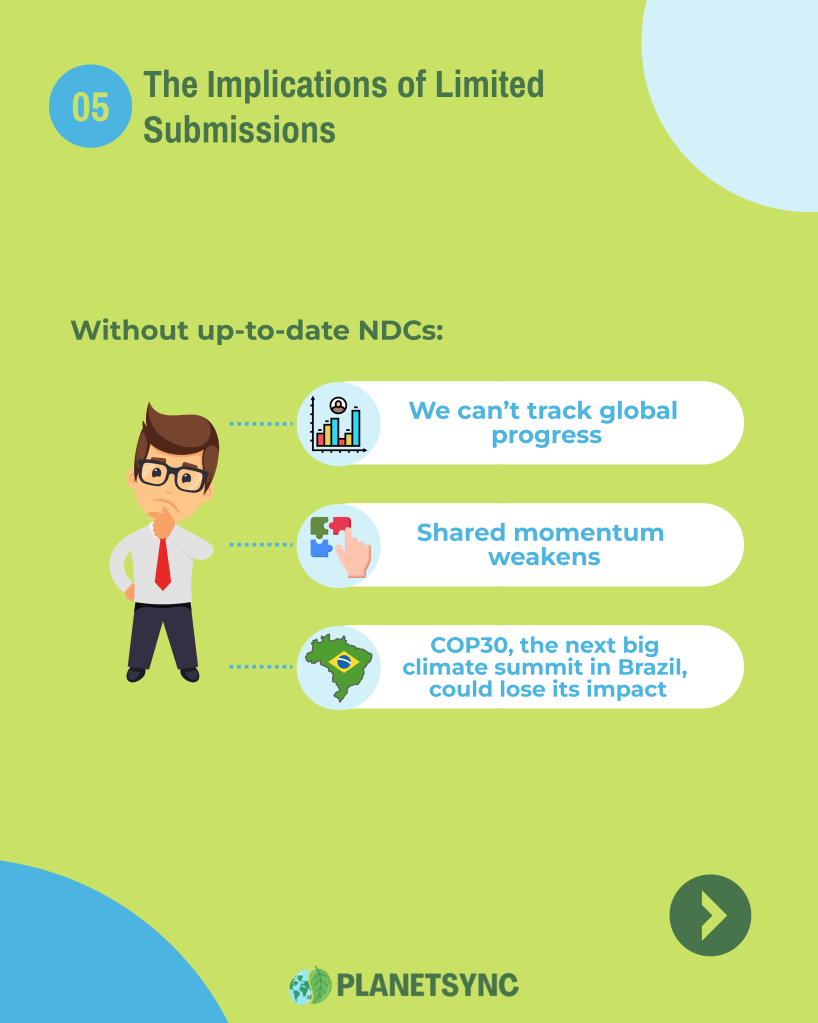
- Accountability and Transparency: NDCs are how the world tracks progress. Without them, it becomes harder to assess whether countries are on track or falling behind.
- Global Coordination: The Paris Agreement relies on a shared effort. When many countries delay their submissions, it can hinder global coordination, potentially slowing down the momentum needed to address climate change effectively.
- COP30 in the Spotlight: The next major international climate meeting, called COP30, will take place in Brazil in November 2025. This summit was intended to be a turning point, where countries would bring stronger plans to the table. But without updated NDCs from key players, that opportunity is at risk.
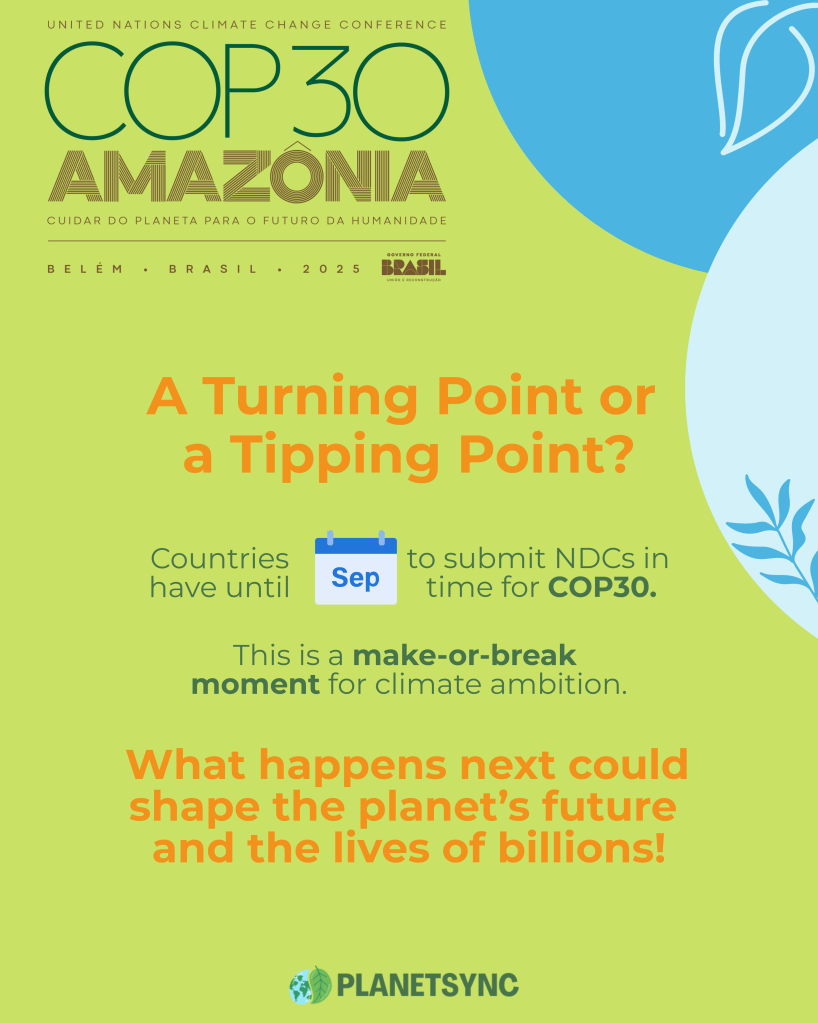
A Turning Point or a Tipping Point?
The clock is ticking. Climate change isn’t slowing down, and neither can we.
Countries have until September 2025 to submit their plans if they want them included in the official UN report that will shape decisions at COP30. This is a critical chance to raise ambition, show leadership, and protect communities worldwide.
Whether this year becomes a turning point or a tipping point depends on what countries do next.
References & Resources
- United Nations Climate Change. Nationally Determined Contributions (NDCs)
- United Nations Climate Change. Nationally Determined Contributions (NDC) Registry
- United Nations Climate Change. Global Stocktake
- Climate Watch. NDC Tracker
- United Nations Climate Change. The Paris Agreement
- SDG Knowledge Hub. 2025 UN Climate Change Conference (UNFCCC COP 30)
- The White House. Putting America First in International Environmental Agreements


 planetsync.blog
Leave a reply to Signify presenta un libro blanco junto con Climate Group Cancel reply