

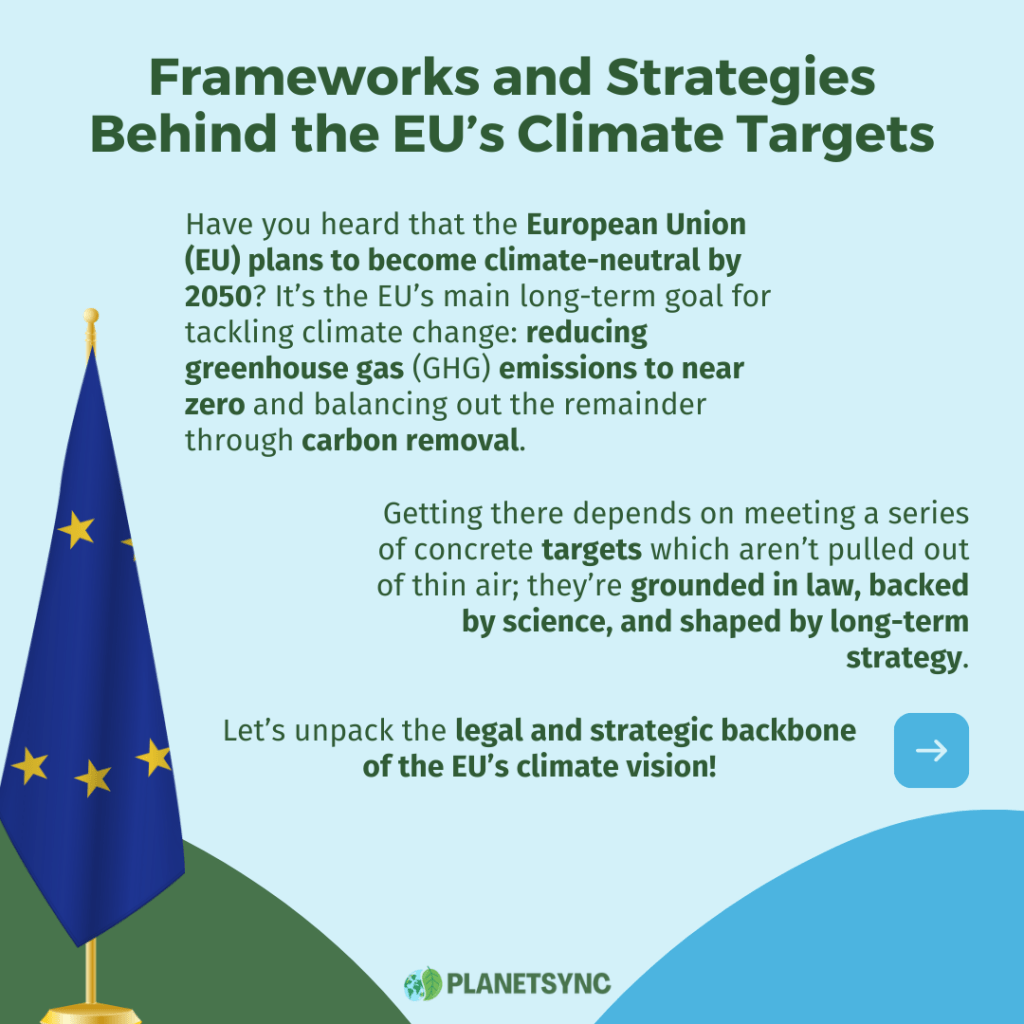
Have you heard that the European Union (EU) plans to become climate-neutral by 2050? It’s the EU’s main long-term goal for tackling climate change: reducing greenhouse gas (GHG) emissions to near zero and balancing out the remainder through carbon removal, either by nature (like forests) or by technology (like carbon capture and storage).
But getting there depends on meeting concrete, legally binding targets, each tied to specific policies, sectors, and timelines. These targets aren’t pulled out of thin air; they’re grounded in law, backed by science, and shaped by long-term strategy.
Behind every solar panel installation, every shift to electric transport, and every carbon price lies a carefully constructed policy framework. These rules shape environmental outcomes, influence economies, cities, energy prices, job markets, and the air we breathe.
If you seek to understand the fundamental legal and strategic drivers shaping the EU climate action, both now and in the years ahead, this article offers an essential starting point.
Need the Gist? Swipe through the visuals below for a quick summary!



European Climate Law
This law makes it legally binding for the EU to reach climate neutrality by 2050. This means greenhouse gas (GHG) emissions (like carbon dioxide or methane) must be reduced to nearly zero, with any remaining emissions balanced by removals, through natural sinks like forests or technological solutions such as carbon capture and storage. To reach this goal, the law sets specific targets along the way. By 2030, the EU aims to cut its GHG emissions by at least 55% compared to 1990 levels.
In February 2024, the European Commission proposed an additional milestone: a net 90% reduction in GHG emissions by 2040, based on scientific recommendations. Although this target has not yet been formally adopted, it marks a crucial step in shaping the next phase of EU climate policy. The proposal launched a political discussion across Member States, with the aim of informing a legislative proposal that will integrate the 2040 target into the Climate Law and establish a comprehensive framework for the post-2030 period.
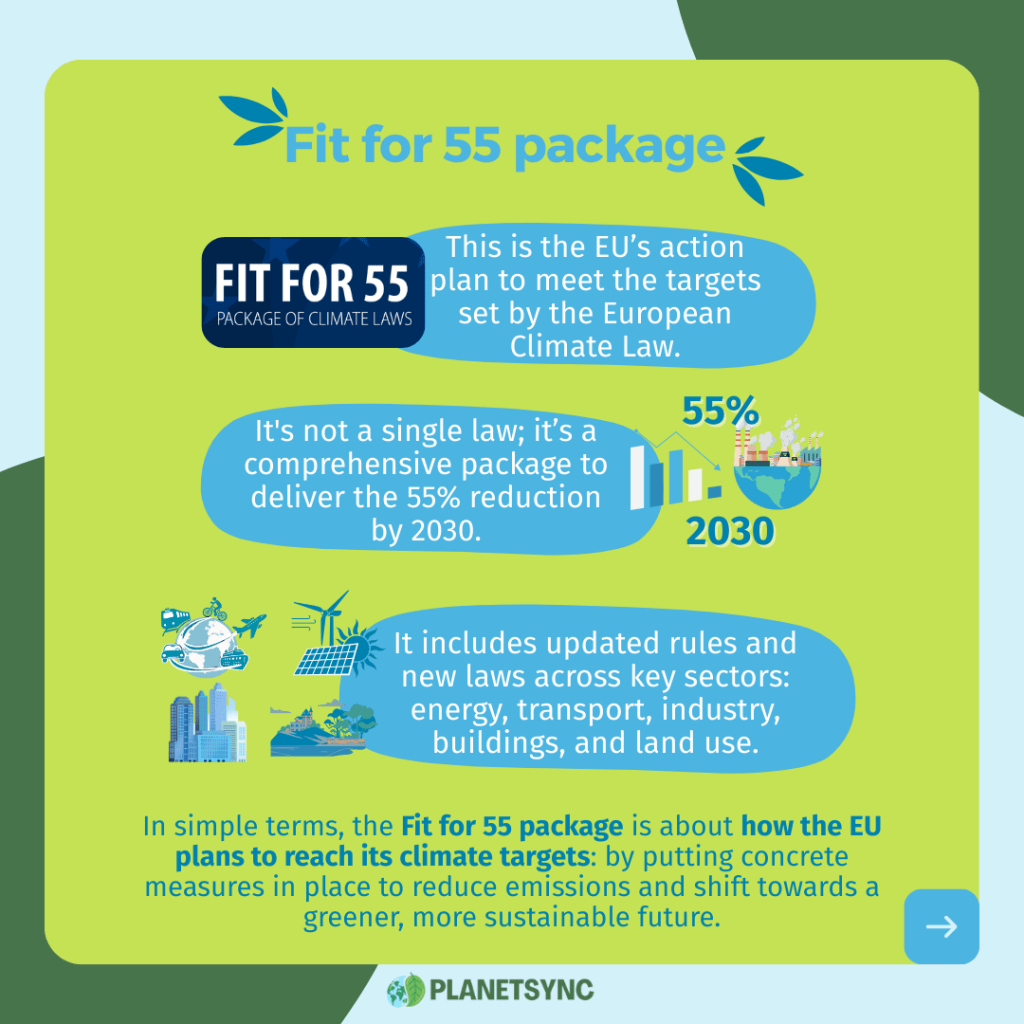
Fit for 55 package
This is the EU’s detailed action plan to meet the targets set by the European Climate Law. It includes new laws and updated rules designed to reduce emissions across key areas like energy, transportation, industry, and buildings. The name “Fit for 55” comes from the goal of cutting emissions by 55% by 2030. This package includes practical changes to the way the EU runs its economy, and it was designed to make the transition fair and affordable, supporting people, businesses, and governments as they adapt to these changes.
EU Emission Trading System (ETS)
This is the EU’s main tool to reduce emissions from major polluting sectors like energy-intensive industries, energy production, and aviation. It works on a cap-and-trade principle. That means there’s a limit (or cap) on how much carbon dioxide (CO₂) companies in certain sectors can emit. These companies must hold allowances for every ton of CO₂ they release, and the number of these allowances decreases every year. This creates a financial incentive to pollute less and invest in cleaner technologies.
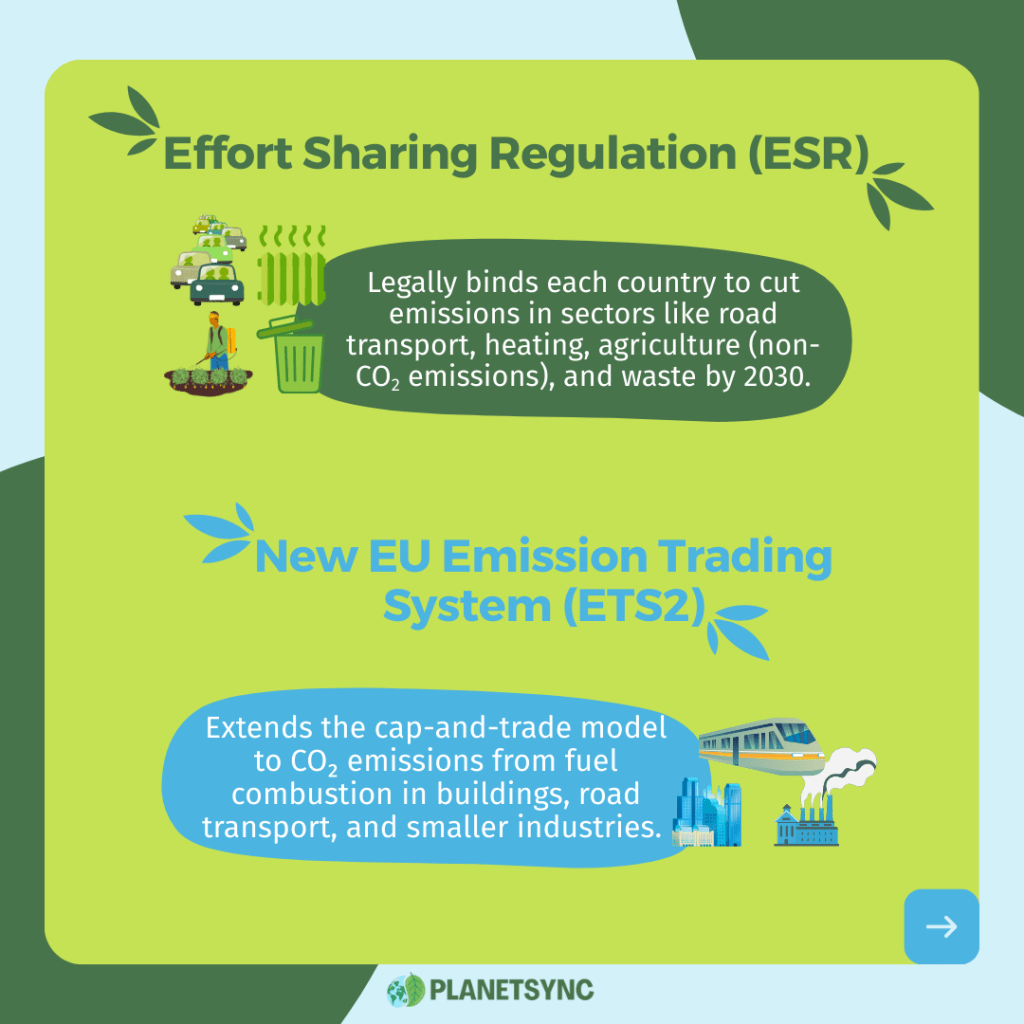
Effort Sharing Regulation (ESR)
The ESR deals with emissions from everyday sectors like road transport, heating in buildings, agriculture (non-CO2 emissions), and waste. Under the ESR, each country is given a legally binding target to reduce emissions in these sectors by 2030.
New Emissions Trading System (ETS2)
ETS2 is a market-based system (cap-and-trade) that will put a price on CO₂ emissions from fuel combustion in buildings, road transport, and small-scale industries (sectors currently addressed under the ESR). It starts monitoring in 2025 and becomes fully operational in 2027.
Land Use, Land Use Change, and Forestry (LULUCF) Regulation
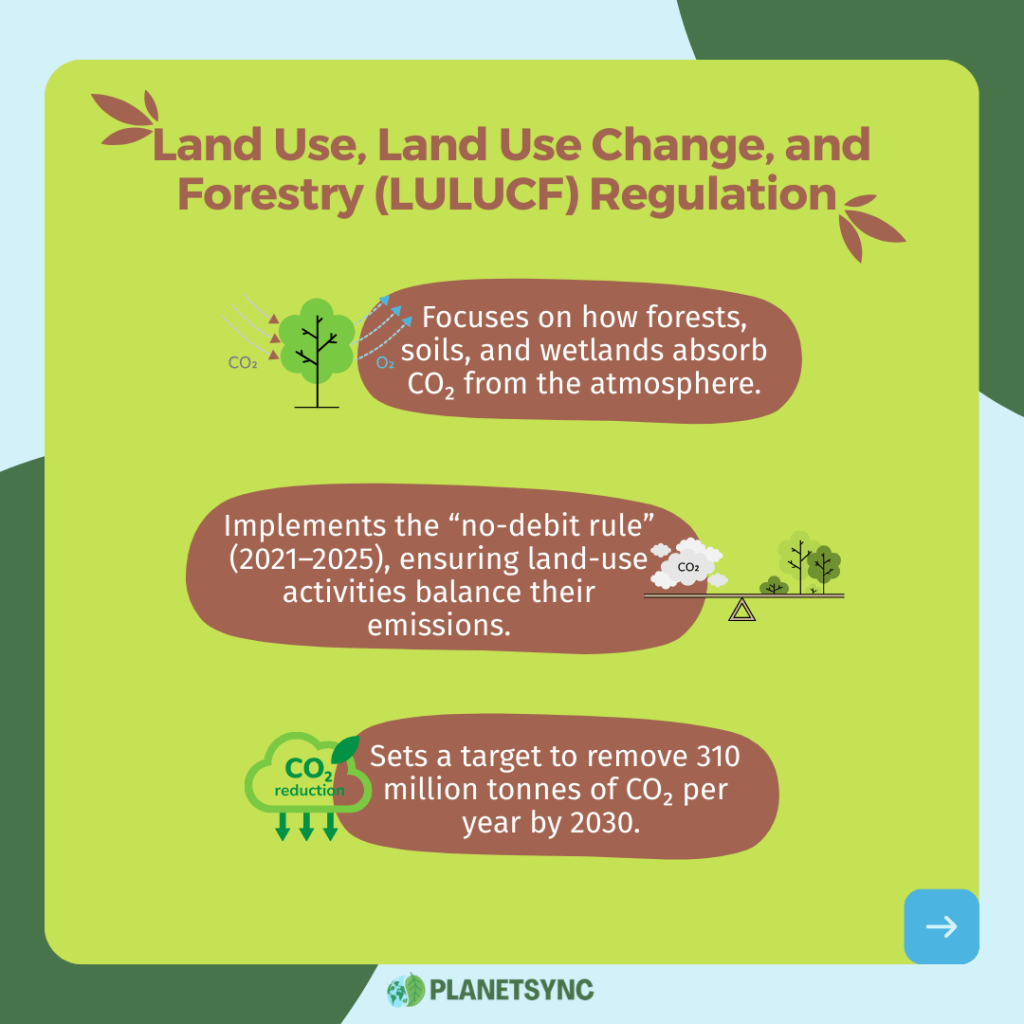
This EU regulation focuses on how nature, especially forests, soils, and wetlands, can help fight climate change by removing CO₂ from the atmosphere. These natural areas are known as “carbon sinks.” The regulation sets targets to increase the amount of CO₂ absorbed by land and forests. One key rule, known as the “no-debit rule,” requires EU countries (from 2021 to 2025) to remove at least as much CO₂ as they emit from land-use activities. By 2030, the EU aims to remove 310 million tonnes of CO₂ per year through land use and forestry alone.
The Foundation Is Set, What Comes Next?
The EU’s climate targets don’t exist in a vacuum. They’re part of a tightly interconnected web of legislation and strategy, each piece reinforcing the others. From carbon markets to land-use rules, the EU has laid a dense but coherent policy foundation for climate action.
Whether it works, and how fast, is another story.
In the next article, we shift focus from design to delivery: Is the EU actually on track to meet these targets? We’ll look at each goal and assess progress one by one.


 planetsync.blog
Leave a comment