

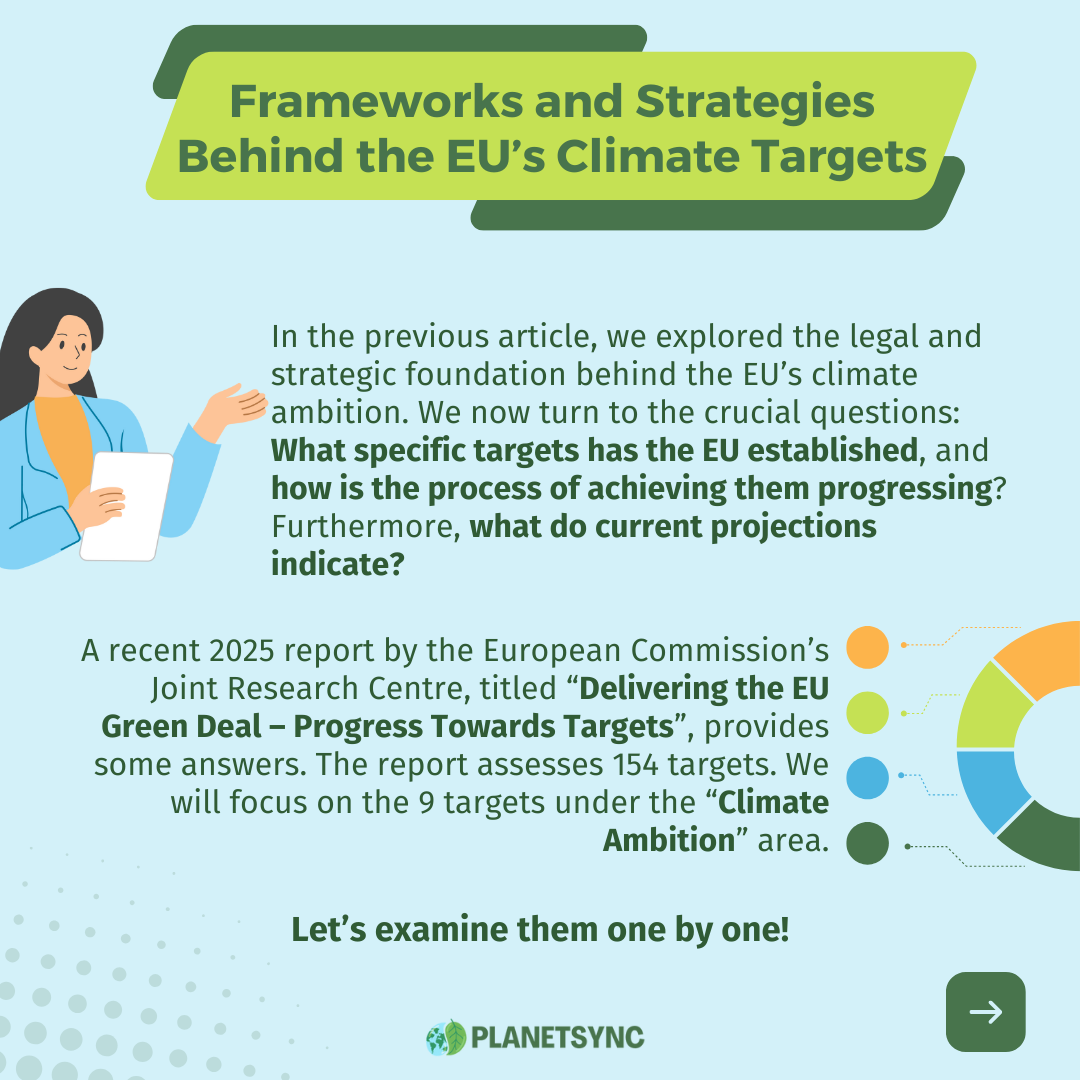
In the previous article, The EU’s Path to Climate Neutrality: Unpacking the Legal and Strategic Framework, we explored the legal and strategic foundation behind the EU’s climate ambition. However, policy design is only half the story. We now turn to the crucial questions: What specific targets has the EU established, and how is the process of achieving them progressing? Furthermore, what do current projections indicate?
A recent 2025 report by the European Commission’s Joint Research Centre (JRC), titled “Delivering the EU Green Deal – Progress Towards Targets”, provides some answers. The report assesses 154 targets drawn from 44 policy documents adopted between December 2019 and mid-2024 under the European Green Deal (EGD) framework. These targets are grouped into 7 thematic areas.
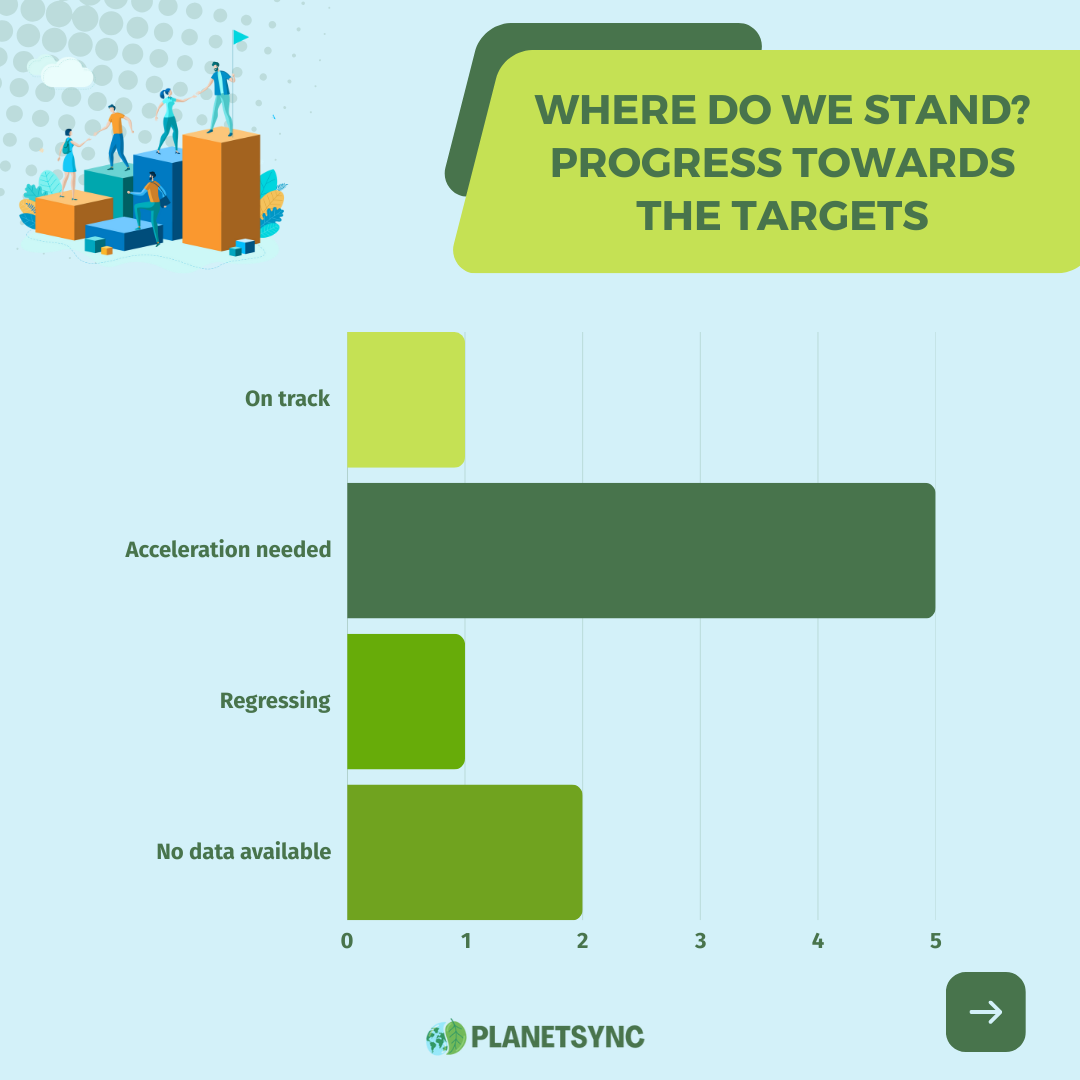
This article focuses exclusively on the 9 targets grouped under “Climate Ambition” area. All meet strict inclusion criteria: they are quantifiable, deadline-based, and derived from official EU legislation or strategy documents.
Let’s examine them one by one.
Need the Gist? Swipe through the visuals below for a quick summary!
Reducing GHG Net Emissions by at least 55% by 2030 (compared to 1990 levels)
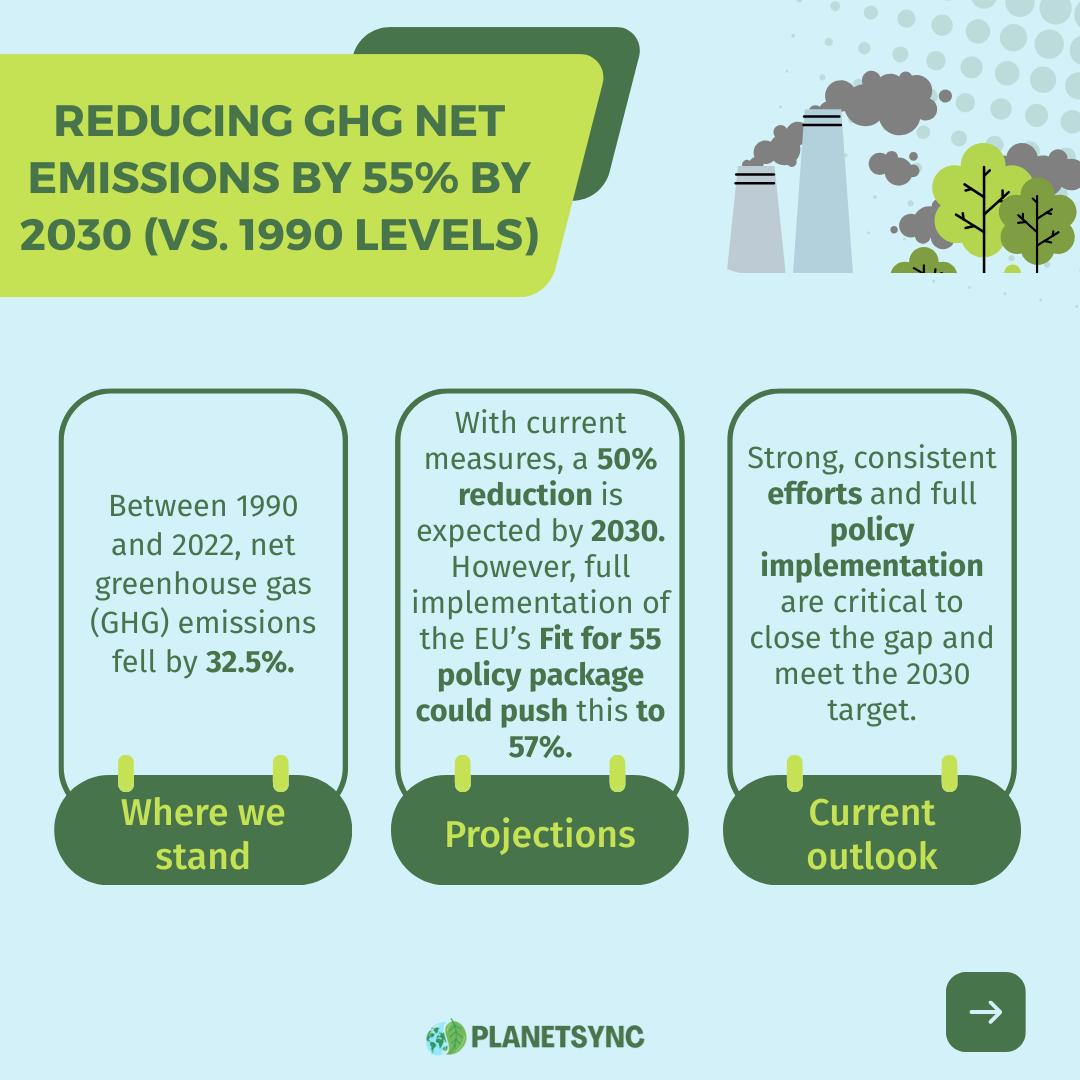
This target, established under the European Climate Law, sets the overall trajectory for EU climate action. Between 1990 and 2022, net GHG emissions fell by 32.5%. Projections submitted by Member States in 2023 indicate a 50% reduction by 2030, falling short of the 55% requirement. However, these projections don’t fully reflect the impact of major EU-wide measures like the reformed ETS and ETS2, which are expected to drive further reductions. With full implementation of the EU’s Fit for 55 policy package the reduction could reach 57%. This target is still achievable but requires sustained and coordinated delivery across all relevant policy areas.
Achieving Climate Neutrality by 2050
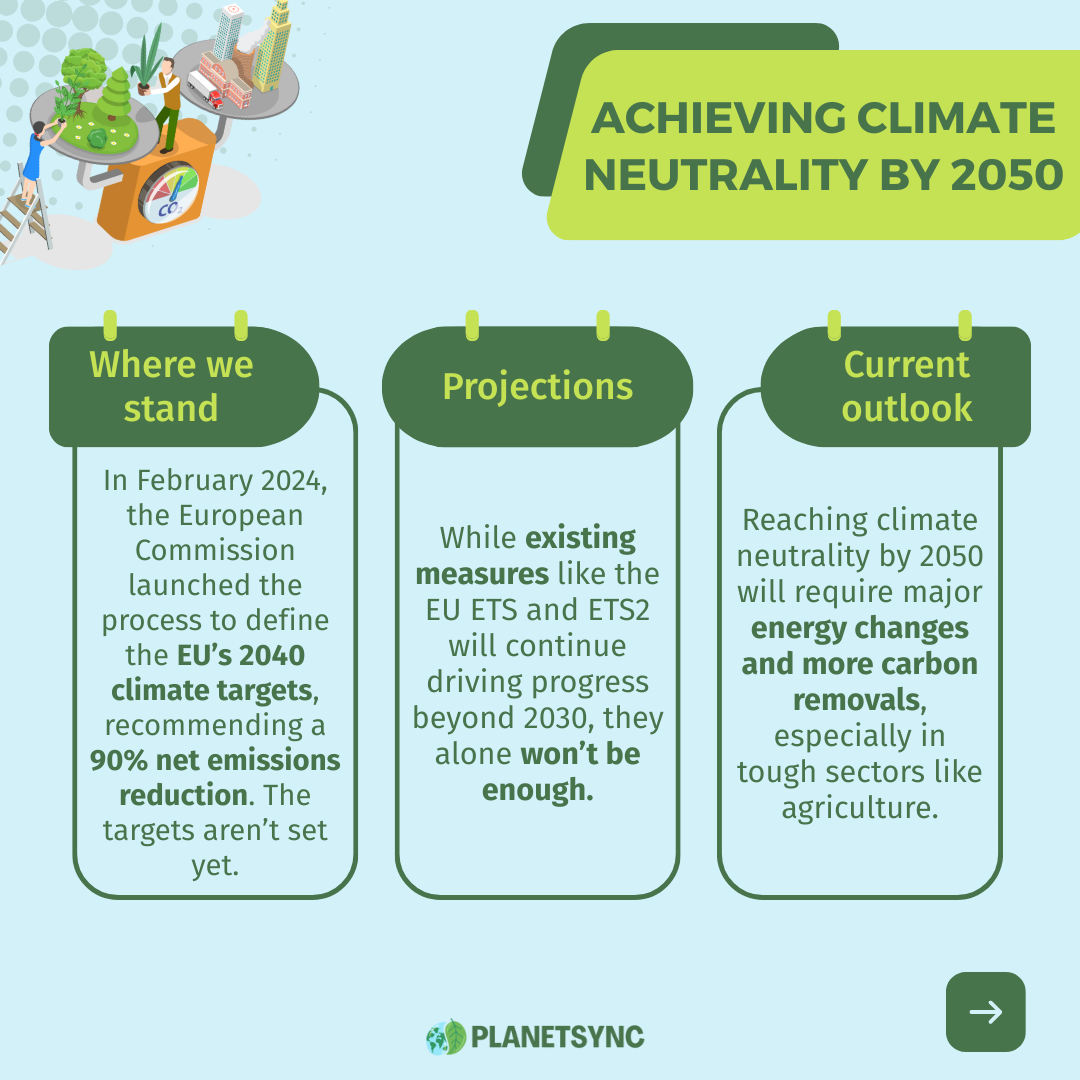
In February 2024, the European Commission adopted Communication that launches the process of establishing the EU’s climate targets for 2040. While the targets are still still to be defined, the direction is clear: achieving climate neutrality by 2050 requires that the majority of the transition be completed by 2040. To this end, the Commission has recommended an ambitious net greenhouse gas emissions reduction of 90% by 2040.
Reaching the 2040 and 2050 climate targets will demand a profound transformation of the EU’s energy system. This includes the large-scale deployment of climate-neutral technologies, many of which require substantial investment and are not yet deployed at commercial scale.
While existing climate policies will continue to drive emissions reductions beyond 2030, the current legislative framework will need to be reviewed, strengthened, and expanded to meet the scale of the challenge ahead. This includes defining robust emission reduction pathways, both overall and sector-specific, and addressing key areas such as carbon capture, industrial carbon removals, and the enhanced use of land as a carbon sink.
Moreover, deeper reductions will be required in hard-to-abate sectors, particularly agriculture. A stronger focus on carbon removals, alongside innovation and support for sustainable practices, will be essential in ensuring a fair, cost-effective, and resilient transition.
Reducing Emissions in EU ETS Sectors by 62% by 2030 (compared to 2005 levels)
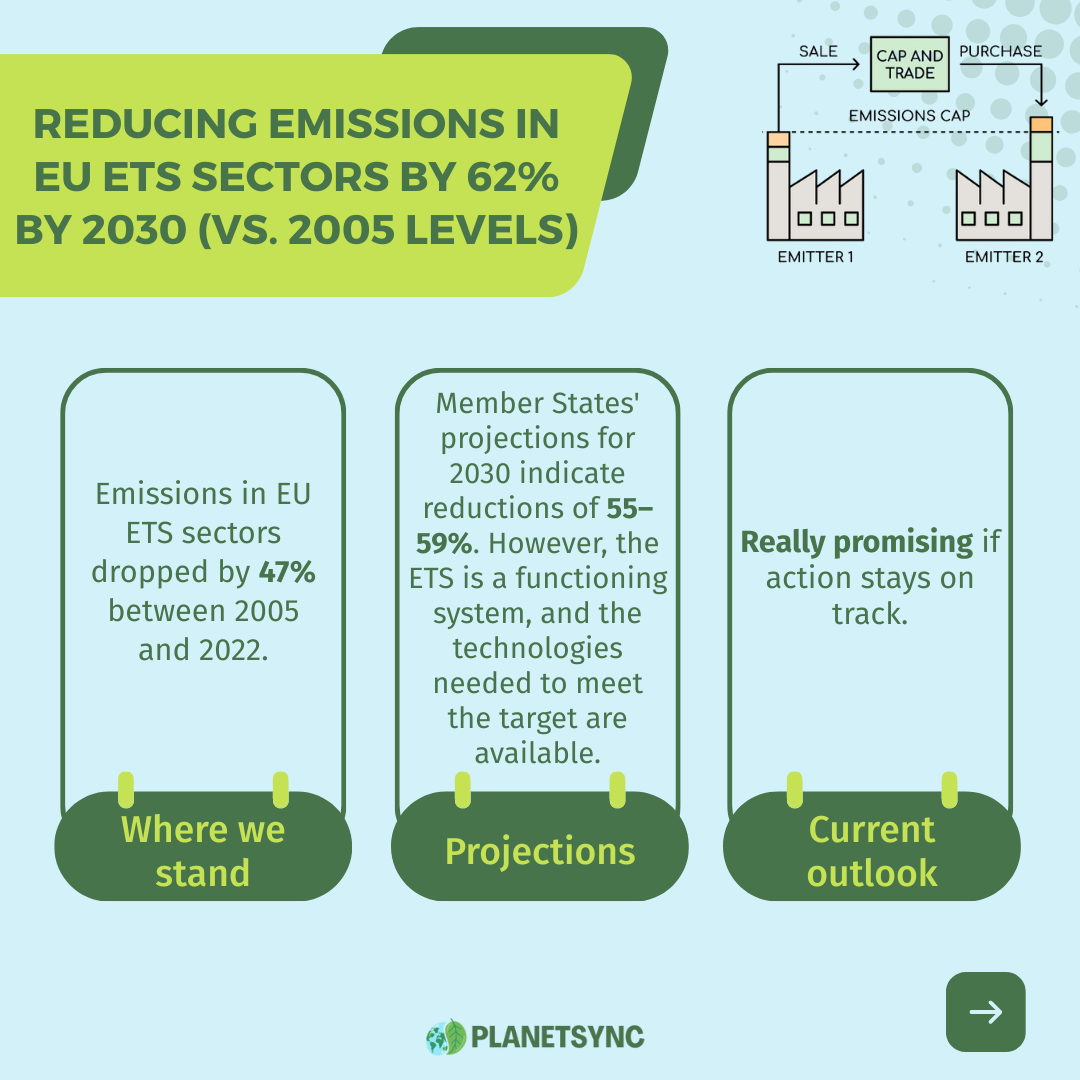
Between 2005 and 2022, emissions from the sectors under the EU ETS dropped by 47%. A big reason for this success is the transition in the power sector, where renewable energy sources like wind and solar have rapidly replaced coal and gas. Looking ahead, projections show that emissions in these sectors could fall by 55–59% by 2030, based on current national policies. That’s slightly below the 62% target, but the good news is that the EU ETS operates as a market-based system across the entire EU, not based on individual country actions. This means even if some countries fall a bit short, the overall system can still deliver the required cuts. And there’s reason to be optimistic: the system is already in place, it’s working, and the clean technologies needed, like renewables and energy efficiency tools, are not only available, but increasingly affordable.
Reducing Emissions in ETS2 Sectors by 43% by 2030 (compared to 2005 levels)
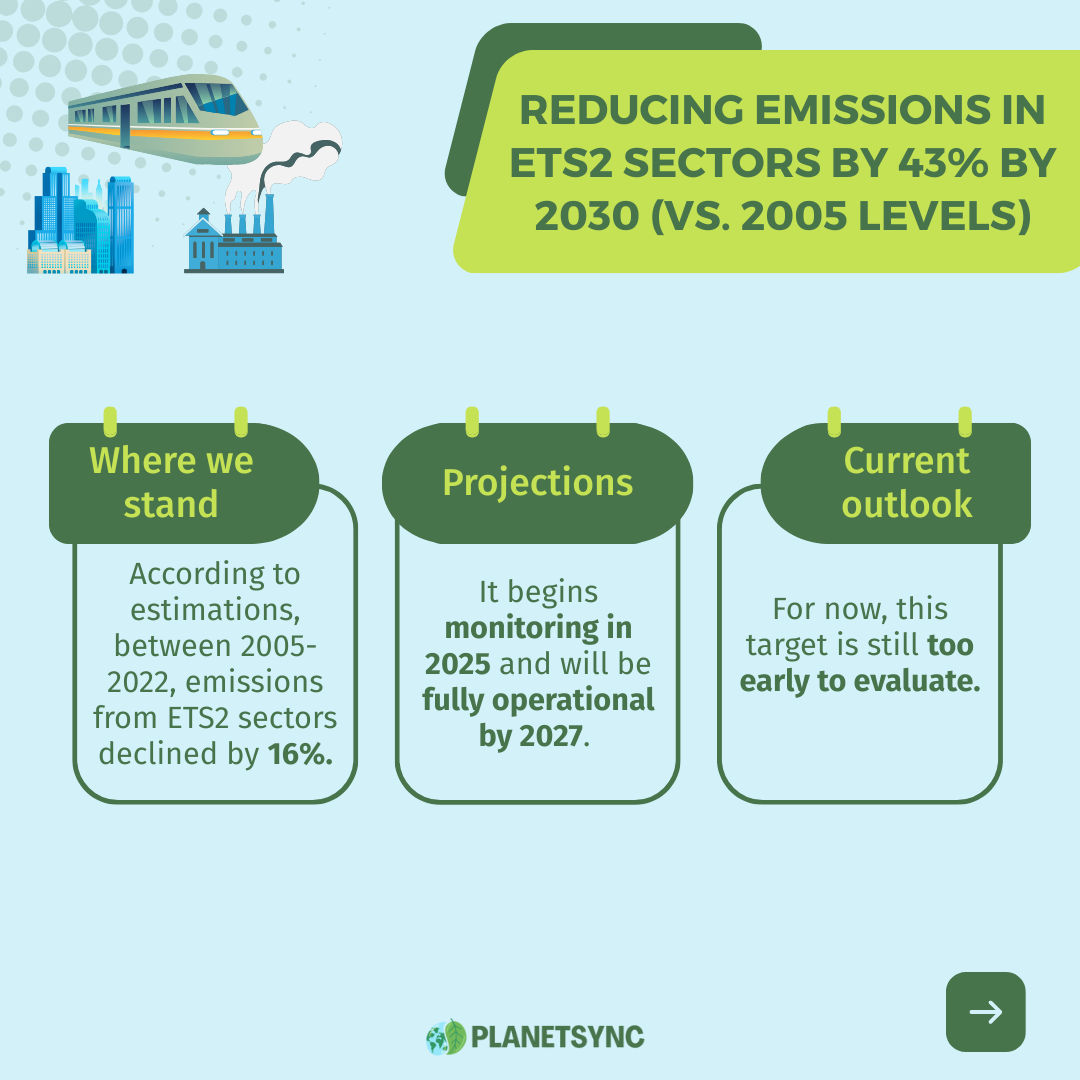
JRC estimates suggest a 16% reduction in emissions in ETS2 sectors between 2005 and 2022. It begins monitoring in 2025 and will be fully operational by 2027. For now, this target is still too early to evaluate.
Cutting Emissions in ESR Sectors by 40% by 2030 (compared to 2005 levels)
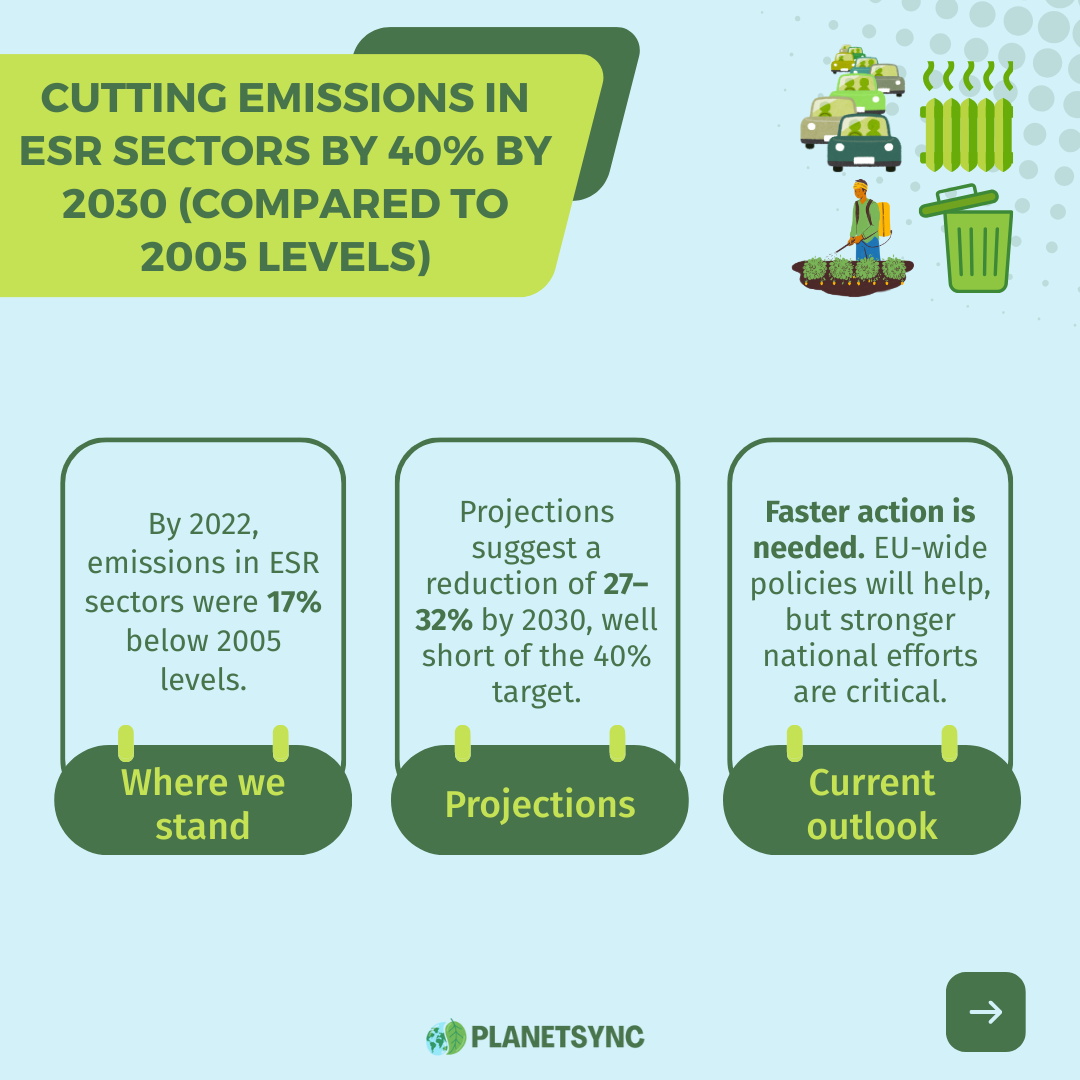
By 2022, emissions in ESR sectors were 17% below 2005 levels. Projections indicate a reduction of 27–32% by 2030, insufficient to meet the 40% goal. While EU-wide policies are expected to help, especially in transport, progress in the building sector is slower than expected, and the overall pace must increase.
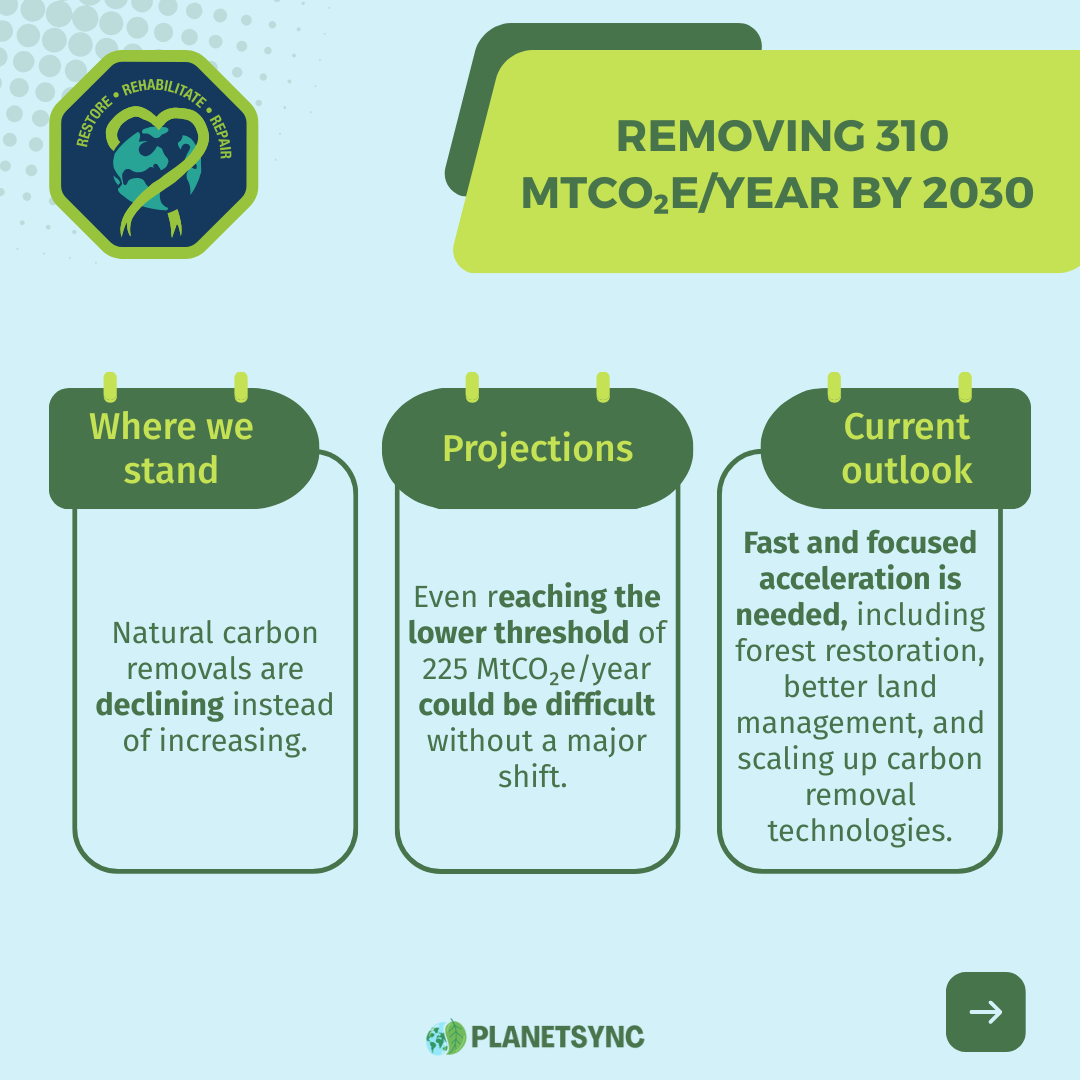
Removing 310 MtCO₂e/year by 2030
The trend in carbon removals is regressing. Even the lower benchmark of removing 225 MtCO₂e/year, the minimum needed to meet the EU’s overall 2030 target, now appears at risk. This downward trend raises serious concerns about whether the current efforts are enough. Without urgent and substantial changes to how Europe manages its forests and land, reaching the target of 310 MtCO₂e in removals by 2030 may no longer be feasible.
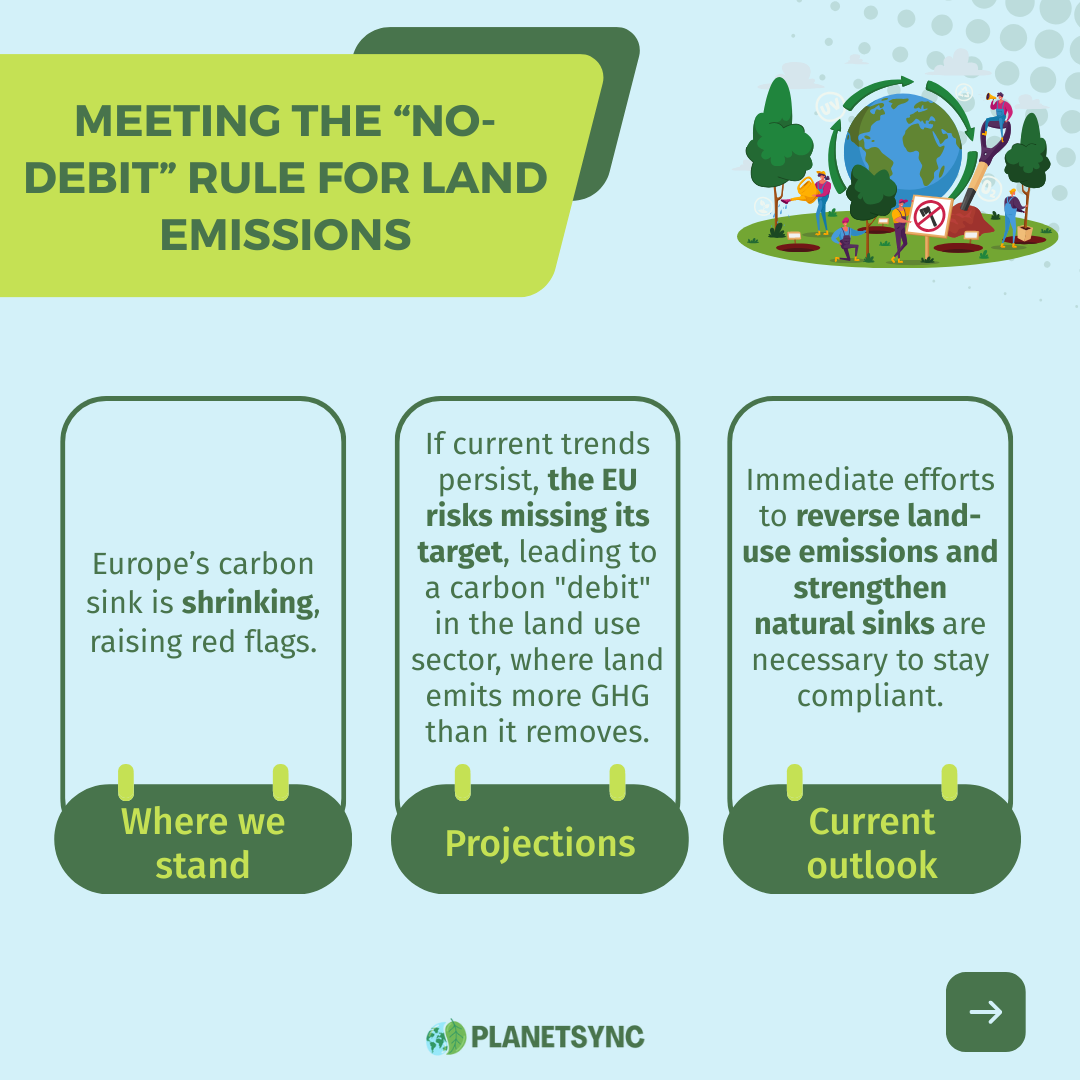
Meeting the “No-Debit” Rule for Land Emissions
Between 2021 and 2025, each EU country must make sure that land use (like forests and agriculture) removes at least as much carbon as it emits. This is known as the “no debit” rule. The EU’s target is an average net removal of 229 million tonnes of CO₂ per year during this period. Right now, it looks like the EU might be slightly off track, especially as forest carbon sinks are shrinking due to more harvesting and natural disturbances.
If this trend continues, the EU risks not meeting its target, which would result in a carbon “debit” for the land use sector.
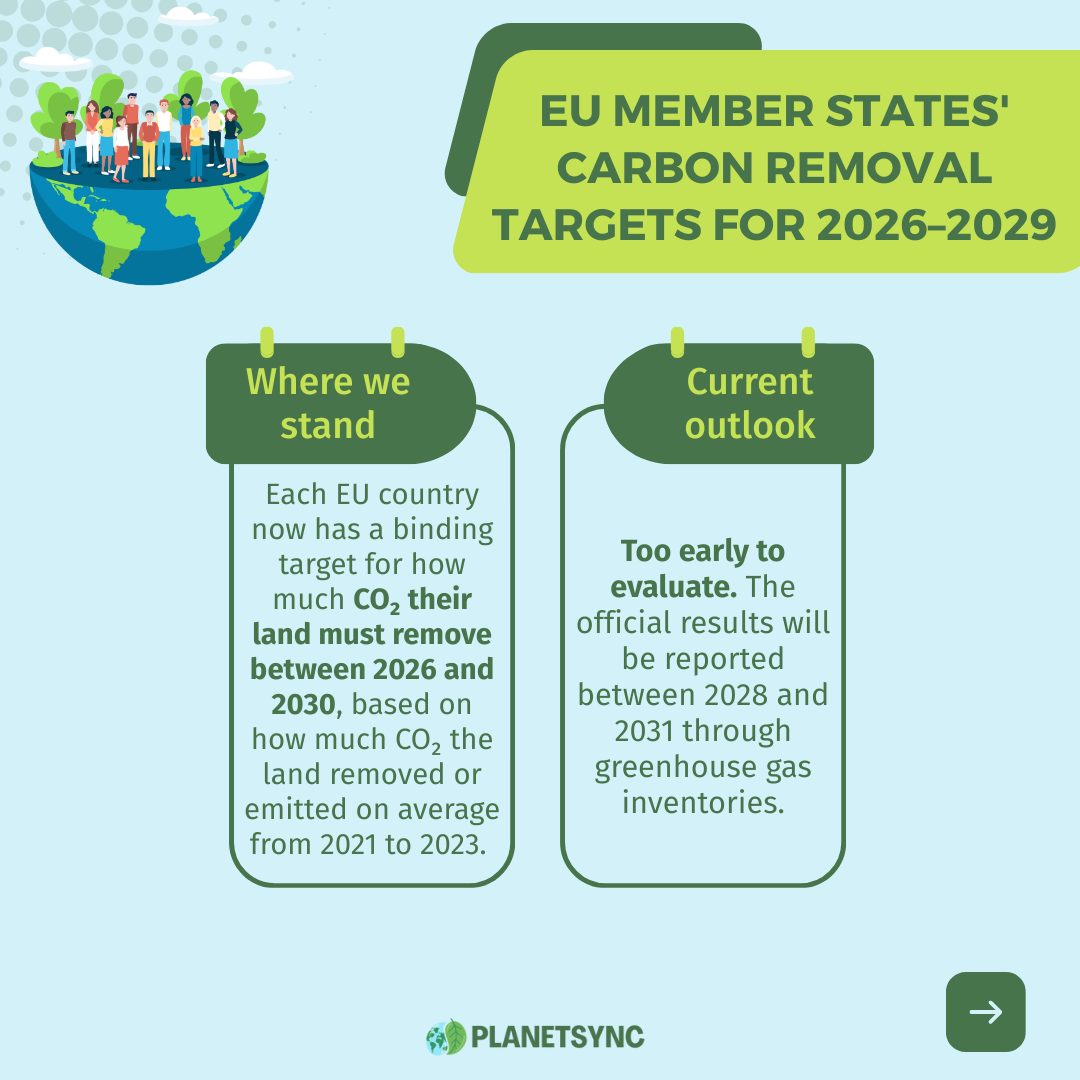
EU Member States’ Carbon Removal Targets for 2026–2029
Under the LULUCF Regulation, each EU country will have a legally binding target for how much CO2 their land must remove from the atmosphere between 2026 and 2030. Each country’s target will follow a linear trajectory, starting from how much their land sector emits or removes on average between 2021 and 2023, and ending at the level they’re required to reach in 2030.
To make sure countries stay on track and don’t wait until the last minute to take action, they will also need to meet a “carbon budget” for the years 2026 to 2029. This means that over those 4 years, each country must achieve a set amount of carbon removals, not just aim for the final 2030 goal. This helps make progress steadier and more predictable, even when emissions might go up or down slightly from year to year due to things like weather or natural events.
These results will be officially reported between 2028 and 2031 as part of each country’s greenhouse gas inventory.
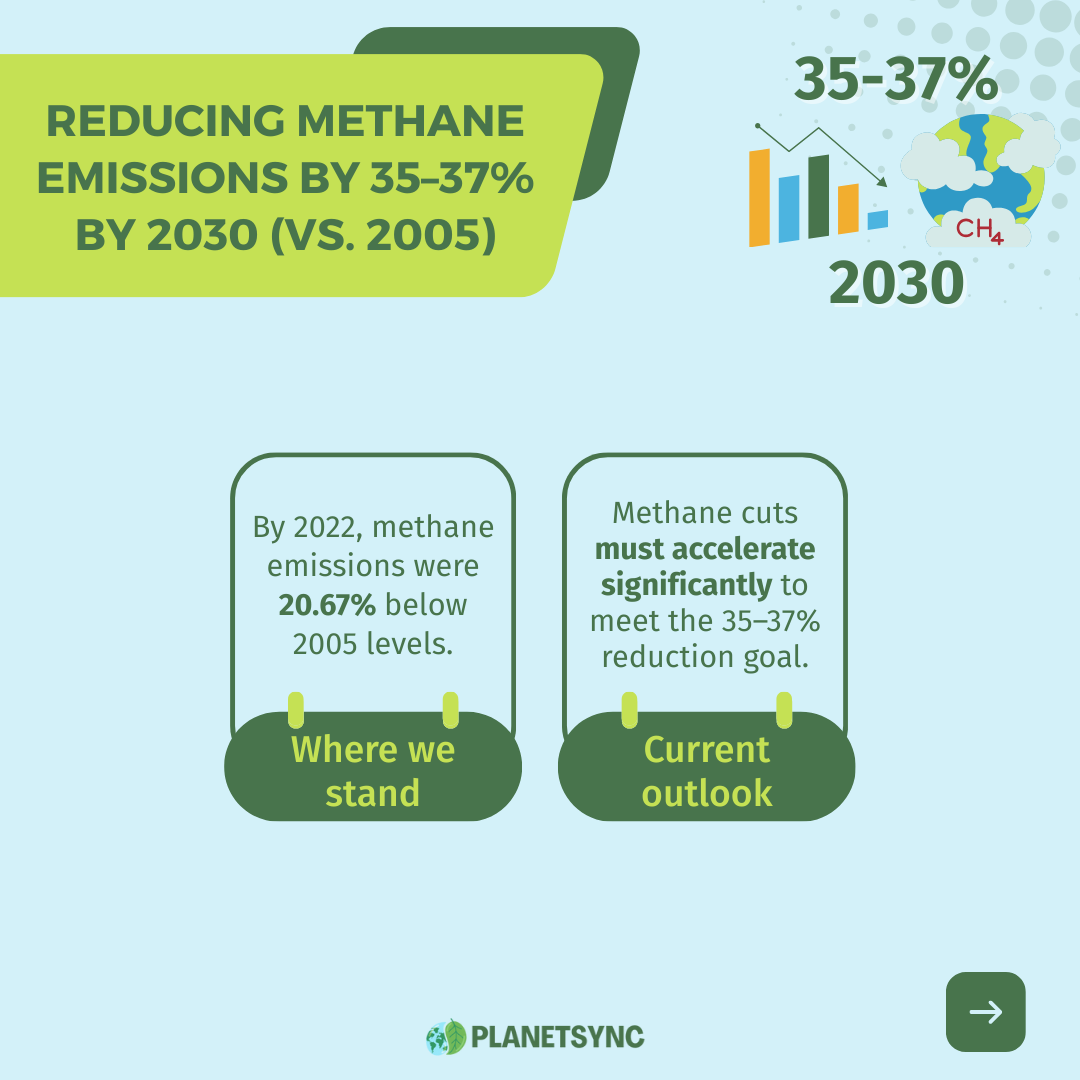
Reducing Methane Emissions by 35–37% by 2030 (compared to 2005 levels)
As of 2022, methane emissions in the EU had dropped by about 20.67% compared to 2005 levels. This is a good step forward, but we need to speed things up and cut emissions by at least 35% by 2030.
The biggest contributor to methane emissions in the EU is agriculture, responsible for more than half of the total. Within this sector, livestock plays an overwhelming role. About 80% of agricultural methane comes from a natural digestive process in animals called enteric fermentation, while another 18% comes from the way manure is managed. The energy sector has made the most progress in cutting methane. This drop is mainly due to improvements in preventing leaks during the extraction and handling of fuels like coal, oil, and natural gas. In the waste sector, most of the methane emissions come from solid waste disposal.
From Climate Ambition to Climate Action
The EU’s climate ambition is bold and the legal frameworks are largely in place. But delivery remains uneven, with some targets within reach and others drifting off course.
What’s becoming clear is that policy alone isn’t enough. Even with robust frameworks progress depends on implementation, coordination, and political will, especially in sectors like agriculture, land use, and buildings, where change has been slow.
In the final article of this series, we’ll explore the barriers holding back progress, from fragmented enforcement to financing gaps, and what it will take to unlock the EU’s full climate potential.


Leave a comment