


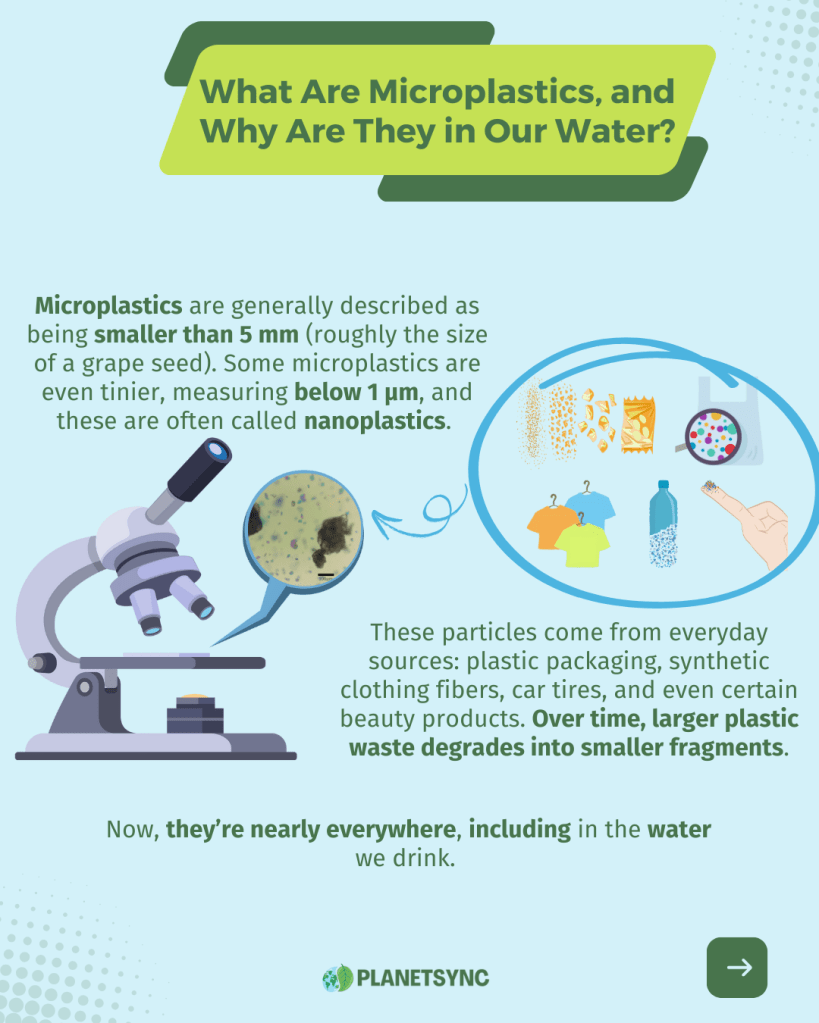
Microplastics are tiny plastic particles that vary in shape, size, density, and chemical composition. While there’s no universal scientific definition, they are generally described as being smaller than 5 mm (roughly the size of a grape seed). Some microplastics are even tinier, measuring below 1 μm, and these are often called nanoplastics. To grasp 1 μm, picture a fine grain of sand sliced into 50-70 layers; one layer is roughly 1 μm.
These particles come from everyday sources: plastic packaging, synthetic clothing fibers, car tires, and even certain beauty products like exfoliating scrubs. Over time, larger plastic waste degrades into smaller fragments, and because it breaks down extremely slowly, often taking centuries, microplastics continue to accumulate in the environment.
Now, they’re nearly everywhere, including in the water we drink. These particles enter lakes, rivers, and groundwater through industrial waste, runoff, and even household drains. While researchers are still studying their potential impact on human health, their widespread presence raises concerns about long-term exposure. Understanding where they come from, how they get into our water, and what we can do about them is an important step toward protecting both our health and the environment.
Need the Gist? Swipe through the visuals below for a quick summary!

Microplastics in Tap Water
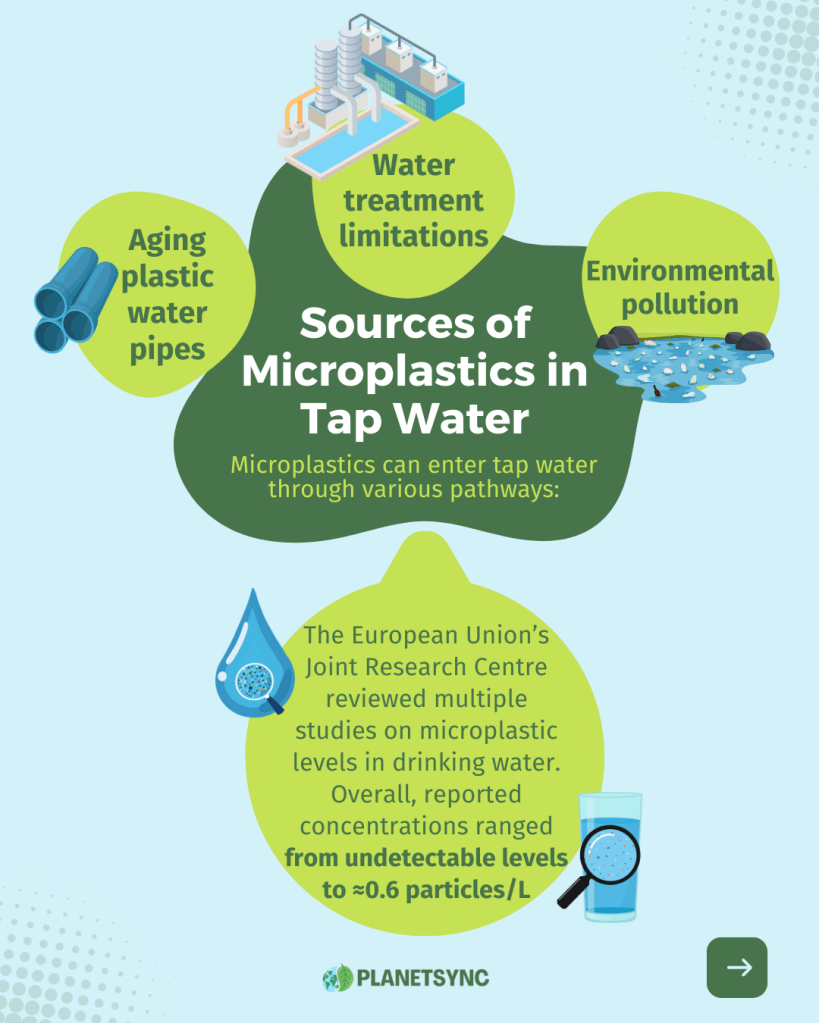
Sources of Microplastics in Tap Water
Microplastics can enter tap water through various pathways:
- Aging plastic water pipes: Some plastic plumbing materials degrade over time, releasing microplastics into tap water.
- Water treatment limitations: Water treatment plants have demonstrated removal efficiencies for microplastics of up to 90%, particularly those ≥1 µm. However, removal efficiency varies by treatment technology and smaller particles are harder to filter out.
- Environmental pollution: Rivers and lakes, the resources that supply water treatment plants for drinking water, are already contaminated with microplastics from urban runoff, laundry wastewater, and industrial processes.
Microplastic Levels in Tap Water
The European Union’s Joint Research Centre (JRC) has reviewed multiple studies on microplastic levels in drinking water. Overall, reported concentrations are generally low, ranging from undetectable levels to approximately 0.6 particles per liter.
Microplastics in Bottled Water
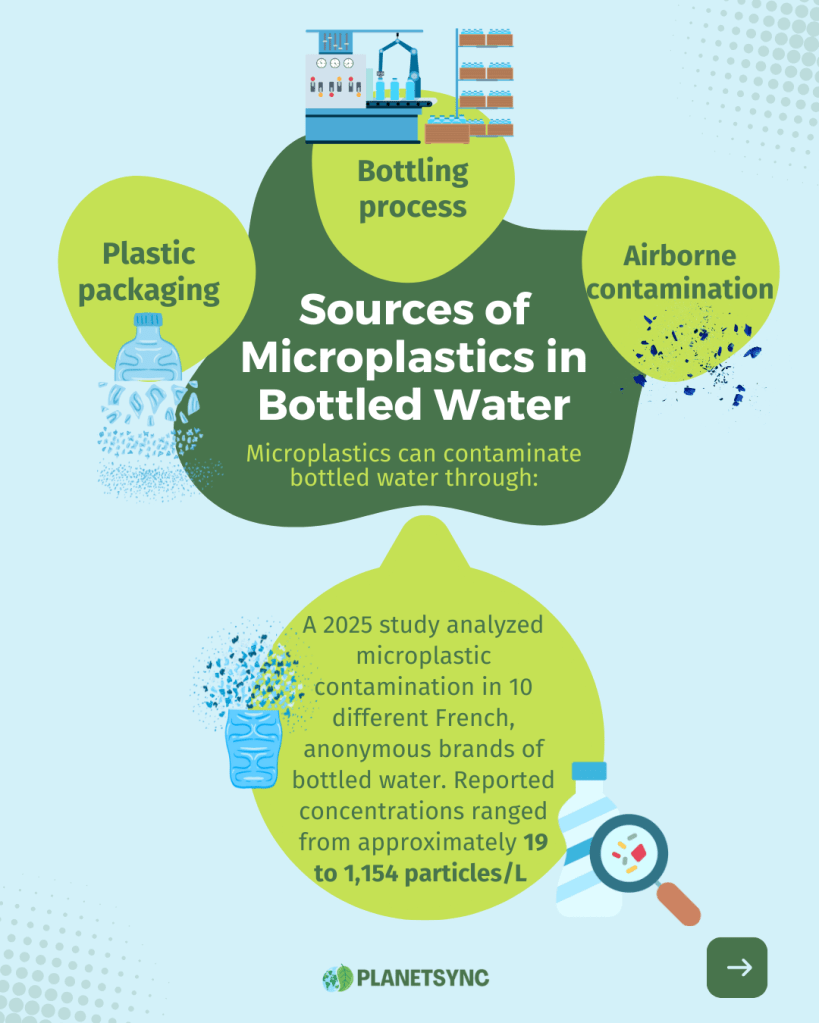
Sources of Microplastics in Bottled Water
Microplastics can contaminate bottled water through:
- Plastic packaging: Bottles can shed tiny plastic fragments into the water, especially when reused.
- Bottling process: Microplastics can enter during manufacturing and bottling.
- Airborne contamination: Plastic dust in the air can settle into the water before sealing.
Microplastic Levels in Bottled Water
A 2025 study analyzed microplastic contamination in 10 different French, anonymous brands of bottled water, detecting particles as small as 1 µm. Reported concentrations ranged from approximately 19 to 1,154 particles per liter. While these numbers may sound alarming, the actual mass of plastic detected remains relatively low, consisting of many extremely tiny fragments.
Challenges in Microplastic Research: Interpreting Data and Assessing Risk
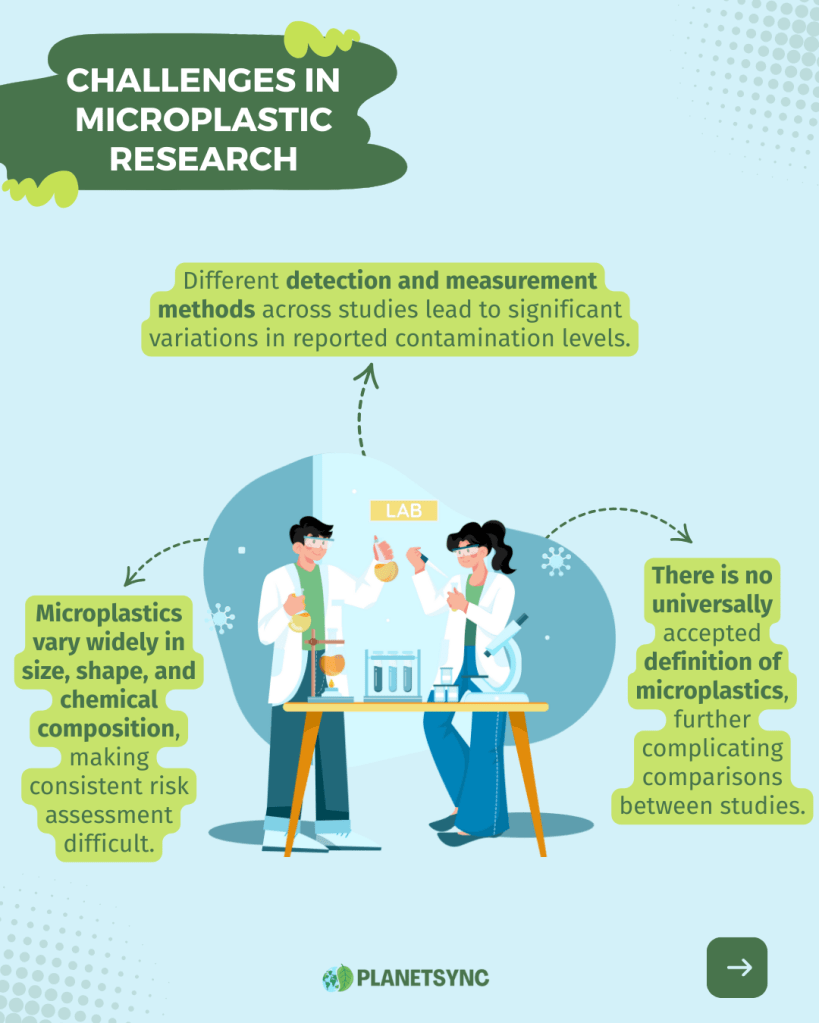
Interpreting study results on microplastics requires careful consideration due to several challenges. Their size, shape, and chemical composition vary widely, making it difficult to assess potential risks consistently. Furthermore, the diverse range of detection and measurement methods employed by researchers leads to significant variations in reported contamination levels. For example, studies utilizing sensitive techniques (e.g. µRaman Spectroscopy) often detect higher concentrations compared to those with lower detection thresholds. This inconsistency is compounded by the absence of a universally accepted definition for microplastics, which further complicates cross-study comparisons and hinders the accurate evaluation of their environmental and health impacts.
What You Can Do to Reduce Your Exposure to Microplastics from Water
While microplastics are everywhere, there are practical steps you can take to limit how much you consume:
- Use a water filter at home: Reverse osmosis and ultrafiltration systems are highly effective in removing microplastics. A 2023 study evaluated point-of-use (POU) devices incorporating microfiltration technologies and found removal efficiencies ranging from 78% to 100% for various microplastic types, depending on the device and microplastic characteristics.
- Choose tap water when possible: In most EU countries, tap water undergoes rigorous safety testing and generally contains fewer microplastics than bottled water.
- Wash synthetic fabrics carefully: Synthetic clothing sheds microplastics during washing. Using a fiber-catching laundry bag and washing in cold water can reduce fiber release.
- Reduce plastic use: Opt for reusable glass or stainless-steel bottles instead of plastic ones, and store food and water in non-plastic containers.
Taking Action Against Microplastics
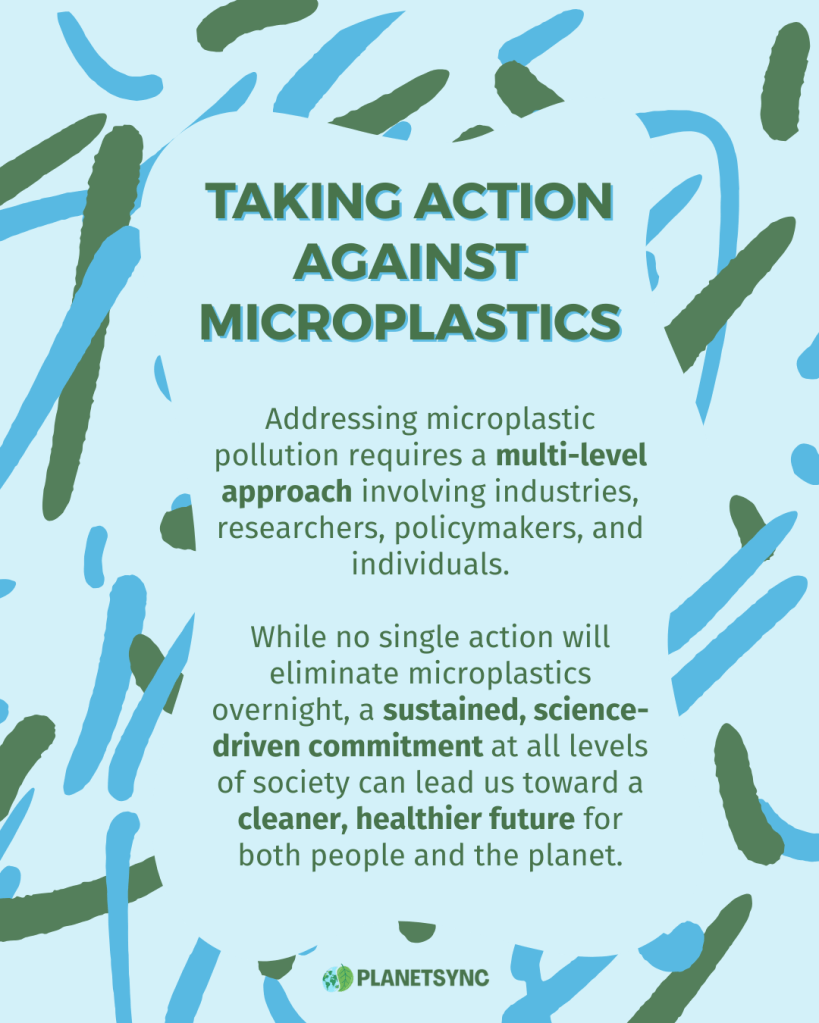
Microplastics have become an unavoidable part of modern life, contaminating the water we drink and the environment we depend on. While their full impact on human health is still under investigation, their widespread presence raises concerns that cannot be ignored. Addressing this issue requires a multi-level approach involving industries, researchers, policymakers, and individuals.
At a systemic level, reducing plastic production, enforcing stricter regulations on plastic waste, and investing in sustainable materials are essential to limiting new sources of microplastic pollution. However, these changes take time. In the meantime, proven water treatment technologies can effectively remove nearly all microplastics from drinking water, making their widespread implementation a crucial step forward.
Researchers must adhere to standardized testing methods, assess potential risks, and determine safe exposure limits, ensuring that policies and technological advancements are grounded in reliable data.
At the individual level, small but meaningful actions, such as reducing plastic consumption and supporting policies that curb plastic pollution, can collectively drive change.
While no single action will eliminate microplastics overnight, a sustained, science-driven commitment at all levels of society can lead us toward a cleaner, healthier future for both people and the planet.
References & Resources
- Belz, S., Cella, C., Geiss, O., Gilliland, D., La, S. R., Mėhn, D., & Sokull-Kluettgen, B. (2024). Analytical methods to measure microplastics in drinking water. JRC Publications Repository. https://doi.org/10.2760/109944
- Cherian, A. G., Liu, Z., McKie, M. J., Almuhtaram, H., & Andrews, R. C. (2023). Microplastic Removal from Drinking Water Using Point-of-Use Devices. Polymers, 15(6), 1331. https://doi.org/10.3390/polym15061331
- Gambino, I., Bagordo, F., Grassi, T., Panico, A., & De Donno, A. (2022). Occurrence of Microplastics in Tap and Bottled Water: Current Knowledge. International Journal of Environmental Research and Public Health, 19(9), 5283. https://doi.org/10.3390/ijerph19095283
- Hagelskjær, O., Hagelskjær, F., Margenat, H., Yakovenko, N., Sonke, J. E., & Roux, G. L. (2025). Majority of potable water microplastics are smaller than the 20 μm EU methodology limit for consumable water quality. PLOS Water, 4(1), e0000250. https://doi.org/10.1371/journal.pwat.0000250
- ECHA. (n.d.). Microplastics.


Leave a comment