


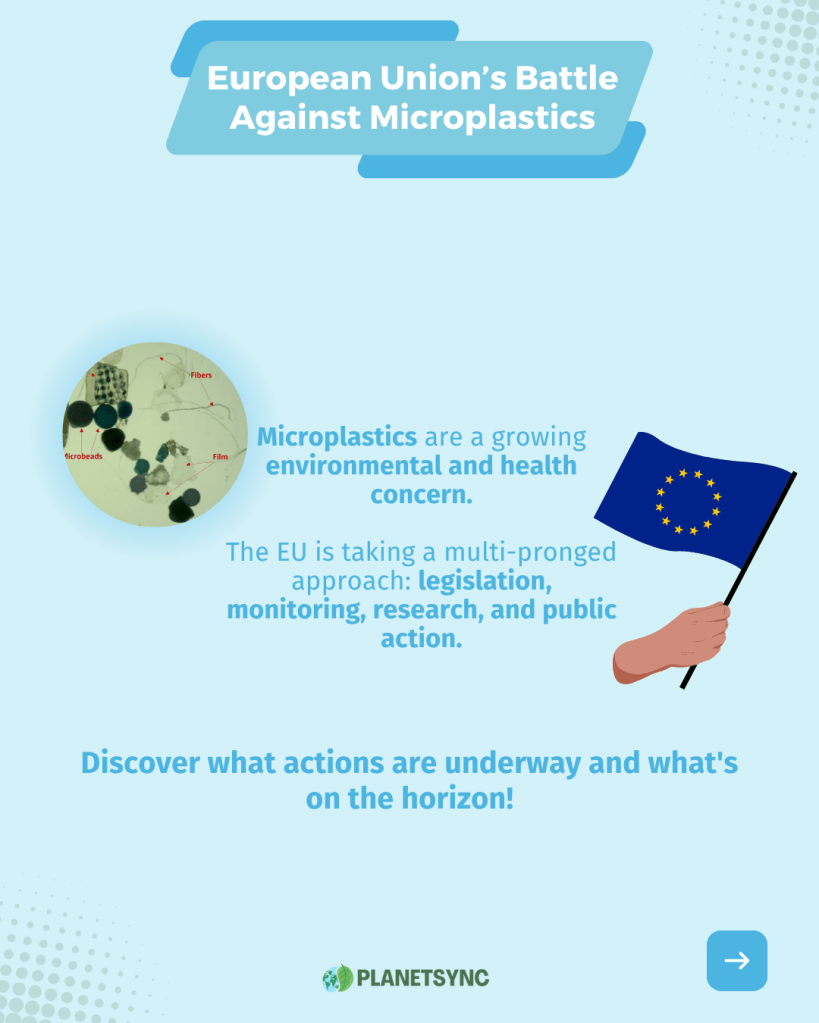
Microplastics are increasingly recognized as an environmental and public health concern, prompting decisive action at the European Union (EU) level. Through a combination of regulatory measures, scientific advancements, and public engagement, the EU is working to mitigate microplastic pollution. This article provides an overview of the key measures being taken and what the future holds for the battle against microplastic pollution in the EU.
Need the Gist? Swipe through the visuals below for a quick summary!


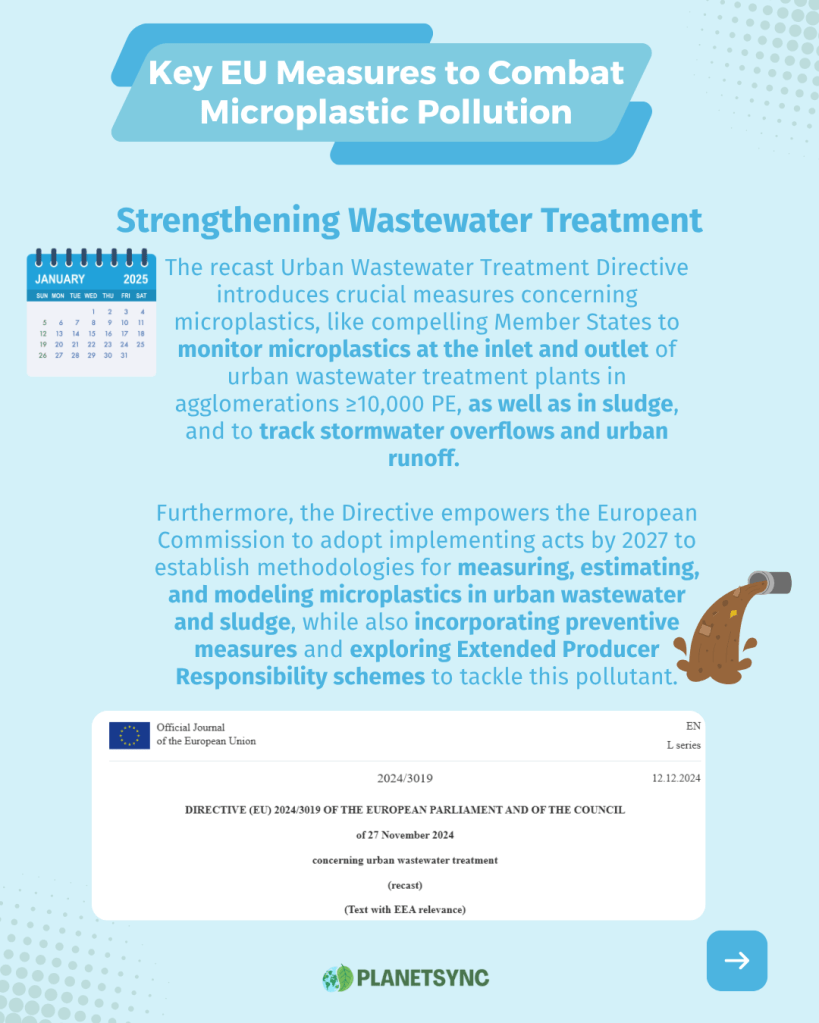


Key EU Measures to Combat Microplastic Pollution
Standardizing Microplastic Detection in Drinking Water
In May 2024, the EU adopted a Delegated Decision that establishes a standardized methodology for detecting and quantifying microplastics in water intended for human consumption. This ensures consistent and reliable monitoring across all EU member states, forming a crucial foundation for future regulatory decisions.
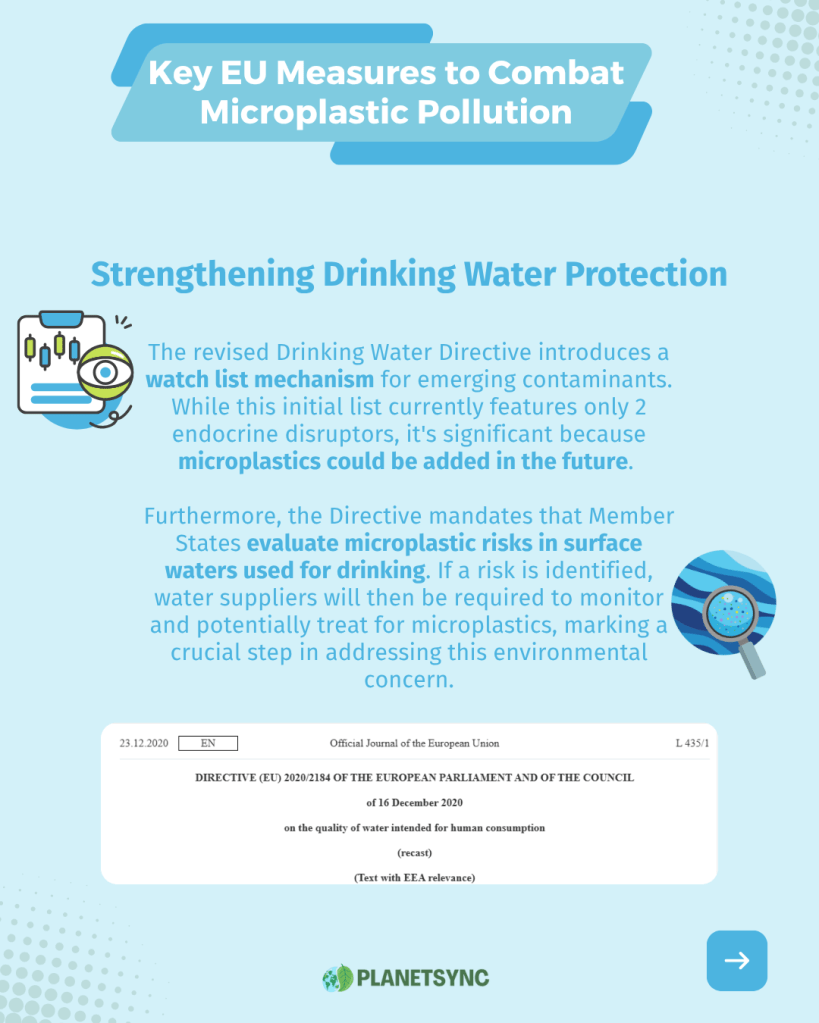
Strengthening Drinking Water Protection
The revised Drinking Water Directive (EU 2020/2184) suggested a watch list mechanism for emerging compounds. While the initial list includes only 17-beta-estradiol and nonylphenol (endocrine-disrupting chemicals), the newly adopted measurement methodology could pave the way for microplastics to be included in future updates. Member States are required to assess microplastic risks in surface water sources used for intended for human consumption. If identified as a health risk, national authorities may require water suppliers to monitor microplastics and, if necessary, implement treatment measures to remove them.
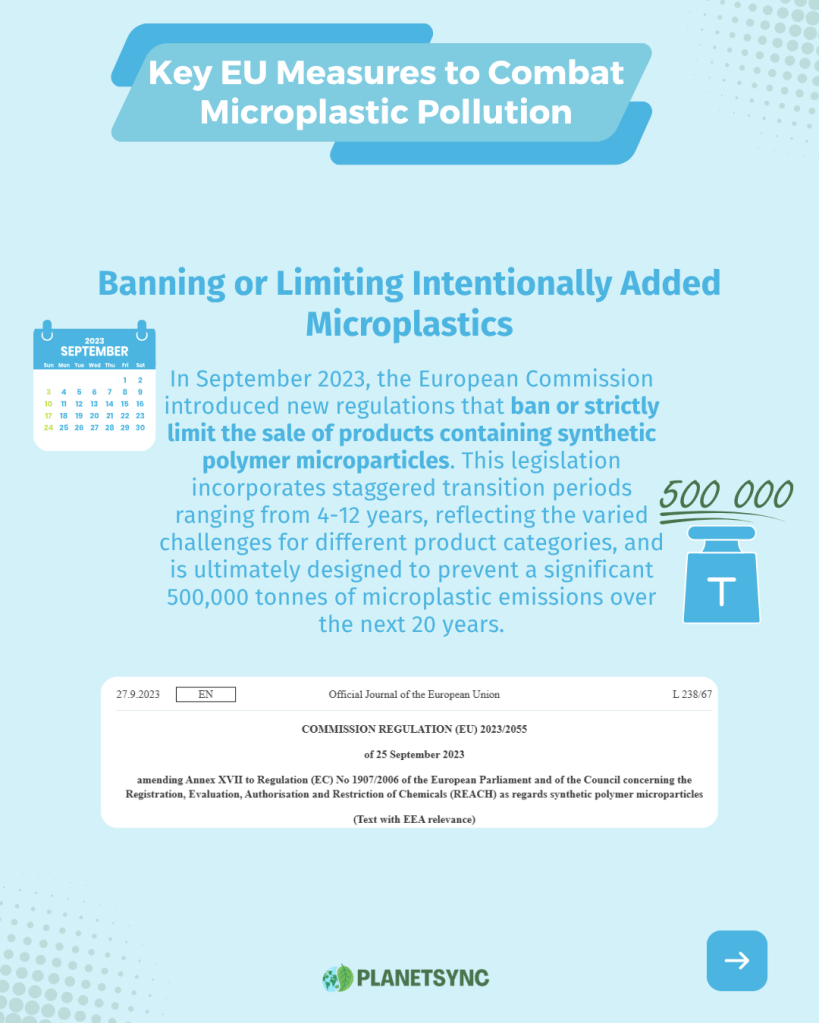
Banning or Limiting Intentionally Added Microplastics
In September 2023, the European Commission introduced new restrictions which ban or strictly limit the sale of products containing intentionally added microplastic particles (defined as synthetic polymer particles ≤5 mm that are insoluble and non-biodegradable). This restriction targets products such as paints, cosmetics with plastic microbeads, detergents with microplastic fragrance capsules, agricultural fertilizers with plastic coatings, artificial sports turf infill, certain types of glitter, and more. The new rules entered into force on 17 October 2023. However, the regulation builds in transition periods of 4 to 12 years to give certain industries time to find alternatives. This restriction is expected to prevent the release of around 500,000 tonnes of microplastics over 20 years.
The Zero Pollution Action Plan (ZPAP)
As part of the European Green Deal, the EU adopted the Action Plan “Towards Zero Pollution for Air, Water and Soil” in May 2021, setting targets to reduce pollution at the source. For microplastics, the plan aims for a 30% reduction in microplastic emissions by 2030 (compared to 2016 levels). While this goal provides a clear policy direction, progress remains uneven, and many of the necessary regulatory measures are still in development.
Strengthening Wastewater Treatment
The recast Urban Wastewater Treatment Directive, which came into effect on January 1, 2025, outlines several measures related to microplastics, some of them are:
- Member States must ensure that competent authorities monitor the presence of microplastics at the inlets and outlets of urban wastewater treatment plants in agglomerations of 10,000 population equivalent above. Microplastics in sludge must also be monitored when relevant, especially when it is reused in agriculture.
- The Commission is empowered to adopt implementing acts to establish methodologies for measuring, estimating, and modeling microplastics in urban wastewater and sludge. These methodologies must be adopted by July 2, 2027.
- Competent authorities are required to monitor the content of microplastics, where relevant, in stormwater overflow discharges and discharges of urban runoff, as these are significant pathways for microplastic pollution.
- Member States must take preventive measures to limit the risk of both intentionally and unintentionally released microplastics reaching urban wastewater and sludge.
- A feasibility assessment will determine whether an extended producer responsibility system should be implemented for products generating microplastics in urban wastewater, based on monitoring data collected from wastewater treatment plants.
Preventing Plastic Pellet Loss
Plastic pellets, the third-largest source of unintentional microplastic pollution after paint degradation and tire abrasion, contributed an estimated 52,140 to 184,290 tonnes of losses in 2019 alone. That’s enough plastic pellets to fill over 70 Olympic-sized swimming pools every year.
To tackle this issue, the EU Council has agreed on new regulations to prevent pellet losses across the entire supply chain. Negotiations with the European Parliament on the final shape of the regulation were expected to begin in early 2025. Once adopted, the measures could reduce plastic pellet pollution by up to 74% and position the EU as a global leader in addressing this issue.
Encouraging Public and Industry Action
Beyond legislation, the EU is promoting initiatives that encourage individuals and businesses to reduce plastic consumption and improve recycling practices. Raising public awareness and enhancing recycling infrastructure are essential steps toward mitigating microplastic contamination in the long term.
What’s Next: Closing Key Gaps in the EU’s Microplastic Strategy
While policies mark substantial progress, further actions are needed to fully address microplastic pollution.
Expanding Regulation to Address Unintentional Microplastic Sources
Further regulations must target major unintentional sources of microplastics, such as emissions from tire abrasion and brake wear. The proposed restrictions must be finalized and enforced promptly. Additionally, more data collection is needed to assess emissions from paints, textiles, and geotextiles to inform future regulatory decisions.
Upgrading Wastewater Treatment Plants
Although existing wastewater treatment plants can remove up to 90% of microplastics, additional treatments (such as quaternary treatments) may be necessary to eliminate even smaller particles from urban wastewater.
Reducing Microfiber Pollution from Textiles
Microfiber pollution from synthetic textiles is a major source of microplastic contamination, with fibers shedding during both production and washing. While low-shedding fabrics and biodegradable alternatives already exist, their adoption remains limited, and microfiber pollution continues to accumulate in water systems.
Some manufacturers have begun addressing this issue, but broader industry commitment and stronger regulations are needed to make these innovations the norm. Expanding the use of microfiber filters in washing machines, improving textile recycling, and encouraging durable, low-shedding designs can significantly reduce pollution. As solutions already exist, scaling them up is the next step.
Enhancing Urban Stormwater Management
Improved stormwater management could incorporate microplastic capture systems to reduce contamination from roadways, where tire abrasion is a significant source of microplastic pollution.
Strengthening Research and Monitoring
Standardized methodologies for detecting and quantifying microplastics in drinking water, adopted in May 2024, will enable more consistent monitoring across the EU. This improved data collection will provide the scientific basis for evaluating whether regulatory threshold limits for microplastics should be established to better protect public health.
International Cooperation
While the EU has been advocating for global action on microplastics, international cooperation remains fragmented. Many countries lack the regulatory frameworks or technological capacity to address microplastic pollution effectively. The EU could help to bridge this gap by supporting knowledge-sharing initiatives, funding research collaborations, and engaging in diplomatic efforts to establish global standards.
Europe’s Roadmap to Zero Pollution
The EU has taken bold steps to combat microplastic pollution by implementing regulatory restrictions, setting strategic reduction targets, updating directives, and advancing research. However, the problem’s scale demands even more ambition, covering all major sources and accelerating implementation of existing and new measures. Upcoming regulations along with continued research and innovation, will be crucial in closing the remaining gaps.
Individual actions also play a role. Proper recycling, reducing plastic consumption, and supporting stronger environmental policies contribute to the broader effort to curb microplastic pollution. With sustained commitment, Europe can move closer to its vision of zero pollution, protecting ecosystems and public health while setting an example for the rest of the world.
References & Resources
- Bank, E. I. (2023). Microplastics and Micropollutants in Water: Contaminants of Emerging Concern. https://www.eib.org/en/publications/20230042-microplastics-and-micropollutants-in-water
- Commission Delegated Decision (EU) 2024/1441 of 11 March 2024 supplementing Directive (EU) 2020/2184 of the European Parliament and of the Council by laying down a methodology to measure microplastics in water intended for human consumption (notified under document C(2024) 1459). (n.d.). https://eur-lex.europa.eu/eli/dec_del/2024/1441/oj/eng
- Commission Regulation (EU) 2023/2055 of 25 September 2023 amending Annex XVII to Regulation (EC) No 1907/2006 of the European Parliament and of the Council concerning the Registration, Evaluation, Authorisation and Restriction of Chemicals (REACH) as regards synthetic polymer microparticles (Text with EEA relevance). (n.d.). https://eur-lex.europa.eu/eli/reg/2023/2055/oj/eng
- Consilium. (n.d.). Zero pollution: Council agrees its position on reducing plastic pellet losses, including in maritime transport. https://www.consilium.europa.eu/en/press/press-releases/2024/12/17/zero-pollution-council-agrees-its-position-on-reducing-plastic-pellet-losses-including-in-maritime-transport/
- Directive (EU) 2020/2184 of the European Parliament and of the Council of 16 December 2020 on the quality of water intended for human consumption (recast) (Text with EEA relevance). (n.d.). https://eur-lex.europa.eu/eli/dir/2020/2184/oj/eng
- Directive (EU) 2024/3019 of the European Parliament and of the Council of 27 November 2024 Concerning Urban Wastewater Treatment (Recast) (Text with EEA Relevance), EP, CONSIL (2024). http://data.europa.eu/eli/dir/2024/3019/oj/eng
- Directorate-General for Environment. (European Commission). (2023). EU action against microplastics. Publications Office of the European Union. https://data.europa.eu/doi/10.2779/917472
- European Commission. (2025, February 4). Zero Pollution Action Plan. https://environment.ec.europa.eu/strategy/zero-pollution-action-plan_en


 planetsync.blog
Leave a comment