

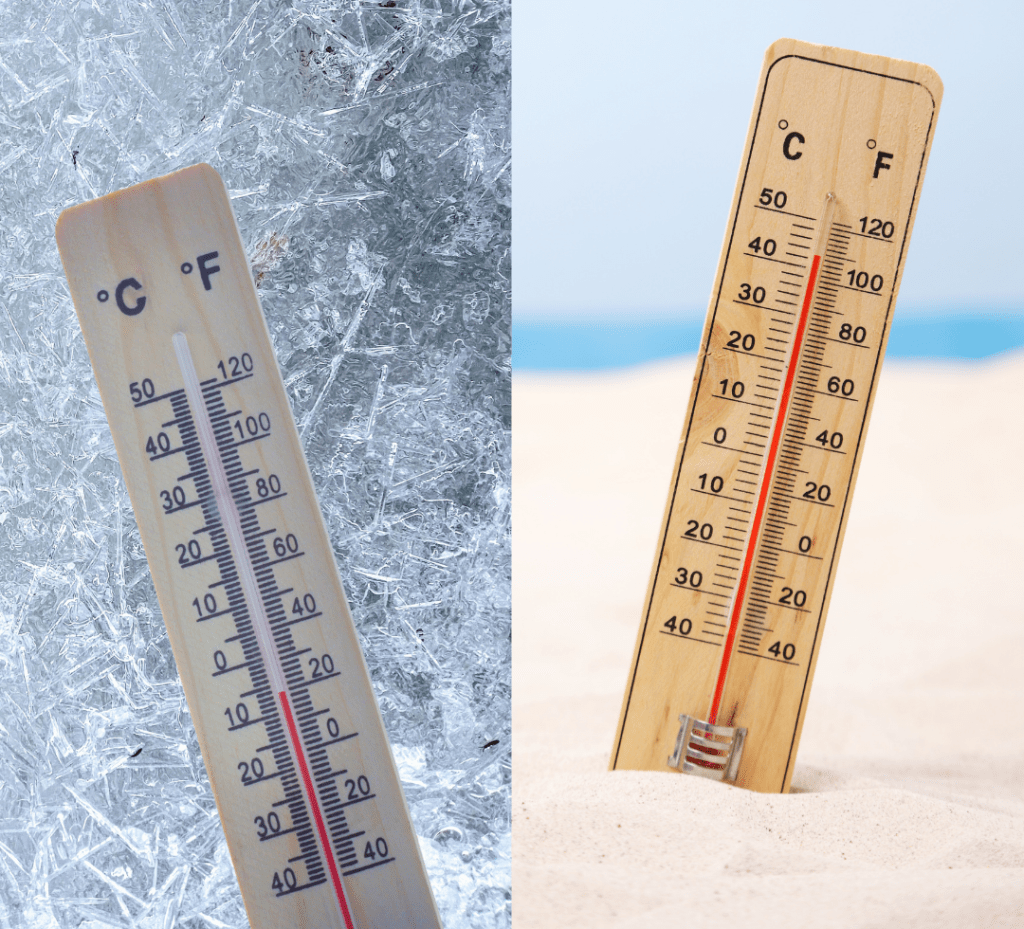
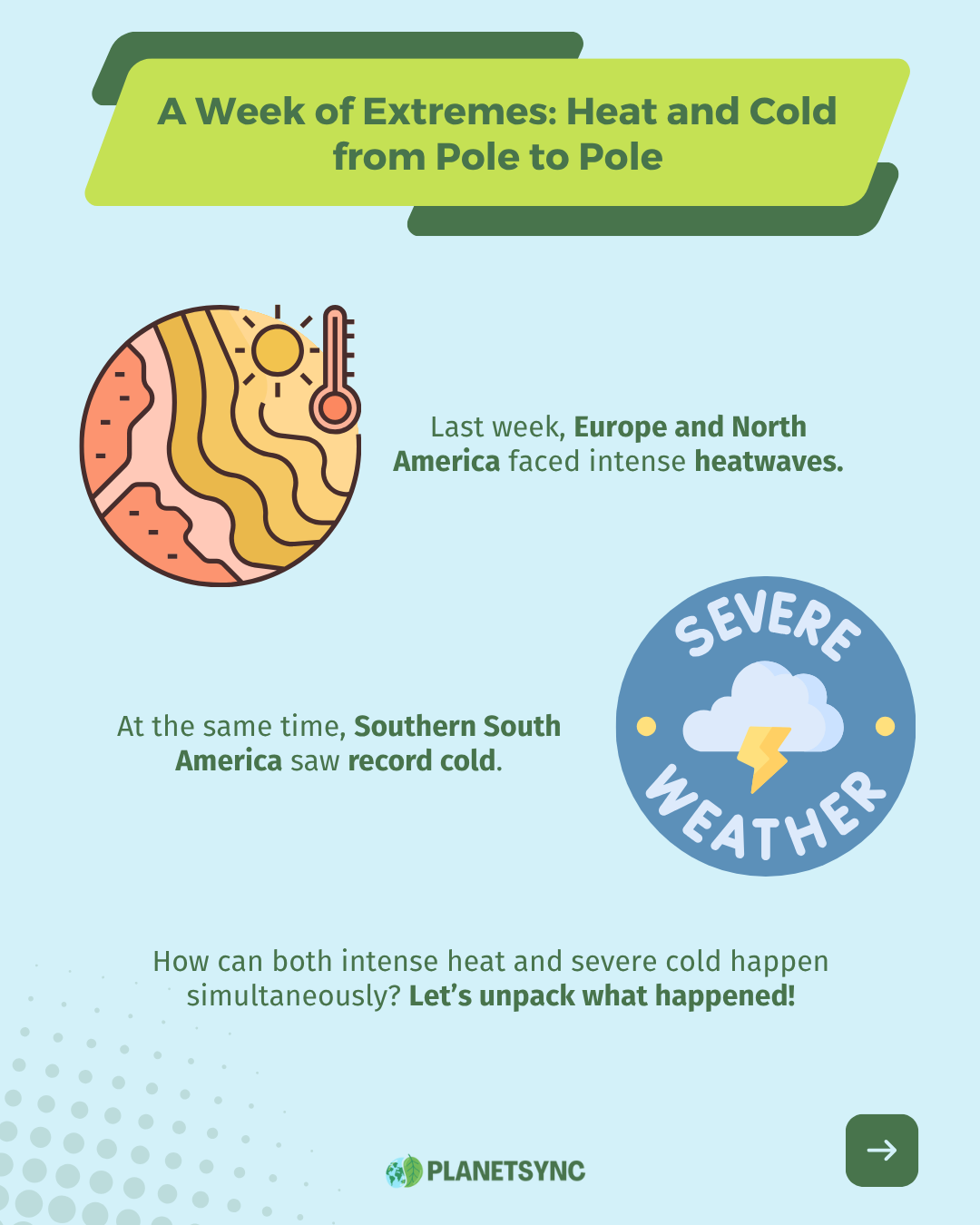
Last week, while parts of Europe and North America faced scorching heatwaves, Southern South America experienced historic cold spells. How can both intense heat and severe cold happen simultaneously? Let’s unpack what happened!
Need the Gist? Swipe through the visuals below for a quick summary!
An Unusual Cold Spell in Southern South America
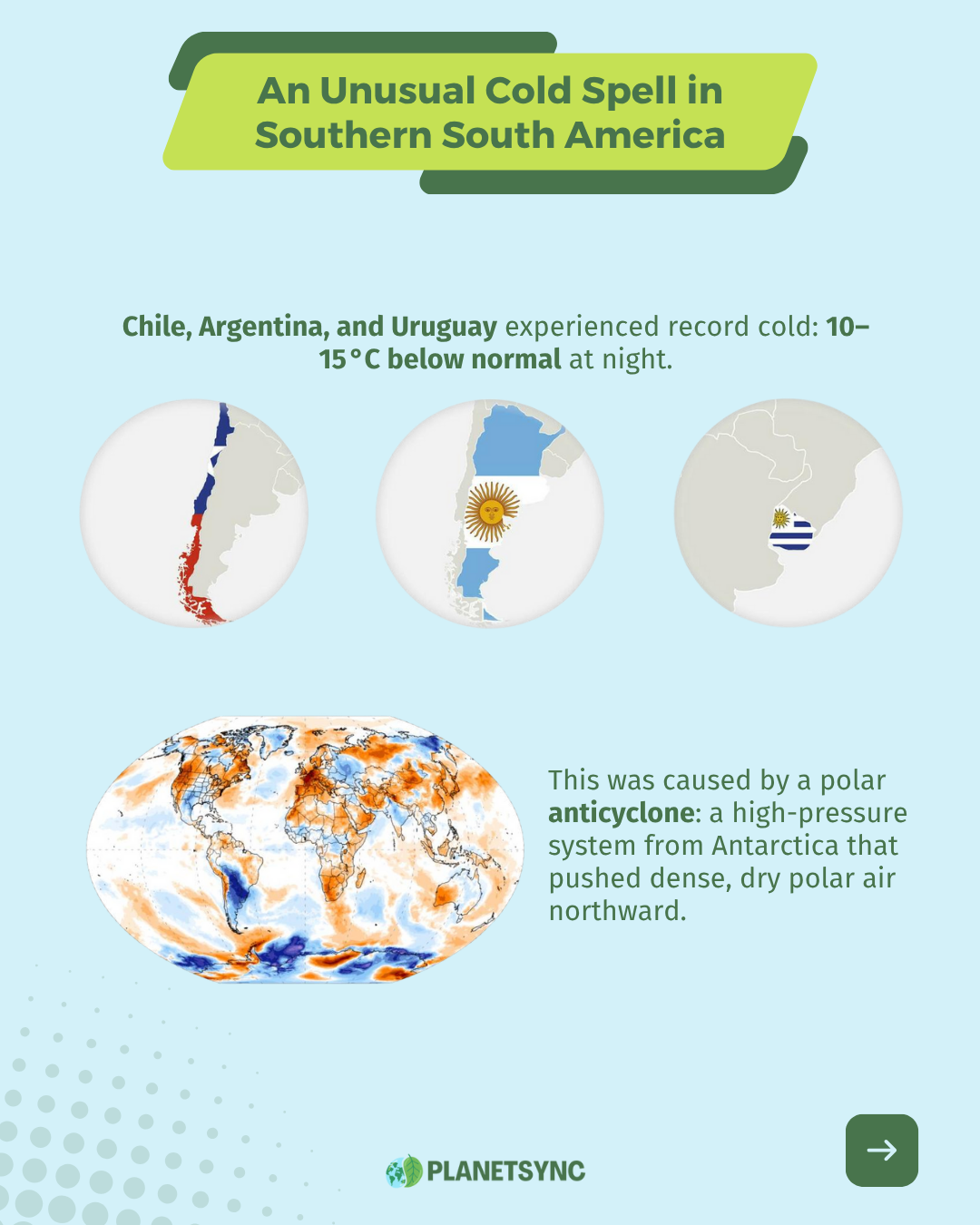
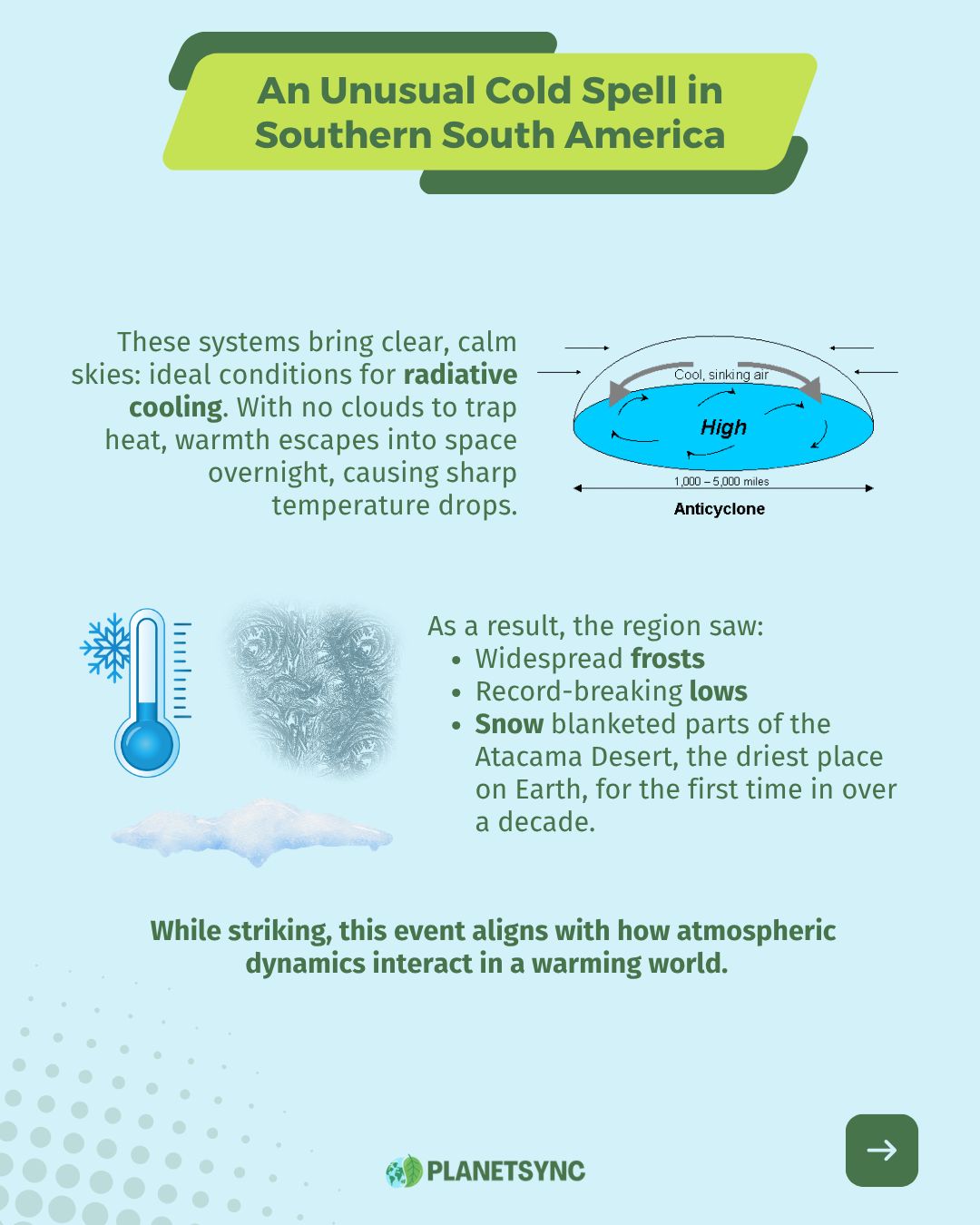
Southern South America, especially Chile, Argentina, and Uruguay, experienced unprecedented cold spells, with nighttime temperatures 10–15 °C below seasonal norms.
According to the World Meteorological Organization and national weather agencies, this was caused by a powerful polar anticyclone (a high-pressure system originating over Antarctica) that expanded northward. As it moved, it carried with it extremely cold, dense air from the polar region.
These systems are known for creating clear skies and calm, dry conditions. And while that may sound harmless, it actually sets up the perfect environment for extreme overnight cooling. You might be wondering why. Well, during the day, the Earth’s surface absorbs heat from the sun. But at night, it releases that heat upward. Normally, clouds and moisture in the air act like insulation, trapping some of that warmth near the surface. But under clear, dry skies (like those created by this anticyclone) there’s nothing to stop the heat from escaping. The warmth simply radiates away through the atmosphere and out into space. Without any barrier to hold it in, temperatures near the ground can drop rapidly and deeply.
That’s exactly what happened. The cold intensified across the region, leading to hard frosts, record low temperatures, and even heavy snow in areas that rarely see it, including parts of the usually arid Atacama Desert.
Simultaneous Heatwaves in the Northern Hemisphere
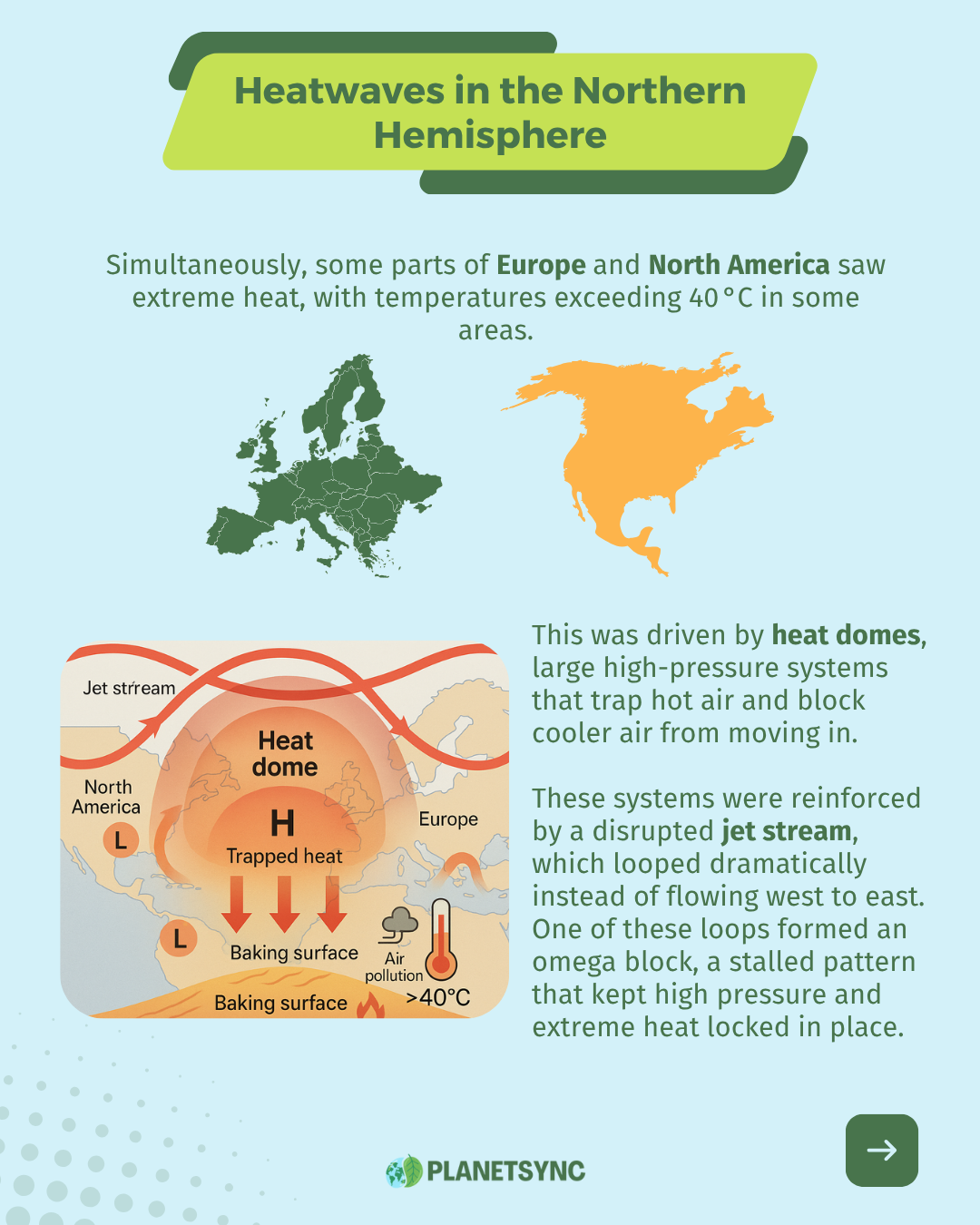
While the Southern Hemisphere was dealing with cold, the Northern Hemisphere was experiencing the opposite: extraordinary heatwaves. Across parts of Europe and North America, large high-pressure systems settled in and formed what are known as heat domes, massive zones of trapped hot air that act like a lid over the atmosphere. When these systems form, they block cooler air from moving in and stop heat from escaping. As a result, the sun’s energy builds day after day, baking the surface underneath. Some regions saw temperatures rise above 40 °C, triggering widespread health alerts, worsening air pollution, and raising the risk of wildfires.
These heat domes didn’t just happen randomly; they were reinforced by a disruption in the jet stream, the fast-flowing band of air high in the atmosphere that usually moves weather systems around the globe. Instead of flowing smoothly, the jet stream weakened and began to loop dramatically north and south. One of these loops locked into what meteorologists call an omega block where high-pressure systems become trapped between slower-moving low-pressure zones. These blocks are notorious for keeping weather stuck in one place, often intensifying heatwaves.
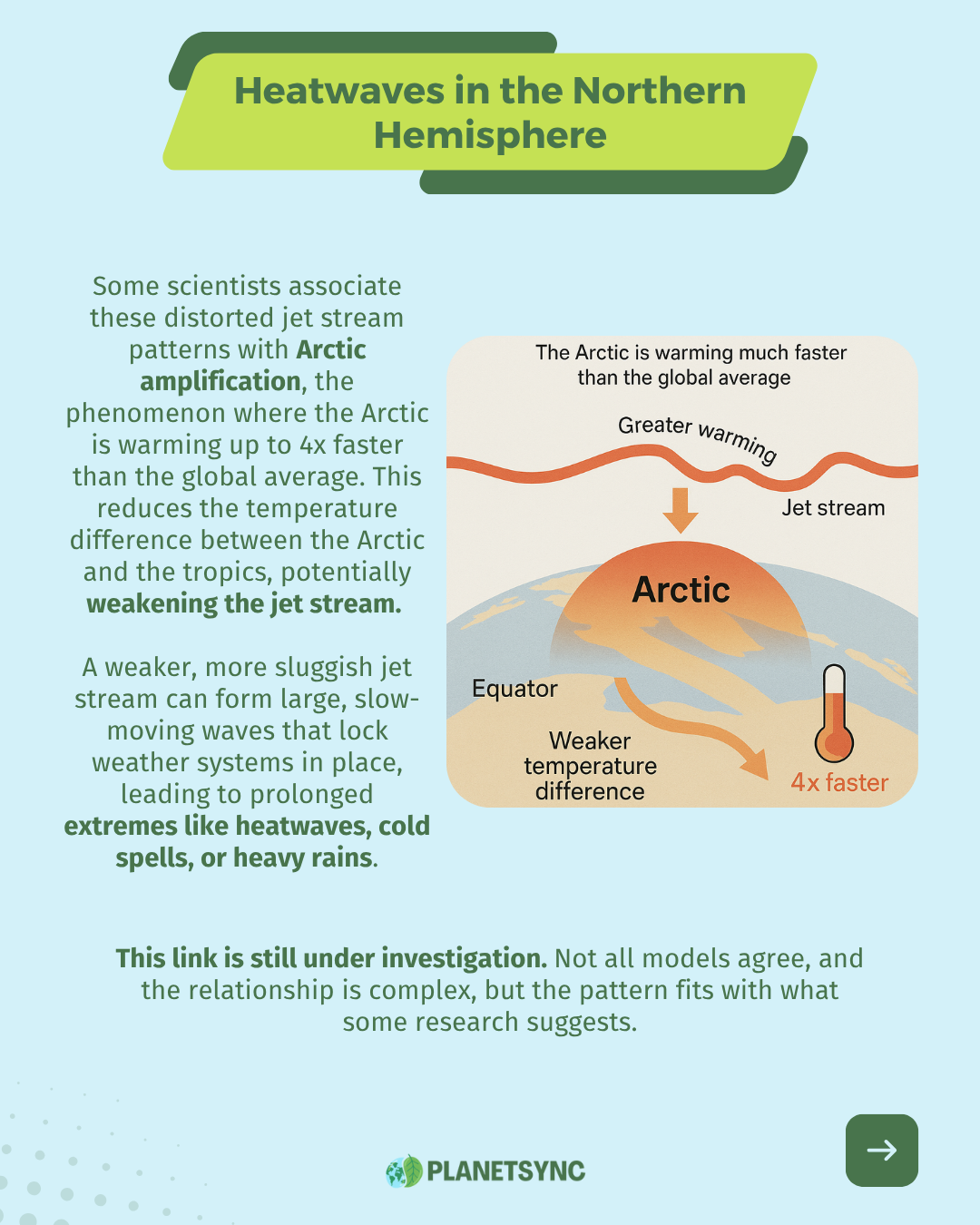
Some climate scientists link these distorted jet stream patterns to Arctic amplification, the phenomenon where the Arctic is warming up to four times faster than the global average. As the Arctic heats, the temperature difference between the pole and the equator weakens, which can slow the jet stream and make it wobble more. However, this relationship is still debated. While some research suggests that Arctic warming may contribute to more frequent or persistent blocks in certain regions, especially in summer, climate models generally predict a global decrease in blocking events in a warmer world, partly because the tropics are warming even faster than the Arctic. This means that, even as some regions experience slower-moving systems, the global atmosphere may become more energetic overall, increasing the potential for extreme events.
In short, the extreme heat across the Northern Hemisphere was likely shaped by a combination of factors: naturally occurring high-pressure systems, a wavy and sluggish jet stream, and possibly the influence of long-term Arctic warming. While scientists continue to refine exactly how these pieces fit together, events like this clearly show how subtle changes in atmospheric circulation can lead to serious consequences on the ground.
Climate Change: Strengthening Extreme Events
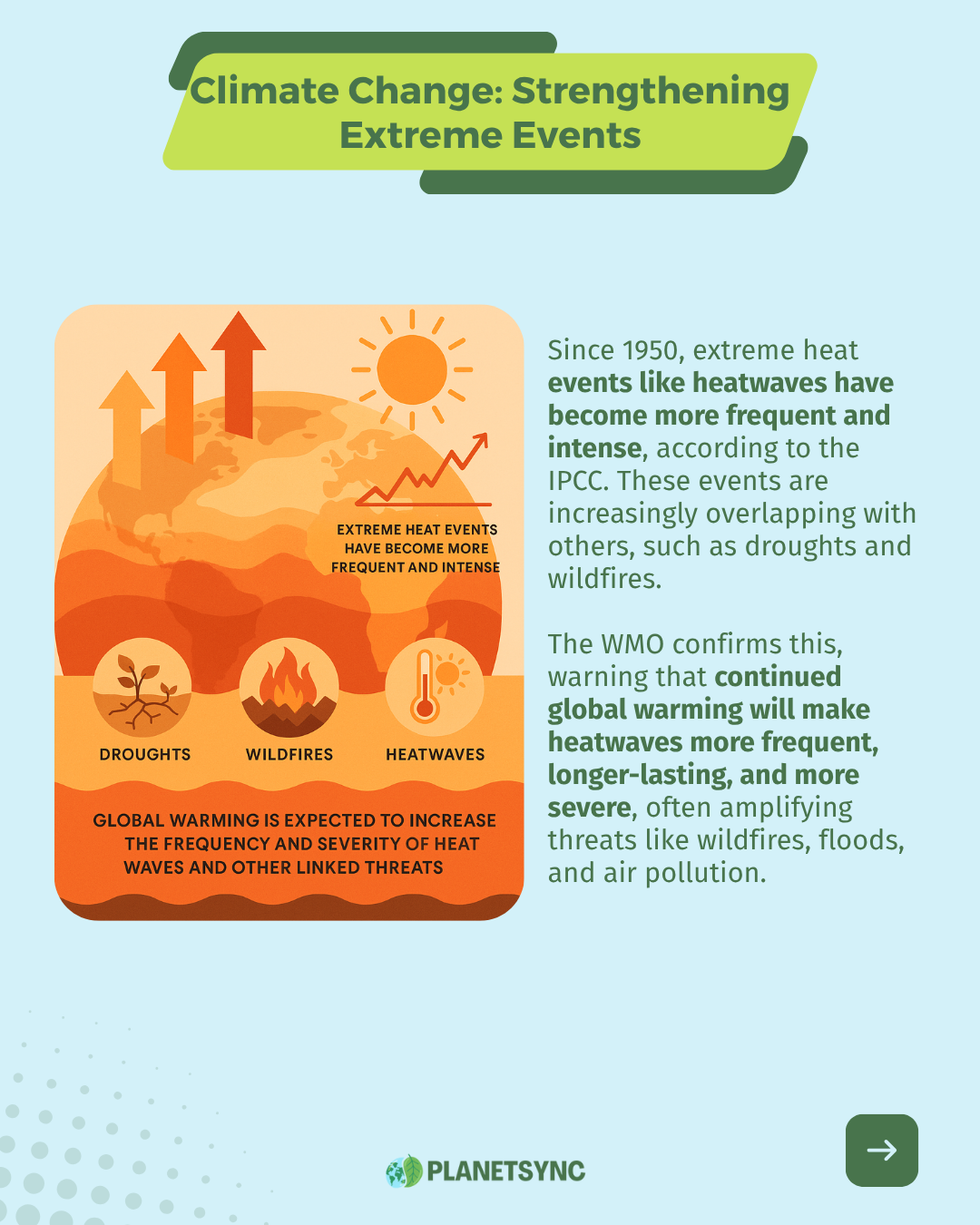
The IPCC’s Sixth Assessment Report shows that since 1950, hot extremes, such as heatwaves, have grown more frequent and intense. The report emphasizes that compound events, like heatwaves combined with droughts or wildfires, are now more likely and projected to increase further with continued warming.
The U.S. Environmental Protection Agency (EPA) similarly reports that, over recent decades, the frequency and length of heatwaves in U.S. cities has tripled since the 1960s, lasting about a day longer and spanning roughly 46 additional days per year.
The World Meteorological Organization (WMO) reinforces this, stating that with further global warming, we can expect heatwaves to continue growing in frequency, intensity, and duration, and that these events often amplify risks from droughts, fires, floods, and air quality issues.
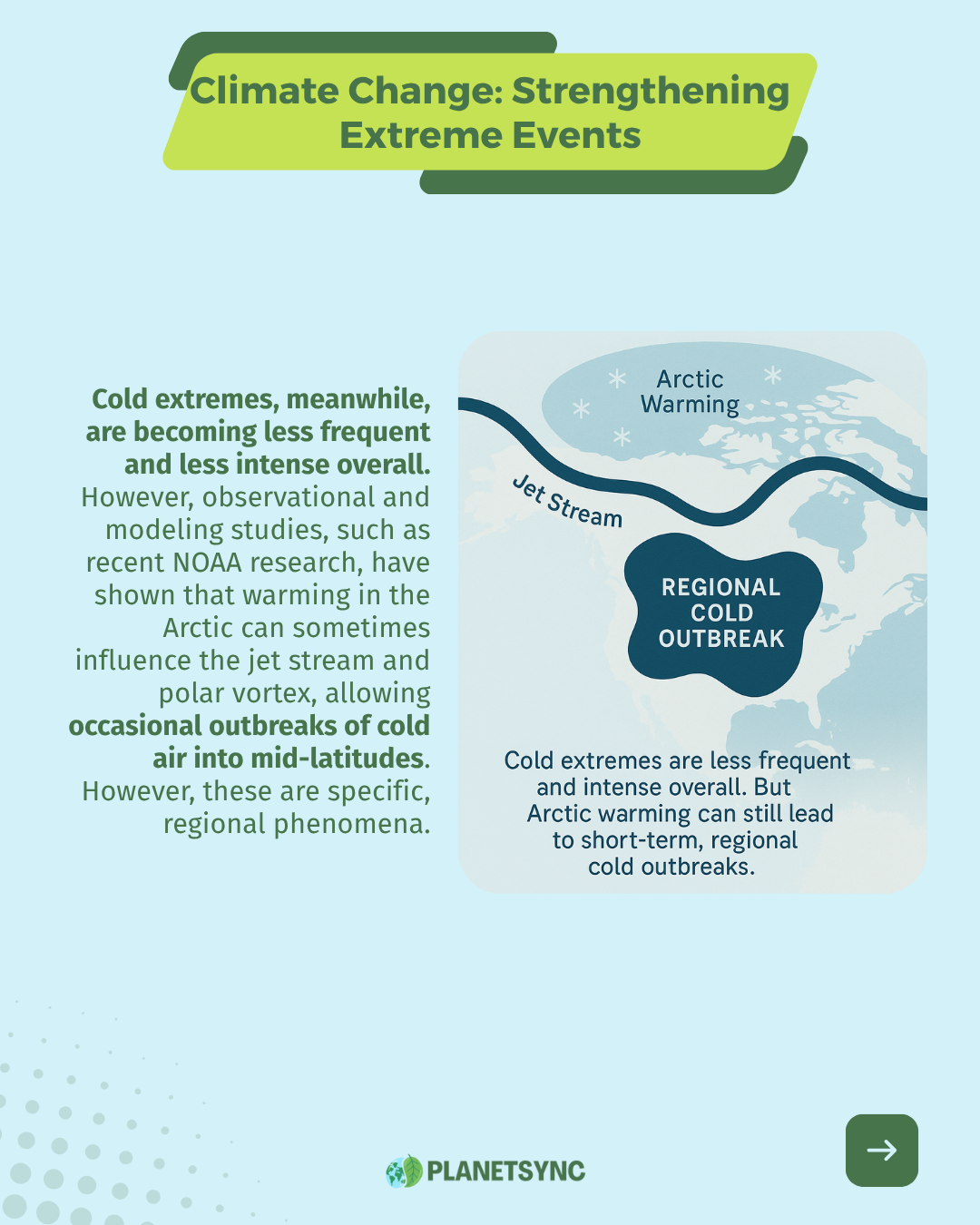
Regarding cold extremes, the global trend is toward fewer and milder cold events. However, observational and modeling studies, such as recent NOAA research, have shown that warming in the Arctic can sometimes influence the jet stream and polar vortex, allowing occasional outbreaks of cold air into mid-latitudes. However, these are specific, regional phenomena and do not negate the long-term decline in cold extremes.
A Climate of Extremes
The co-occurrence of extreme heat in the Northern Hemisphere and intense cold in the south may seem contradictory, but both are shaped by the same atmosphere-spanning systems and dynamics. Events like these illustrate how climate change fuels disruption: shifting baselines, intensifying extremes, and amplifying the risk of multiple hazards happening at once.
Science is clear: heatwaves are increasing in frequency, severity, and duration, and compound events are becoming more common. Cold extremes are declining globally, but occasional regional outbreaks will still occur, especially when large-scale circulation patterns are disturbed.
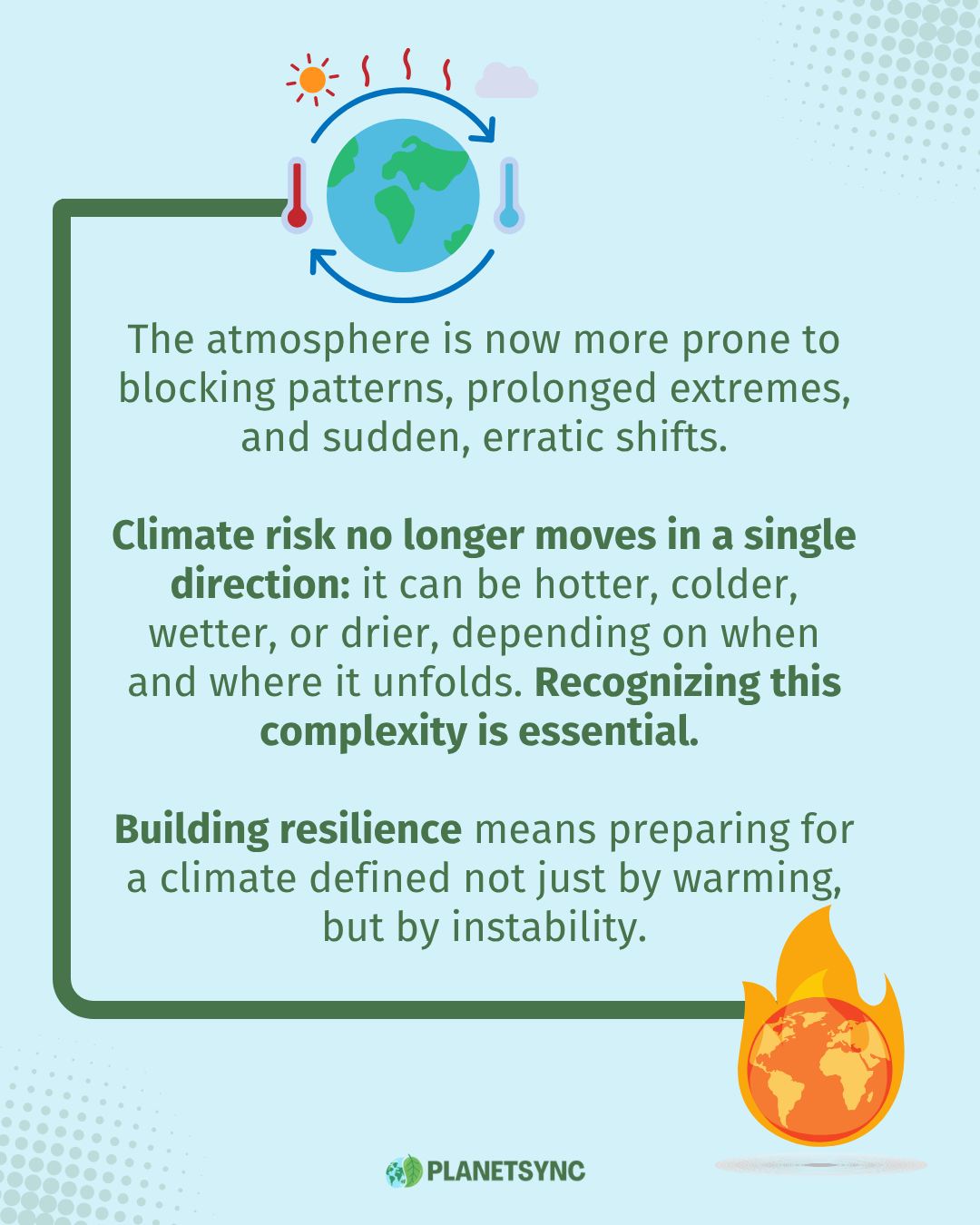
These extremes remind us that climate change unfolds through episodes of volatility, often where and when we least expect them. Preparing for this future means recognizing that climate risk now moves in multiple directions: hotter, wetter, drier, and, at times, unexpectedly colder. Building resilience requires acknowledging that complexity.
References & Resources
- Arctic Council. (n.d.). Shifting Winds: How a wavier polar jet stream causes extreme weather events. Arctic Council. https://arctic-council.org/news/shifting-winds-how-a-wavier-polar-jet-stream-causes-extreme-weather-events/
- Cawdrey, Kathryn. (n.d.). Warming Makes Droughts, Extreme Wet Events More Frequent, Intense. https://www.nasa.gov/centers-and-facilities/goddard/warming-makes-droughts-extreme-wet-events-more-frequent-intense/
- Climate Central. (n.d.). Climate Change and the Escalation of Global Extreme Heat. https://www.climatecentral.org/report/climate-change-and-the-escalation-of-global-extreme-heat-2025
- Dirección Metereológica de Chile. (n.d.). Servicios Climáticos. https://climatologia.meteochile.gob.cl/application/diario/boletinClimatologicoDiario/actual
- Hanna, E., Francis, J., Wang, M., Overland, J. E., Cohen, J., Luo, D., Vihma, T., Fu, Q., Hall, R. J., Jaiser, R., Kim, S.-J., Köhler, R., Luu, L., Shen, X., Erner, I., Ukita, J., Yao, Y., Ye, K., Choi, H., & Skific, N. (2024). Influence of high-latitude blocking and the northern stratospheric polar vortex on cold-air outbreaks under Arctic amplification of global warming. Environmental Research: Climate, 3(4), 042004. https://doi.org/10.1088/2752-5295/ad93f3
- IPCC Sixth Assessment Report. (n.d.). Chapter 11: Weather and Climate Extreme Events in a Changing Climate. https://www.ipcc.ch/report/ar6/wg1/chapter/chapter-11/
- McSweeney, R. (2020, June 12). Jet stream: Is climate change causing more ‘blocking’ weather events? Carbon Brief. https://www.carbonbrief.org/jet-stream-is-climate-change-causing-more-blocking-weather-events/
- NASA Science. (2023, August 7). Extreme Weather. https://science.nasa.gov/climate-change/extreme-weather/
- Rantanen, M., Karpechko, A. Y., Lipponen, A., Nordling, K., Hyvärinen, O., Ruosteenoja, K., Vihma, T., & Laaksonen, A. (2022). The Arctic has warmed nearly four times faster than the globe since 1979. Communications Earth & Environment, 3(1), 168. https://doi.org/10.1038/s43247-022-00498-3
- Tandon, A. (2022, August 11). The Arctic has warmed ‘nearly four times faster’ than the global average. Carbon Brief. https://www.carbonbrief.org/the-arctic-has-warmed-nearly-four-times-faster-than-the-global-average/
- US EPA, O. (2021, February 4). Climate Change Indicators: Heat Waves [Reports and Assessments]. https://www.epa.gov/climate-indicators/climate-change-indicators-heat-waves
- World Meteorological Organization. (n.d.). Climate change and heatwaves. https://wmo.int/content/climate-change-and-heatwaves
- World Meteorological Organization. (2023, March 10). Heatwave. World Meteorological Organization. https://wmo.int/topics/heatwave
- World Meteorological Organization. (2025a, July 1). Extreme heat grips Europe. World Meteorological Organization. https://wmo.int/media/news/extreme-heat-grips-europe
- World Meteorological Organization. (2025b, July 3). Southern South America hit by exceptional cold spell. World Meteorological Organization. https://wmo.int/media/news/southern-south-america-hit-exceptional-cold-spell


 planetsync.blog
Leave a comment