

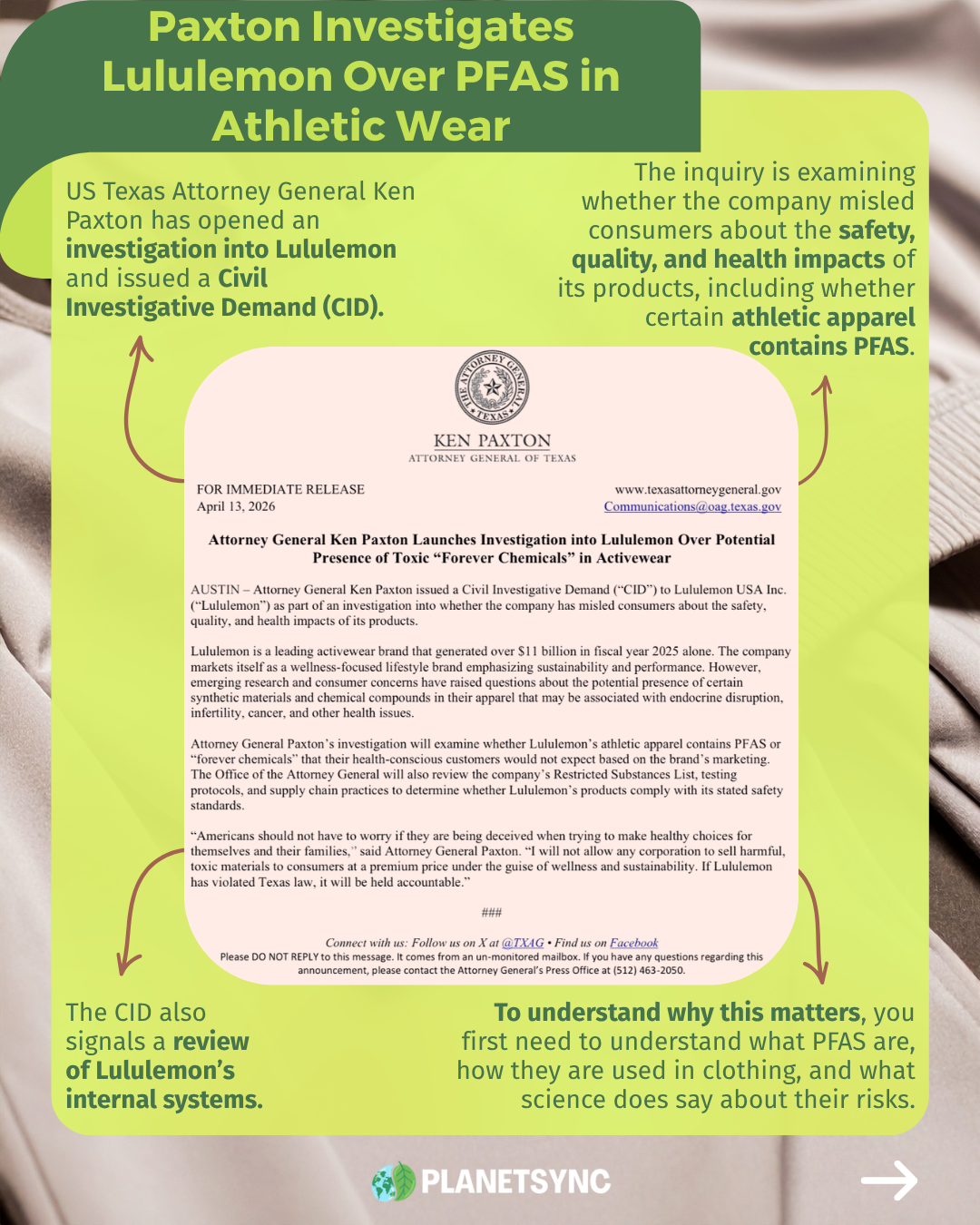
Texas Attorney General Ken Paxton announced on April 13, 2026, that his office has opened an investigation into Lululemon and issued a Civil Investigative Demand (CID). The inquiry is examining whether the company misled consumers about the safety, quality, and health impacts of its products, including whether certain athletic apparel contains PFAS.
The CID also signals a review of Lululemon’s internal systems: its Restricted Substances List (RSL), product testing protocols, and supply-chain controls.
To understand what regulators are examining and why this matters, you first need to understand what PFAS are, how they are used in clothing, and what science does and doesn’t say about their risks. So, let’s do it!
Need the Gist? Swipe through the visuals below for a quick summary!
What PFAS Are
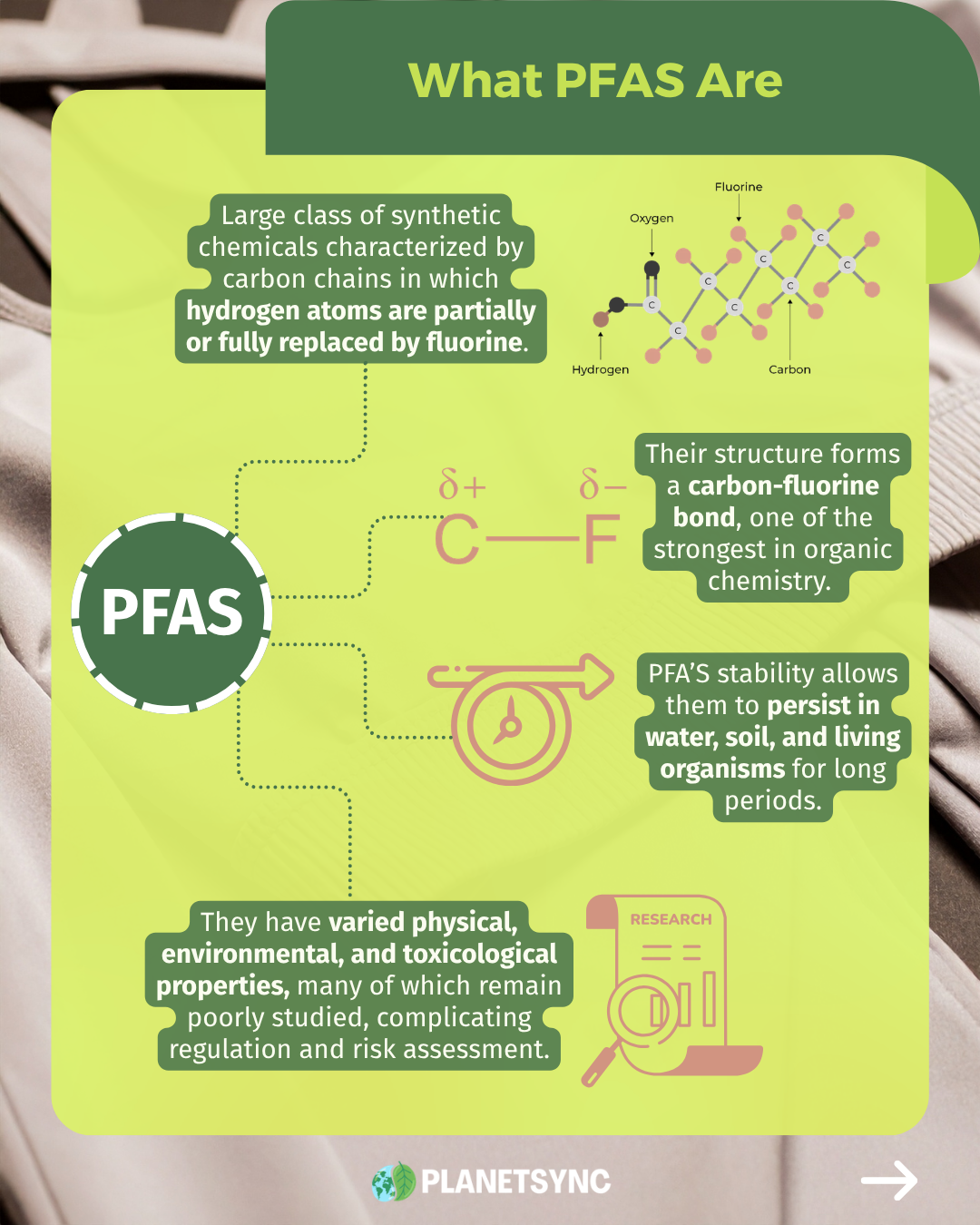
PFAS (per- and polyfluoroalkyl substances) are a large class of synthetic chemicals characterized by carbon chains in which hydrogen atoms are partially or fully replaced by fluorine. This structure creates a carbon–fluorine bond, among the strongest in organic chemistry, making many PFAS highly resistant to heat, chemical reactions, and environmental breakdown. That stability allows them to persist in water, soil, and living organisms for long periods.
PFAS have varied physical, environmental, and toxicological properties, many of which remain poorly studied, complicating both regulation and risk assessment.
Why PFAS Are Used in Textiles
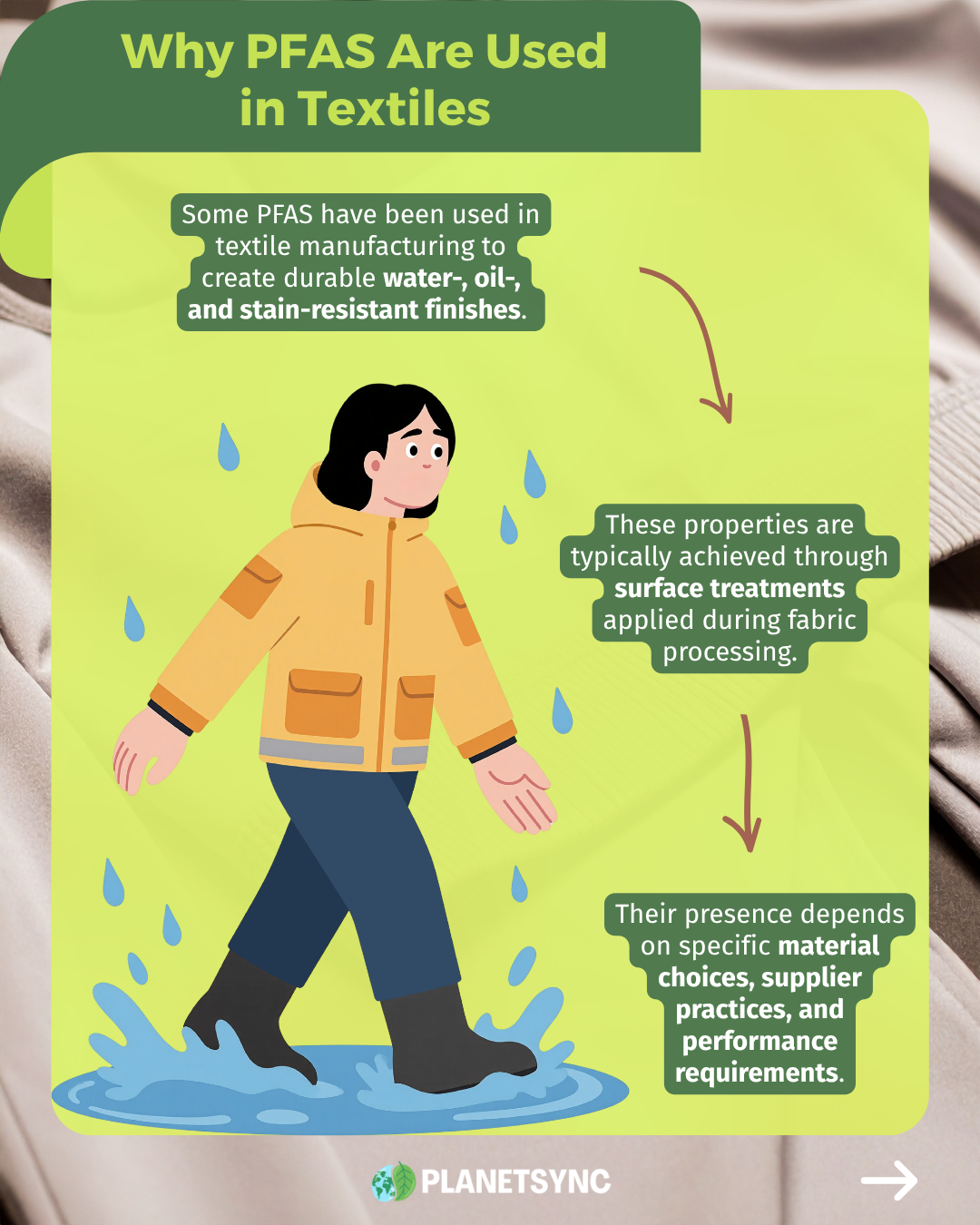
Some PFAS have been used in textile manufacturing to create durable water-, oil-, and stain-resistant finishes. These properties are typically achieved through surface treatments applied during fabric processing.
However, not all PFAS are used in clothing, and not all clothing contains PFAS. Their presence depends on specific material choices, supplier practices, and performance requirements.
Exposure From Clothing
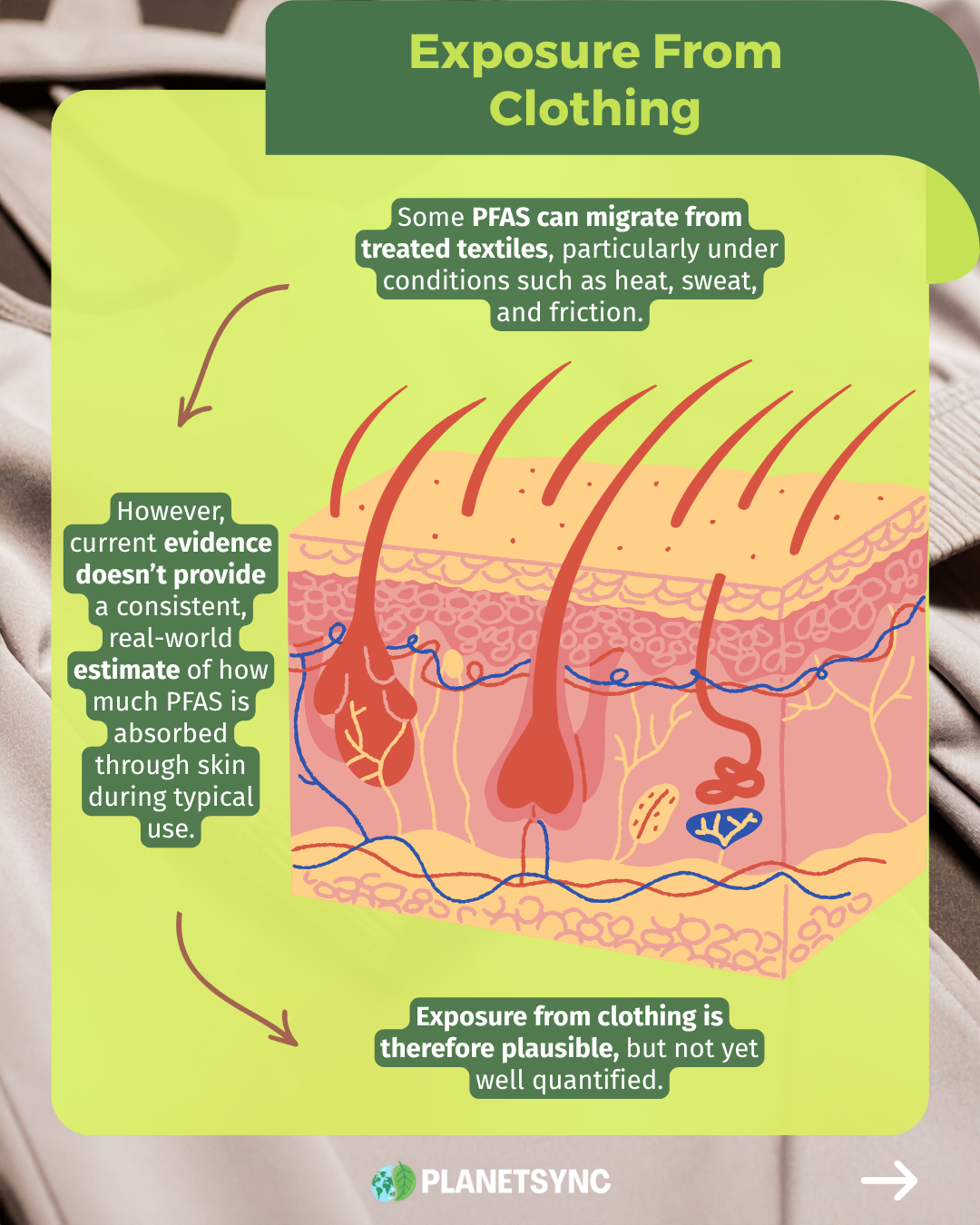
For apparel, the primary pathway under consideration is dermal exposure. Some PFAS can migrate from treated textiles, particularly under conditions such as heat, sweat, and friction.
However, current evidence doesn’t provide a consistent, real-world estimate of how much PFAS is absorbed through skin during typical use. Assessments continue to highlight limited data on migration rates, skin uptake, and cumulative exposure.
Exposure from clothing is therefore plausible, but not yet well quantified.
What Is Established About Health Effects
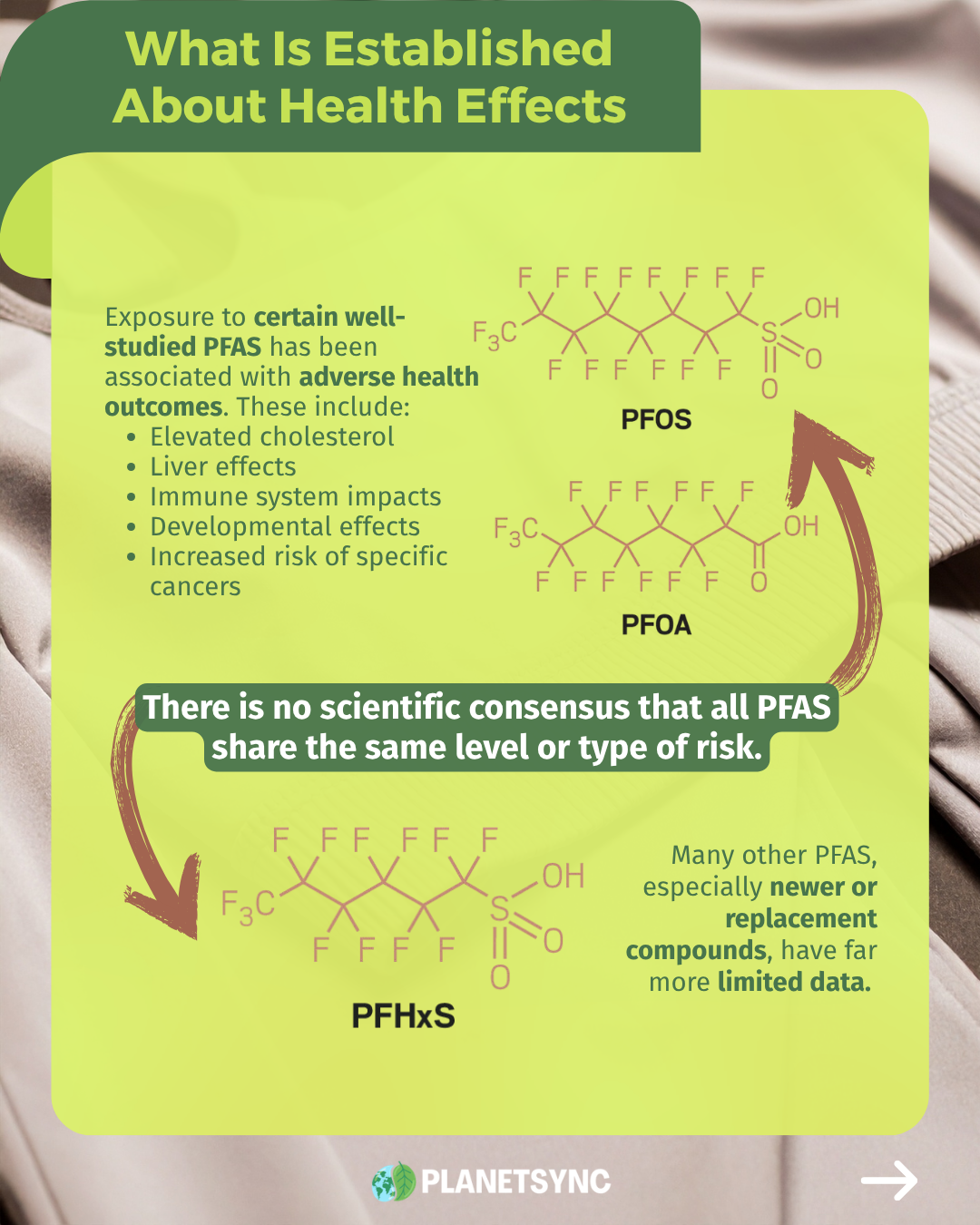
Evidence on PFAS is compound-specific, not class-wide.
Exposure to certain well-studied PFAS, particularly PFOA and PFOS, has been associated with adverse health outcomes in epidemiological and toxicological studies. These include elevated cholesterol, liver effects, immune system impacts (including reduced vaccine response), developmental effects, and increased risk of specific cancers.
However, several constraints are important.
First, most of the strongest human data comes from populations exposed through drinking water contamination or occupational settings, where exposure levels are significantly higher than those expected from consumer products.
Second, many newer or replacement PFAS have far more limited toxicological data. While some are designed to be less bioaccumulative, they remain environmentally persistent, and their long-term health effects are not yet well characterized.
Third, associations observed in epidemiological studies don’t always establish direct causation, and effect sizes can vary depending on exposure level, duration, and individual susceptibility.
Taken together, the current scientific consensus is that certain PFAS can cause adverse health effects under sufficient exposure conditions, but the degree of risk depends heavily on the specific compound and the magnitude of exposure.
What the Investigation Is Testing
The core issue in this case is whether product claims align with internal controls.
Investigators are expected to examine whether Lululemon’s claims (explicit or implied) about safety or chemical composition are supported by how the company manages chemicals in practice. This includes how the company defines restricted substances, enforces supplier compliance, and verifies materials through testing.
Why This Case Matters
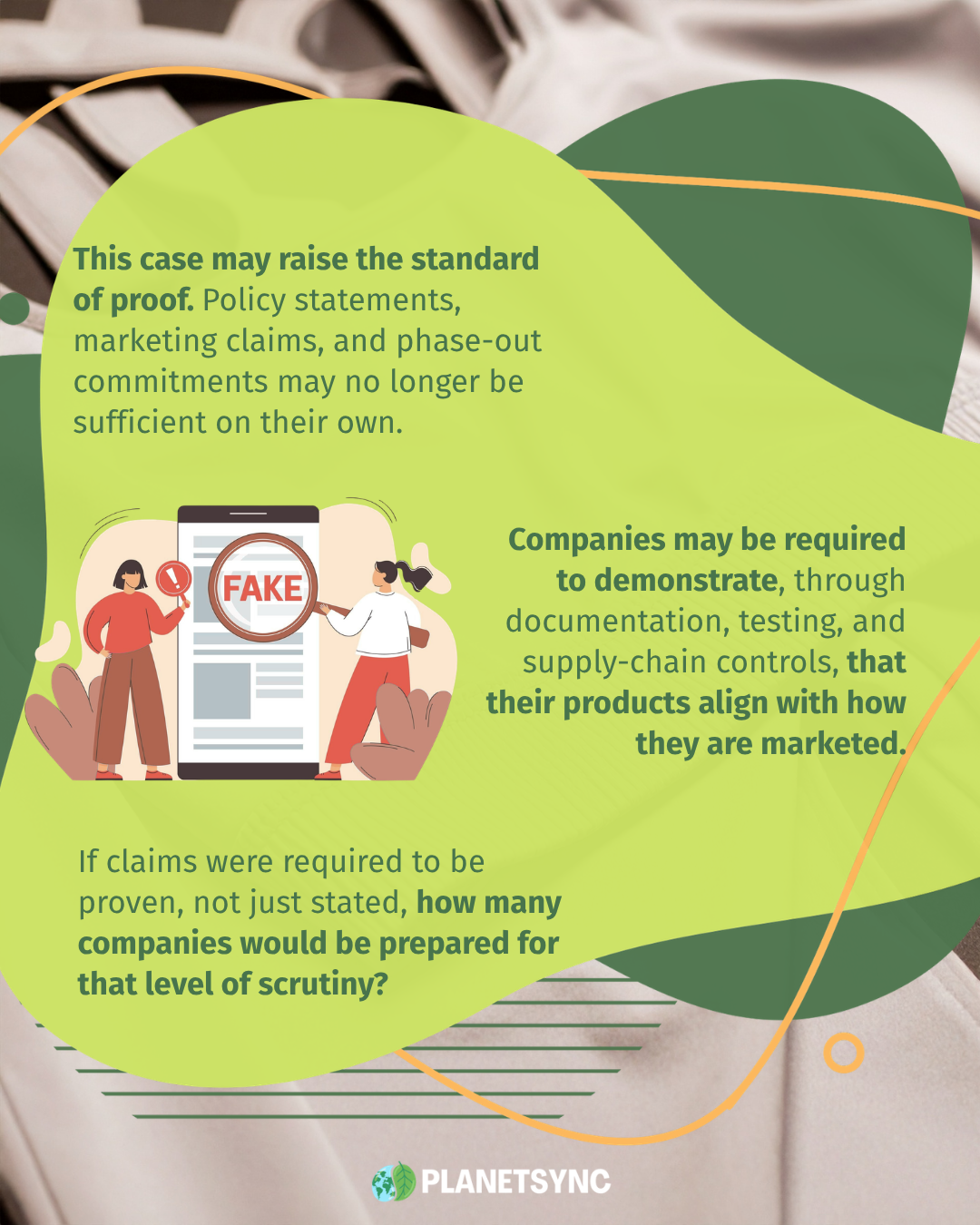
This case may raise the standard of proof. Policy statements, marketing claims, and phase-out commitments may no longer be sufficient on their own. Companies may be required to demonstrate, through documentation, testing, and supply-chain controls, that their products align with how they are marketed.
If claims were required to be proven, not just stated, how many companies would be prepared for that level of scrutiny?
References & Resources
- Bline, A. P., DeWitt, J. C., Kwiatkowski, C. F., Pelch, K. E., Reade, A., & Varshavsky, J. R. (2024). Public Health Risks of PFAS-Related Immunotoxicity Are Real. Current Environmental Health Reports, 11(2), 118–127. https://doi.org/10.1007/s40572-024-00441-yre
- EFSA. (2026, March 16). Per- and polyfluoroalkyl substances (PFAS). https://www.efsa.europa.eu/en/topics/per-and-polyfluoroalkyl-substances-pfas
- Espartero, L. J. L., Ishaq, Z., Bradley, S., Moore, M., Yamada, M., Wang, X., Prow, T., Juhasz, A., & Thai, P. K. (2025). Dermal permeation of perfluoroalkyl substances in human skin – An in-vitro study. Chemosphere, 378, 144408. https://doi.org/10.1016/j.chemosphere.2025.144408
- Fenton, S. E., Ducatman, A., Boobis, A., DeWitt, J. C., Lau, C., Ng, C., Smith, J. S., & Roberts, S. M. (2021). Per- and Polyfluoroalkyl Substance Toxicity and Human Health Review: Current State of Knowledge and Strategies for Informing Future Research. Environmental Toxicology and Chemistry, 40(3), 606–630. https://doi.org/10.1002/etc.4890
- National Institute of Environmental Health Sciences. (n.d.). Perfluoroalkyl and Polyfluoroalkyl Substances (PFAS). National Institute of Environmental Health Sciences. https://www.niehs.nih.gov/health/topics/agents/pfc
- Pervez, Md. N., Ilango, A. K., Jiang, T., Talukder, Md. E., Ehsan, M. N., Cai, Y., & Liang, Y. (2025). PFAS in the textile industry: Sources, fate, detection, and pathways toward sustainable remediation and regulation. Chemical Engineering Journal, 522, 168183. https://doi.org/10.1016/j.cej.2025.168183
- Ragnarsdóttir, O., Abdallah, M. A.-E., & Harrad, S. (2022). Dermal uptake: An important pathway of human exposure to perfluoroalkyl substances? Environmental Pollution, 307, 119478. https://doi.org/10.1016/j.envpol.2022.119478
- Ragnarsdóttir, O., Abou-Elwafa Abdallah, M., & Harrad, S. (2024). Dermal bioavailability of perfluoroalkyl substances using in-vitro 3D human skin equivalent models. Environment International, 188, 108772. https://doi.org/10.1016/j.envint.2024.108772
- Texas Attorney General Office. (n.d.). Attorney General Ken Paxton Launches Investigation into Lululemon. https://www.texasattorneygeneral.gov/news/releases/attorney-general-ken-paxton-launches-investigation-lululemon-over-potential-presence-toxic-forever
- US EPA. (2016, March 30). PFAS Explained [Overviews and Factsheets]. https://www.epa.gov/pfas/pfas-explained
- Yang, Y., Wang, J., Tang, S., Qiu, J., Luo, Y., Yang, C., Lai, X., Wang, Q., & Cao, H. (2025). Per- and Polyfluoroalkyl Substances (PFAS) in Consumer Products: An Overview of the Occurrence, Migration, and Exposure Assessment. Molecules, 30(5), 994. https://doi.org/10.3390/molecules30050994
- Zhao, X., Zhang, S., Hu, Z., Ren, Z., Wang, T., Zhu, B., An, L., Wang, H., & Liu, J. (2025). Research on the PFAS release and migration behavior of multi-layer outdoor jacket fabrics. Journal of Hazardous Materials, 487, 137218. https://doi.org/10.1016/j.jhazmat.2025.137218


 planetsync.blog
Leave a comment