

-
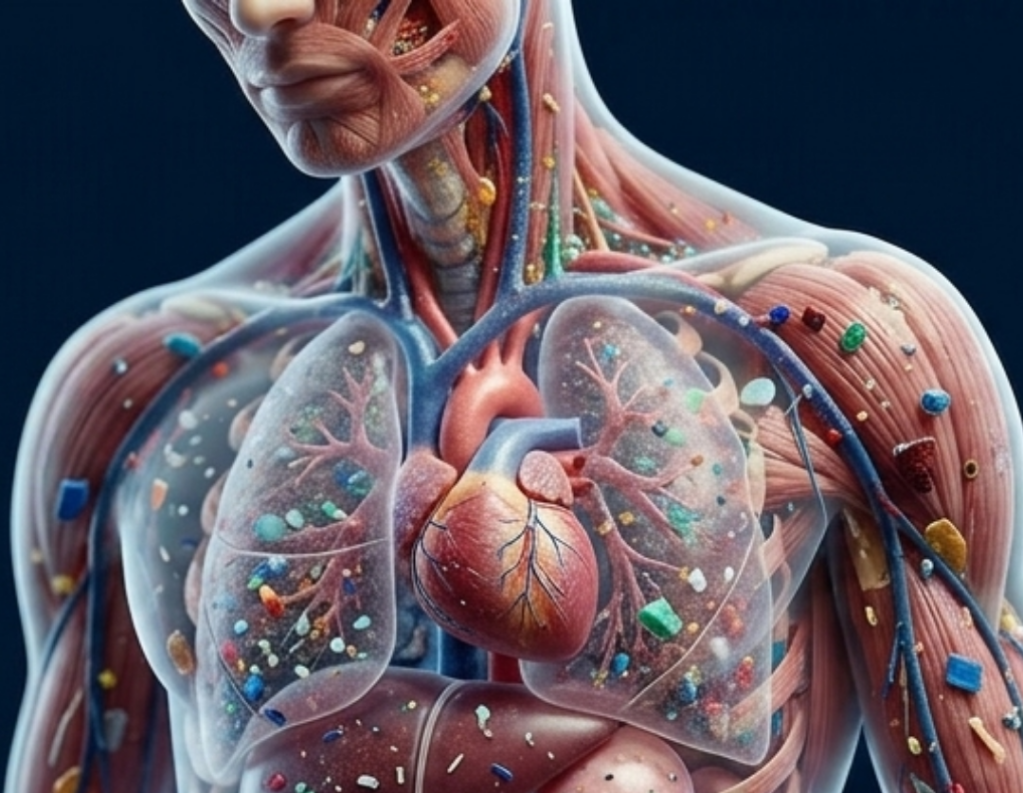
Microplastics and Human Health: How They May Contribute to Chronic Disease, Cancer, and Neurological Disorders
merging research reveals how microplastics and nanoplastics may contribute to chronic diseases, metabolic disorders, hormonal disruption, and neurodegeneration. Learn about the latest science and potential health risks
-

Microplastics in the Human Body: What We Know So Far
Microplastics have been found in human blood, lungs, brain, and organs. Learn how they affect cells, trigger inflammation, and may pose long-term health risks.
-

What Are Microplastics, and Why Are They in Our Water?
Microplastics are tiny plastic particles that vary in shape, size, density, and chemical composition. While there’s no universal scientific definition, they are generally described as being smaller than 5 mm (roughly the size of a grape seed). Some microplastics are even tinier, measuring below 1 μm, and these are often called nanoplastics. To grasp 1…
-

Plastic on Our Planet, Plastic in Our Bodies: World Environment Day 2025 Is a Wake-Up Call
Take a moment to look around. Chances are, something plastic is within arm’s reach: your phone case, a pen, a snack wrapper, clothes, etc. Plastic has become so embedded in daily life that it’s easy to forget it hasn’t been around all that long. Yet in just over 118 years, it has revolutionized everything from…
-

Super Pollutants in the Air: Hydrofluorocarbons and Tropospheric Ozone
In Super Pollutants in the Air: Black Carbon and Methane, we explored the impact of black carbon and methane, two air pollutants with severe climate and health effects. But the challenge of air pollution goes beyond just these two. Other pollutants like hydrofluorocarbons (HFCs) and tropospheric ozone are also accelerating climate change while deepening health…
-

Super Pollutants in the Air: Black Carbon and Methane
Air pollution is a major environmental threat, harming human health and accelerating climate change. Among the most potent contributors to air quality degradation are Short-Lived Climate Pollutants (SLCPs), also known as “super pollutants”. These pollutants persist in the atmosphere for a relatively short time but have a disproportionately high impact on global warming and air…
-

Climate Ambition in the EU: Barriers on the Road to 2030 and Beyond
In the previous article, Beyond Policy: Examining the EU’s Progress on Climate Ambition Targets, we examined progress toward the EU’s 9 climate targets under the “Climate Ambition” pillar of the European Green Deal. The analysis revealed a mixed picture: while some targets are on track, others are unlikely to be met without additional measures. This…
-
Beyond Policy: Examining the EU’s Progress on Climate Ambition Targets
In the previous article, The EU’s Path to Climate Neutrality: Unpacking the Legal and Strategic Framework, we explored the legal and strategic foundation behind the EU’s climate ambition. However, policy design is only half the story. We now turn to the crucial questions: What specific targets has the EU established, and how is the process…
-
The EU’s Path to Climate Neutrality: Unpacking the Legal and Strategic Framework
Have you heard that the European Union (EU) plans to become climate-neutral by 2050? It’s the EU’s main long-term goal for tackling climate change: reducing greenhouse gas (GHG) emissions to near zero and balancing out the remainder through carbon removal, either by nature (like forests) or by technology (like carbon capture and storage). But getting…
-

Earth Day 2025: Why Tripling Renewable Energy by 2030 Matters More Than Ever
April 22, 2025, marks the 55th anniversary of Earth Day. This year’s theme, “Our Power, Our Planet,” puts a spotlight on a critical challenge of our time: tripling renewable energy by 2030. But what does that actually mean, and why does it matter so much? Let’s break it down! Need the Gist? Swipe through the…
Hi,
I’m Johanna

Welcome to PlanetSync, your gateway to exploring the pressing challenges, emerging trends, and policy developments shaping the future of our planet’s water resources and environmental systems.
My mission is to bring attention to important topics often overlooked, misunderstood, or difficult to engage with. Through clear and accessible information, I aim to inform and inspire individuals to take informed actions that drive lasting, positive change.
Let’s connect
🌍 Join the PlanetSync Newsletter: Where Complex Issues Meet Clear Insights! 🌍

Water Topics
© 2025 PlanetSync by Johanna Gutiérrez

